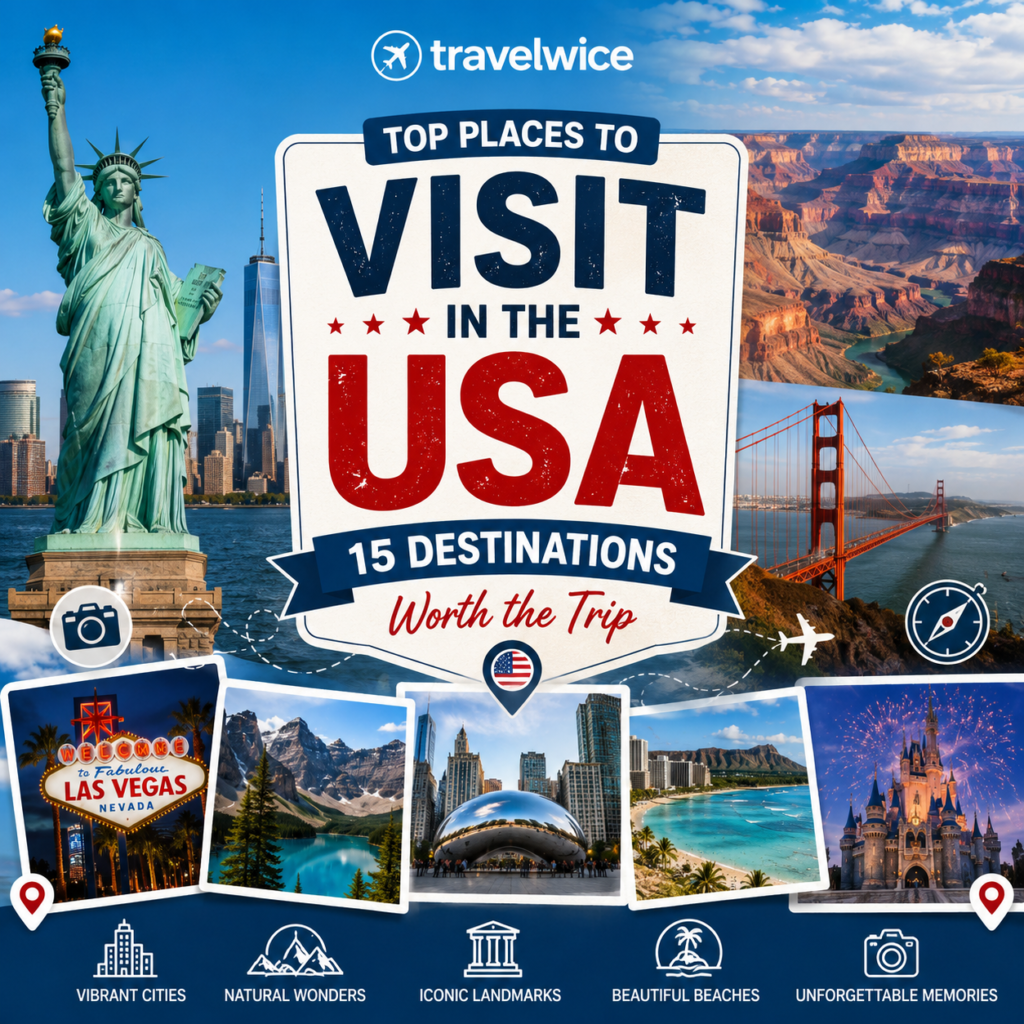

Top Places to Visit in the USA
Ranking the top places to visit in USA is tricky, because the country packs an unusual range into one landmass: canyon country in the Southwest, subtropical beaches in Florida, alpine lakes in the Rockies, and cities that never really slow down. There’s no single “best” place to visit. The right pick depends on whether you want wilderness, nightlife, history, or a mix of all three. This guide covers the destinations that consistently deliver, grouped by trip type, along with the timing and logistics that make a real difference on the ground.
Quick Answer: Top Places to Visit in the USA
Want one trip that captures the country’s range? Pair a national park with a major city. Try the Grand Canyon or Yosemite for scenery, then New York City or New Orleans for culture and food. Late spring (May) and early fall (September–October) offer the best balance of good weather and smaller crowds almost everywhere, whether you’re headed to a park or a city.
America’s Most Iconic National Parks
National parks usually top the list when people plan a US trip, and for good reason. The country protects some of the most dramatic landscapes on Earth as public land, and most of it costs little or nothing to enter. You can browse the complete list of protected areas on the National Park Service’s official site.
Great Smoky Mountains National Park (Tennessee/North Carolina) holds the title of most visited national park by a wide margin. It drew more than 11.5 million visitors in 2025, over double the number-two park. It charges no entrance fee. Its appeal comes less from single iconic viewpoints and more from mile after mile of old-growth Appalachian forest, waterfalls, and fall foliage.
Zion and Yellowstone rank second and third nationally. Each draws 4.5–5 million visitors a year. Zion offers narrow slot canyons and the famous Angels Landing hike. Yellowstone delivers geothermal features like Old Faithful, plus wildlife such as bison and elk. Both parks now run timed-entry or shuttle systems during peak season, so book ahead.
Grand Canyon and Yosemite round out the top five, each drawing over 4 million visitors annually. The Grand Canyon’s South Rim stays open year-round and needs no technical hiking for the main viewpoints. Yosemite Valley peaks in late spring, when snowmelt sends its waterfalls into full flow.

Want to skip the crowds entirely? Parks like North Cascades in Washington and Great Basin in Nevada offer comparable scenery with a fraction of the visitors. That trade-off matters if timed-entry permits or parking are a dealbreaker for you.
| Park | Known for | Typical crowd level |
|---|---|---|
| Great Smoky Mountains | Forests, waterfalls, fall color | Very high, but spreads across a large area |
| Zion | Slot canyons, red rock hiking | High; shuttle-only in peak season |
| Yellowstone | Geysers, wildlife | High; best early morning or late in the day |
| Grand Canyon (South Rim) | Rim views, easy access | High but manageable outside summer |
| Yosemite | Waterfalls, granite cliffs | High in spring; quieter in fall |
| North Cascades / Great Basin | Alpine scenery, solitude | Low |
For a deeper dive into national park logistics, see our full USA travel guides library.
Cities Every Trip Itinerary Considers
The East Coast Anchors
New York City remains the most visited US city among international travelers. It draws millions of overseas arrivals each year and tops most “best US cities” rankings for its density of museums, Broadway theater, and neighborhoods. It’s also the most common entry point for first-time visitors, since JFK Airport handles more international arrivals than any other US airport.
Washington, D.C. gives you free access to the Smithsonian museums and national monuments, which makes it one of the most budget-friendly major-city trips in the country. Boston brings distinct colonial history and a walkable downtown that most car-dependent US cities can’t match.
The West Coast and Sun Belt
Los Angeles combines beach culture, film-industry attractions, and strong Asia-Pacific flight connections. It works well as a natural second stop for anyone exploring the West Coast. Las Vegas markets itself as an entertainment capital, and these days travelers go less for gambling alone and more for concert residencies, food, and easy access to Red Rock Canyon and the Grand Canyon.
Orlando deserves a mention on numbers alone: it welcomed a record 76.7 million visitors in 2025, almost entirely thanks to its theme parks. That number should keep climbing as Universal’s newer attractions mature. Our Orlando travel guide breaks down the full itinerary. Miami functions as the main US gateway for Latin American travelers and brings a genuinely different cultural flavor, from Little Havana to South Beach.
The Distinct Regional Pick
New Orleans rewards travelers who want architecture, food, and music history you won’t find anywhere else in the country. If Boston covers the North’s colonial story, New Orleans covers the South’s Creole and jazz heritage, and the two make a good contrast if you’re comparing regional US history on the same trip.
Coastlines and Islands
The US coastline shifts so much by region that “beach vacation” means something different depending on where you land. Hawaii delivers the most tropical version of an American beach trip. Maui and Oahu draw the bulk of visitors for their beaches and volcanic landscapes.
On the mainland, the Florida Keys and South Beach, Miami cover the subtropical end. Cape Cod and Acadia National Park in Maine represent the cooler, rockier New England coast instead. Acadia alone drew about 4 million visitors in 2025, and it ranks among the most accessible national parks for a short trip.
On the West Coast, Big Sur in California offers dramatic cliffside driving along Highway 1. It pairs naturally with a Yosemite or San Francisco itinerary, since all three sit within a few hours of each other.
When to Go
Timing affects US travel more than it does in many countries, simply because climate varies so much by region:
- National parks in the Mountain West and Southwest (Zion, Grand Canyon, Yellowstone): visit May through September, though early fall avoids summer crowds and heat.
- Southeastern parks and cities (Great Smoky Mountains, New Orleans, Florida): skip the humid summer months. Spring and fall work best.
- Northeastern cities (New York, Boston): enjoyable nearly year-round, though fall foliage season (late September–October) and the December holidays bring the largest crowds and highest hotel prices.
- Hawaii and Southern California: mild weather year-round means pricing and school-holiday crowds matter more than season.
Planning Around Crowds and Permits
Here’s a trend worth knowing before you book: several major national parks, including Zion and parts of Yosemite, now require timed-entry reservations during peak months. These slots can sell out weeks in advance. If a park sits at the center of your trip, check current entry requirements on Recreation.gov before you lock in dates, since these systems have expanded in recent years and rules can shift season to season. Browse our full destinations directory for more park-by-park planning notes.
Frequently Asked Questions
What are the most visited places in the USA? Great Smoky Mountains National Park leads national park visitation, with more than 11.5 million visitors in 2025. New York City consistently ranks first for international city arrivals. And when you count total visitor numbers, including domestic tourism, Orlando’s theme parks push it among the highest of any single US destination.
Is it better to visit US national parks or cities on a first trip? Neither wins outright. It depends on what you want from the trip. First-time visitors usually do best combining one major city, for logistics, flights, and food, with one or two national parks reachable by a short flight or drive. That beats trying to cover both coasts in a single visit.
Do I need a car to visit most of these destinations? For national parks, yes. Public transit rarely reaches trailheads or scenic drives, so you’ll need a rental car, or at least a park shuttle once inside. Major cities like New York, Boston, and Washington, D.C. offer strong public transit and walkable downtowns, so a car becomes optional there, and often more hassle than help.
Final Takeaway
Skip the search for a single “top” destination. Instead, match the landscape to what you actually want. Wilderness and hiking point you toward the national parks; culture, food, and nightlife point you toward cities like New York, New Orleans, or Los Angeles. Book timed-entry permits and flights early, especially for peak summer and fall foliage season, since that one decision will do more for your trip than almost anything else on this list. If budget is the deciding factor, our budget-friendly USA destinations guide rounds out this list of the top places to visit in USA with more affordable picks