

Las Vegas Strip Guide 2026: Hotels, Shows & Free Sights
The first time I walked the Las Vegas Strip, I made the classic mistake. I looked at the map, saw that the Bellagio and Caesars Palace were next to each other, and thought I would stroll between them in five minutes. Twenty-five minutes later I was still walking — through a casino, up an escalator, across a pedestrian bridge, down another escalator, and through a second casino — and I had not even reached the front door of Caesars. The Strip is 4.2 miles of Las Vegas Boulevard, and it lies to you at every turn. The hotels look close and they are not. The distances are long, the blocks are huge, and the only honest way to do it is on foot, slowly, with a plan. This Las Vegas Strip guide is the walk I wish someone had given me before my first night: where to start, what is free, what is worth paying for, where to eat without spending $200, and how to get from one end to the other without wrecking your feet.
TL;DR: Walk the Strip in two halves, not one — south and centre on day one, centre and north on day two, and save the best of it for after dark. The free sights carry the trip: the Bellagio fountains (every 30 minutes from 3 p.m. weekdays and noon on weekends, every 15 minutes from 8 p.m. to midnight), the Conservatory, the Flamingo habitat, and the Sphere glowing over the north end. A Monorail single ride is $6.25 at the station or $5.75 online, and a 24-hour pass is $15.50 or $13.95 online. Budget $45–$55 a night for the resort fee plus 13.38% tax on top of your room rate, and $20–$25 a day for parking at the big resorts. Wear sneakers, carry water, and take the free trams whenever you can.

How the Strip Is Laid Out
The Strip runs north to south along Las Vegas Boulevard, from the “Welcome to Fabulous Las Vegas” sign at the south end to the SAHARA at the north end. It helps to think of it in three chunks. The south Strip runs from the sign up to the Excalibur and New York-New York: Mandalay Bay, Luxor, the pyramid with the sphinx out front, and the castle turrets of Excalibur. This end is quieter, the resorts are bigger and further apart, and it is where you find the best pool days and some of the cheaper rooms. The centre Strip is the heart of it: Bellagio, Caesars Palace, Paris, the Flamingo, the LINQ, Harrah’s. This is where the fountains are, where the crowds are thickest, and where you will spend most of your time. The north Strip runs from the Venetian and the Palazzo up past the Wynn and Encore to the Sphere, the Resorts World towers and the SAHARA. It is newer, calmer, and more polished — and the walk from the Venetian to the SAHARA is longer than it looks on any map.
Two things about the layout catch everyone out. First, the hotels are set back from the street behind lakes, gardens and forecourts, so the walk from the sidewalk to the front door of a hotel can take ten minutes on its own. Second, you almost never cross Las Vegas Boulevard at street level. You cross on pedestrian bridges, up escalators and over the traffic, and the bridges are where the best photos are — the view down the Strip from the bridge at Flamingo Road, with the Bellagio lake on one side and the Paris tower on the other, is the postcard shot. The bridges also mean you cannot just dash across the road to the hotel opposite. Plan your crossings, or you will add half a mile to your walk without meaning to.
Walking the Strip: My Route, South to North
Start at the sign. The “Welcome to Fabulous Las Vegas” sign stands at the southern tip of the Strip, and the queue for a photo moves fast — a stranger takes your picture, you take theirs, and everyone is happy. Go in the late afternoon, when the light is gold and the neon is switching on, and you get the sign and the skyline in the same frame. From there, walk north past Mandalay Bay. The resort is huge — one of the biggest on the Strip — and the walkway past it is long and quiet, which is a good thing: it is the calm before the centre Strip hits you.
Luxor comes next, and the pyramid is stranger in person than in any photo. The beam of light from its top is visible for miles on a clear night, and the sphinx out front is the size of a small building. Excalibur’s castle is across the road, all turrets and banners, and the walk between the two is the first pedestrian bridge of the trip. New York-New York sits just north of Excalibur, with a skyline of skyscraper replicas and a roller coaster that loops around the outside of the building — I could hear the screams from the sidewalk, and I decided the coaster was a young person’s game.
The centre Strip starts at Park MGM and the Tropicana corner and runs north to the Flamingo. This is the stretch to take slowly. The Bellagio lake is on the west side, and the fountains are the reason to time your walk: a show every 30 minutes in the afternoon, every 15 minutes after 8 p.m. I planned my evening walk to arrive at the lakefront railing at 8 p.m. sharp, and the crowd that gathered in five minutes went quiet the moment the water went up. Across the street, the Paris Las Vegas Eiffel Tower replica faces the lake, and the observation deck at the top looks straight down on the fountains. Caesars Palace is next door, a sprawling Roman resort that takes a solid twenty minutes to walk through, and the Forum Shops inside are a mall dressed up as a Roman street with a painted sky ceiling and a free animatronic show, the Fall of Atlantis.
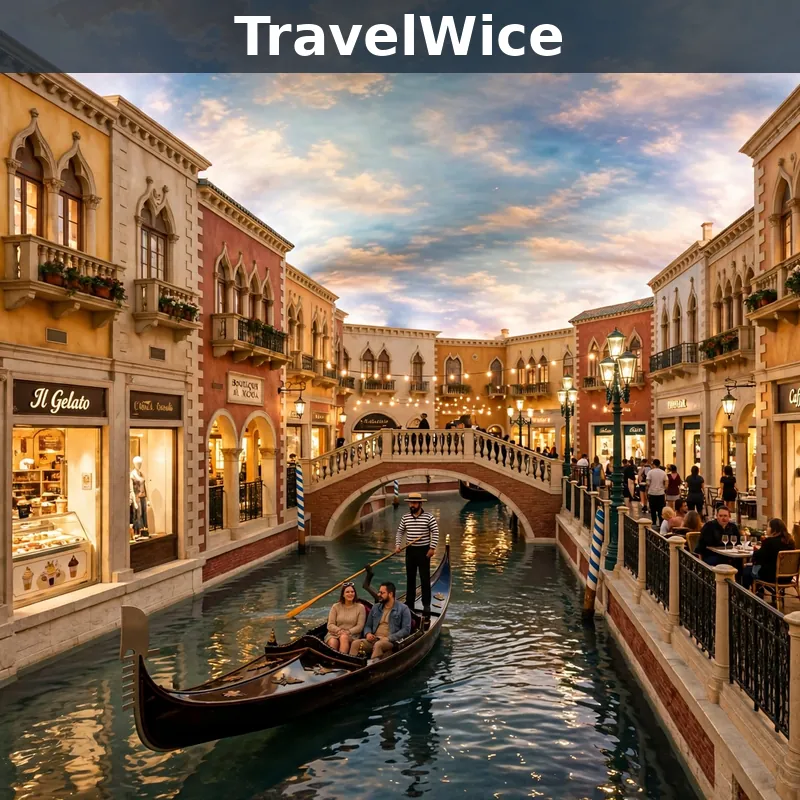
North of the Flamingo, the Strip changes pace. The LINQ Promenade is a pedestrian street of shops, bars and restaurants running east from the boulevard, and the High Roller observation wheel turns slowly above it. The Venetian and the Palazzo come next, with canals and gondolas inside, and then the Wynn, with its lake, its gardens and the atrium full of flowers. The Sphere sits just off the Strip at 255 Sands Avenue, and you can see it glowing from half a mile away — an eyeball, a basketball, a smiley face, a different image every night. The walk from the Bellagio to the Sphere took me about 45 minutes with stops, and by the time I got there my feet were telling me to take the Monorail back. I did, from the Harrah’s and LINQ station, and it was the best $6.25 I spent all week.
The Best Free Sights on the Strip
The Bellagio fountains are the anchor, and they are free. Weekday shows run every 30 minutes from 3 p.m. to 7:30 p.m., then every 15 minutes from 8 p.m. to midnight. On Saturdays, Sundays and holidays the half-hourly shows start at noon. Each performance lasts three to five minutes and plays a different song, so two shows in a row are never the same. The lakefront railing is the classic spot, but it fills up fast after 8 p.m. — a weekday afternoon show has the same water with a fraction of the crowd. High wind can pause or cancel a show, so a still, silent lake on a blustery day is not a broken fountain, it is a wind hold. Check before you go on a windy day.
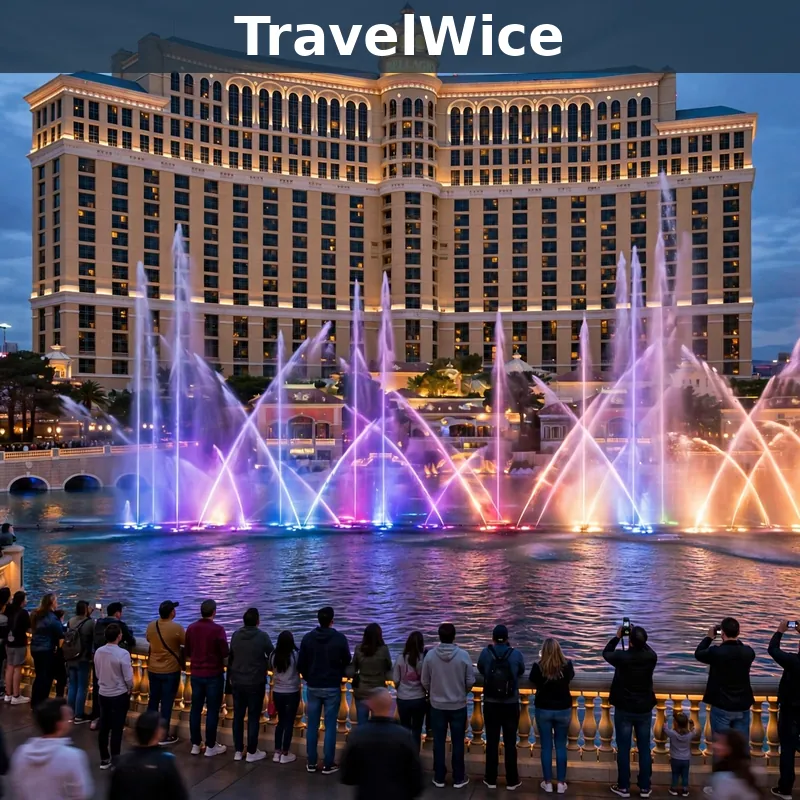
Inside the Bellagio, the Conservatory and Botanical Gardens change with the seasons — spring flowers, an autumn harvest display, a winter holiday scene — and it costs nothing to walk through. I went in on a Tuesday morning and had the flower displays almost to myself, which is the opposite of the evening crowd outside. The Flamingo Wildlife Habitat is a garden courtyard with real flamingos, koi and turtles, free, and a calm ten minutes away from the casino floor. The Wynn’s atrium is the same idea on a grander scale: a garden of flowers and trees inside a luxury hotel, free to wander, and the lake outside has a waterfall show in the evenings.
One thing that is gone: the volcano at the Mirage. The resort closed in 2024, and the volcano show with it, so do not plan a night around it. The old guides still list it, and the old videos still show it, but it is finished. The Strip changes fast — shows close, resorts change hands, whole corners get rebuilt — and the fountains and the Conservatory are the free sights you can count on. For the wider trip beyond the Strip, our Las Vegas travel guide for 2026 covers Fremont Street downtown, the Grand Canyon and Hoover Dam day trips, and the seasons.
The High Roller and the LINQ Promenade
The High Roller is the 550-foot observation wheel at the LINQ Promenade, and it is the best view on the Strip that does not involve a hotel room. One ride is one 30-minute revolution in an enclosed cabin, and the wheel turns so slowly you barely feel it move. At the box office, an adult ticket is $23.50 in the daytime, from noon to 5:59 p.m., and $34.75 from 6 p.m., plus taxes and fees. Youth tickets for ages 4 to 12 are $8.50 by day and $17.50 at night, and children 3 and under ride free. The 21-and-over Happy Half Hour, with an open bar in the cabin, is $60 at the box office.
Go at night. The daytime ride is cheaper, but the night ride is the one you will remember — the whole Strip lit up below you, the Bellagio fountains going off every 15 minutes, the Sphere glowing to the north. I rode at 9 p.m. on a Thursday, and the cabin was half full, the glass was clean, and the view from the top stretched from the Stratosphere tower in the north to the airport in the south. The wheel opens around noon every day, with last entry at 11:30 p.m. Monday to Thursday and 1:30 a.m. Friday to Sunday. The LINQ Promenade below is worth an hour on its own: bars with patios, street performers, the Fly LINQ zipline overhead, and the kind of easy, open-air evening the casino floors never give you. It is the most relaxed stretch of the centre Strip, and it is where I ended most of my nights.
Hotels Along the Strip
Where you stay on the Strip decides how much walking you do, and the honest answer is that the centre is the best base for a first visit. You walk out of your hotel and you are in the middle of it. The trade-off is the price, and the price is never the number on the booking site. Strip resort fees run $45–$55 a night before tax, and the room tax is 13.38% in the Strip corridor — and the fee is taxed too, so a $55 fee becomes $62.36. A room listed at $180 is really about $242 a night. Do that maths before you book, not when the bill arrives.

| Strip area | Best for | Feel | Typical nightly rate (before fees) |
|---|---|---|---|
| South Strip | Value, pools, families | Big resorts, quieter, spread out | $120–$250 |
| Centre Strip | First-timers, walkers | Right in the middle of it | $180–$350 |
| North Strip | Luxury, quieter nights | Polished, calmer, newer | $200–$400 |
| Off-Strip | Budget, car trips | Practical, car-dependent | $60–$140 |
The centre Strip hotels are the ones everyone knows: Bellagio, Caesars Palace, Paris, the Flamingo, the LINQ, Harrah’s. A fountain-view room at the Bellagio is the splurge worth considering — I paid extra for one and watched the 11 p.m. show from my window in my socks, which felt like a small luxury worth every dollar. Paris has Eiffel Tower view rooms that look straight at the fountains, and the Flamingo is the budget pick in the centre, with older rooms and a great pool and garden courtyard. The south Strip has Mandalay Bay, Luxor and Excalibur, where the rooms are cheaper and the pools are bigger, and the walk to the centre is a solid 20 minutes — fine once a day, tiring twice. The north Strip has the Venetian and the Palazzo, with suites that are really small apartments, and the Wynn and Encore, which are the most polished hotels on the boulevard. The Sphere sits just off the north Strip at 255 Sands Avenue, and the hotels up there are the quietest at night.
Parking is the other cost people forget. Self-parking runs $20–$25 a day at the MGM, Caesars and Venetian resorts, while Wynn, Fontainebleau, SAHARA and Treasure Island still offer free guest self-parking. Valet runs around $40, and $50 at Caesars Palace. A few places charge no resort fee at all — Casino Royale, Four Queens, Hotel Apache and the Four Seasons among them — which is worth knowing if you are counting every dollar. Our best hotels in Las Vegas for 2026 compare the Strip hotels room by room, with the real nightly costs including fees, taxes and parking.
Shows on the Strip
The Strip has four Cirque du Soleil resident shows, and they are the safest bet in town. “O” at the Bellagio is the one I would pick first — an aquatic show in a pool that turns into a stage, with divers falling from the ceiling. Tickets start from around $125. Michael Jackson ONE at Mandalay Bay starts from around $99, KÀ at MGM Grand from around $69, and Mystère at Treasure Island from around $77. KÀ is the cheapest of the four and the most spectacular in scale, with a stage that tilts and spins, so if you only see one Cirque show and you are watching the budget, KÀ is the pick. Book through the Cirque du Soleil official site and compare dates, because prices move by night.
The Sphere is the new landmark on the north Strip. The Wizard of Oz film runs about 75 minutes, is for ages 6 and up, and starts from around $104. The residencies rotate through the year: the Eagles run from 13 November 2026 to 23 January 2027, Metallica runs to 13 March 2027, and the Backstreet Boys play 26 December 2026 to 2 January 2027. Check the Sphere Las Vegas official site for the current line-up before you book, because the calendar changes and the good seats go fast. Absinthe at Caesars Palace is the late-night pick: an 18-and-over cabaret in a round tent, rude, funny, and close enough to the stage that you feel part of it, with tickets from around $116–$123. Shin Lim’s magic show starts from around $54–$69, and WOW at the Rio starts from $45.
Three shows I want to warn you about, because the old guides still list them: The Beatles LOVE closed in 2024, Mad Apple closed on 5 September 2026, and Awakening at Wynn closed on 10 October 2026. If a blog or a video tells you to book any of them, it is out of date. Our Las Vegas shows guide for 2026 has the full line-up, the prices, and which seats are worth paying for.
Where to Eat on the Strip
The Strip eats at every price at once. On my first night I ate a $6 slice of pizza standing outside the Wynn and it was fine. On my third night I had dinner at a restaurant inside the Bellagio where the bill for two came to more than my first hotel night, and it was one of the best meals of the year. Both are the Strip, and both are worth doing.
The buffets are the classic Strip meal, and they are still worth it once — the big ones at Caesars Palace and the Wynn, where the seafood and carving stations run long and the dessert section is a meal on its own. Go hungry, go early, and skip breakfast, because a buffet lunch costs less than dinner and the food is the same. For cheap eats, the food courts inside the big resorts do a solid job: a $12 sandwich, a $9 slice, a $5 coffee. The LINQ Promenade has the best cheap-and-cheerful strip of bars and restaurants on the boulevard, with patios and happy hours that run into the early evening. Fine dining is where the Strip quietly competes with New York and Paris — the celebrity-chef restaurants book out weeks ahead, so reserve before you travel, and a tasting menu runs $150–$250 a person before drinks. Drinks are the trap: a cocktail on the Strip runs $18–$25, and the free drinks at the slot machines only flow while you are playing. My rule was one good dinner, one buffet, and the rest cheap and cheerful, with a bottle of water in my bag at all times. Our Las Vegas food guide for 2026 covers the buffets, the fine dining and the cheap eats in detail, with the dishes I actually ate and what they cost.
Getting Around the Strip Without Wrecking Your Feet
The Monorail runs along the east side of the Strip, from MGM Grand in the south to SAHARA in the north, seven stations, about 15 minutes end to end. A single ride is $6.25 at the station or $5.75 as an online eTicket, and a 24-hour pass is $15.50 at the station or $13.95 online. The pass pays for itself on the third ride. The catch is that the stations sit behind the hotels, not on the boulevard, so you walk through a casino to reach them — add five to ten minutes each way. Trains run from 7 a.m., until midnight on Mondays, 2 a.m. Tuesday to Thursday, and 3 a.m. Friday to Sunday.
The free trams are the Strip’s best-kept secret. Three of them run for free: Mandalay Bay to Luxor to Excalibur at the south end, Bellagio to Crystals to Park MGM in the centre, and Mirage to Treasure Island in the north. I used the Bellagio–Park MGM tram twice a day and never paid a cent. The Deuce bus runs the length of the Strip and out to Fremont Street downtown, and a day pass is $8 — the cheapest way downtown if you are not in a hurry. Rideshare pickups are at the back of most casinos, not the front door, so follow the signs to the rideshare zone. And if you are driving, remember the parking numbers: $20–$25 a day at the big resorts, free at Wynn, Fontainebleau, SAHARA and Treasure Island. For the full picture of getting downtown, our Fremont Street Las Vegas guide for 2026 covers the Deuce, the canopy shows and the SlotZilla zipline.
What the Strip Really Costs
A day on the Strip can cost almost nothing or a small fortune, and the difference is in the choices. The free sights — the fountains, the Conservatory, the Flamingo habitat, the Strip walk itself — cost nothing, and they are the backbone of a good day. A mid-range day runs roughly $200–$350 a person: a centre Strip room at $180 becomes about $242 once the resort fee and tax are added, food runs $60–$100 if you mix a cheap breakfast, a food-court lunch and one sit-down dinner, and a Cirque show is $69–$125 a ticket. A budget day can run $120–$180 if you stay south or off-Strip, eat cheap, and lean on the free sights. Gambling is the wild card: set a budget before you sit down, treat it as entertainment, and walk away when it is gone. I set myself $40 a day, played the low-limit slots and a $10 blackjack table downtown, and came home having spent less on gambling than on coffee. Our Las Vegas trip cost guide for 2026 breaks down budget, mid-range and luxury days in full, and our New York travel guide for 2026 shows how the Strip compares with another big American city break. If you want more short-trip ideas at a similar budget, our roundup of the best weekend getaways in the USA has other trips that work the same way, and our California travel guide for 2026 covers the other end of the desert road if your trip keeps going west.
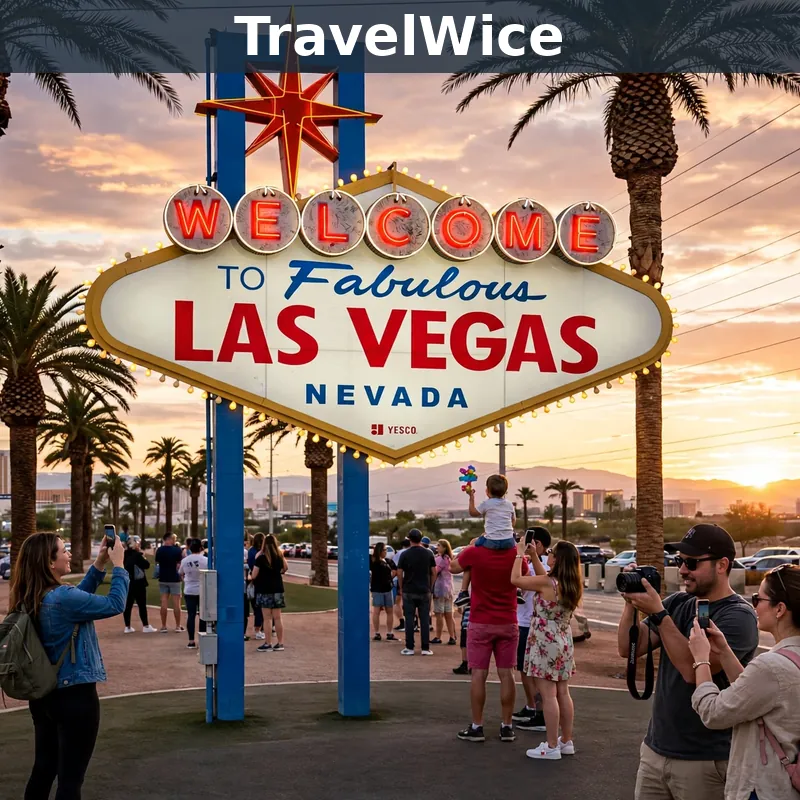
Chart: Las Vegas Strip Average Highs by Month
Strip weather decides how much walking you can do, so this chart shows the average daytime highs across the year, from NOAA’s 1991–2020 normals for Las Vegas.
| Month | Avg high (°F) | Avg low (°F) |
|---|---|---|
| January | 59 | 41 |
| March | 71 | 51 |
| May | 89 | 66 |
| July | 105 | 82 |
| September | 94 | 70 |
| November | 67 | 47 |
What the chart shows is a street with a long, hot summer and a mild, short winter. Highs sit in the high 50s from December through February, climb through the 70s in March and April, reach the 80s and 90s in May and June, and peak at 105°F in July. September is still hot at 94°F, October cools to 82°F, and November drops to 67°F. The practical takeaway: the best Strip walking weather is October to April, the cheapest rooms are in January and February, and in summer you should plan pool mornings, indoor afternoons and Strip walks after sunset. Whatever month you go, carry water and check the National Weather Service forecasts — a desert day can swing 25 degrees between noon and midnight, and the night air after sunset is colder than it looks from inside a casino.
References
- Visit Las Vegas official tourism site — Las Vegas hotels, shows, events and trip planning.
- Las Vegas official tourism site — Strip guides, attractions and deals.
- Cirque du Soleil official site — Cirque shows, tickets and schedules.
- Sphere Las Vegas official site — Sphere shows, films and residencies.
- National Weather Service forecasts — Las Vegas forecasts and desert weather alerts.
Las Vegas Strip Quiz
Test what you picked up from this guide before you go.
1. How long is the Las Vegas Strip?
- A) 4.2 miles
- B) 2 miles
- C) 10 miles
2. When do the Bellagio fountain shows run every 15 minutes?
- A) From 8 p.m. to midnight, every night
- B) Only on weekends
- C) From noon to 3 p.m.
3. How much is a Monorail single ride at the station in 2026?
- A) $6.25
- B) $2.50
- C) $10
4. Which of these is a FREE tram on the Strip?
- A) Bellagio to Crystals to Park MGM
- B) The airport express train
- C) A taxi from the airport
5. How much is a typical Strip resort fee per night in 2026, before tax?
- A) $45–$55
- B) $10–$15
- C) $100–$120
Quiz Answers
- A) 4.2 miles — The Strip is 4.2 miles long, and walking it end to end takes 1.5 to 2 hours if you never stop.
- A) From 8 p.m. to midnight, every night — From 8 p.m. the fountains run every 15 minutes until midnight every night; the half-hourly shows start at 3 p.m. on weekdays and noon on weekends.
- A) $6.25 — A Monorail single ride is $6.25 at the station or $5.75 as an online eTicket, and a 24-hour pass is $15.50 at the station or $13.95 online.
- A) Bellagio to Crystals to Park MGM — Three trams run free on the Strip: Mandalay Bay–Luxor–Excalibur, Bellagio–Crystals–Park MGM, and Mirage–Treasure Island.
- A) $45–$55 — Strip resort fees run $45–$55 a night before tax, and the fee is taxed at 13.38%, so a $55 fee becomes $62.36.