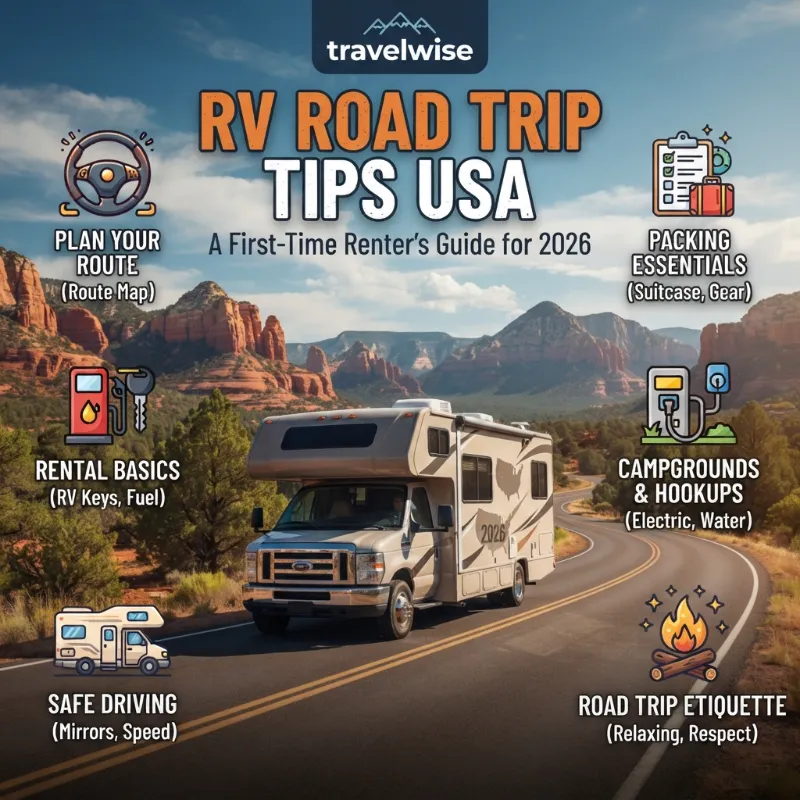

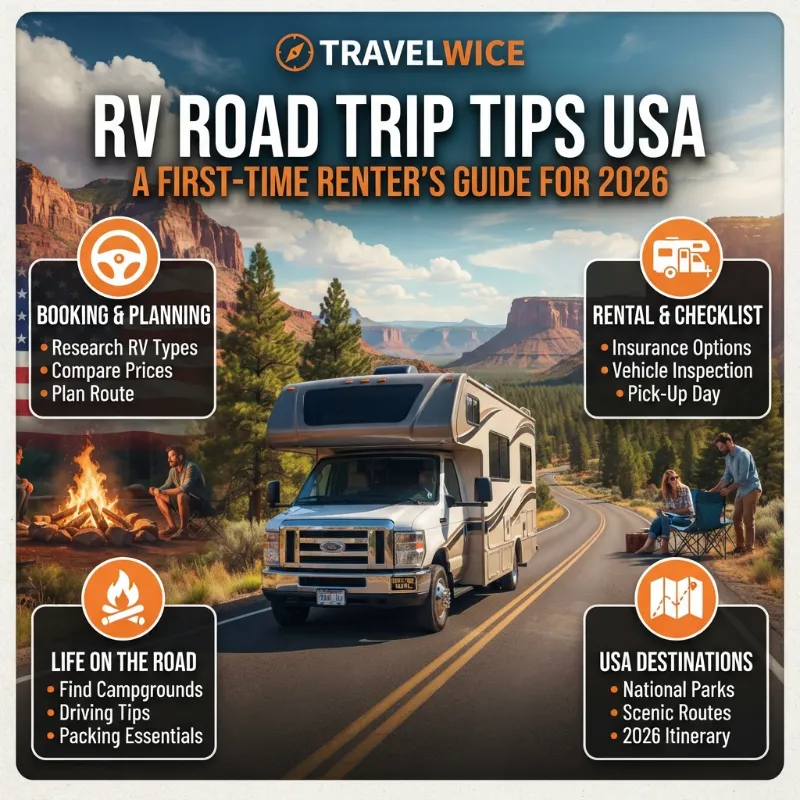
Your first RV trip feels exciting until you stand in a rental lot and see a 25-foot home on wheels. Most new renters worry about the same things: cost, driving size, and where to park at night. These RV road trip tips USA travelers need will remove that stress before you book anything.
Roughly 11 million US households own an RV, according to the RV Industry Association, so you are joining a big and friendly crowd. Renting is the easiest way to test the lifestyle without a loan. This guide covers how to rent an RV in the USA, what a real budget looks like, and how to book campgrounds without losing sleep.
TL;DR
- Book a Class C motorhome or a small travel trailer for your first trip. Both are simple to drive and easy to learn.
- Plan for about $350 to $500 per night all-in for a family of four, once fuel, food, fees and campsites are counted.
- Reserve popular campgrounds 4 to 6 months ahead. Summer weekends sell out fast.
- Do a full walkthrough at pickup. Record a video of every dent, tank gauge and appliance.
- Keep drives under 250 miles a day. Short days make the trip fun instead of tiring.
Key Takeaways at a Glance
| Topic | What to Know | Typical 2026 Range |
|---|---|---|
| Rental cost per night | Depends on RV class and season | $75 to $500 |
| Best RV for beginners | Class C or small travel trailer | $150 to $250 per night |
| Campsite fee | State park vs private resort | $20 to $110 per night |
| Mileage allowance | Often 100 miles per night free | $0.30 to $0.50 per extra mile |
| Security deposit | Held on your card | $500 to $2,500 |
| Booking window | For summer and national parks | 4 to 6 months ahead |
| Ideal daily drive | Keeps stress low | 150 to 250 miles |
What Is an RV Road Trip and Why Is It Worth Trying?
An RV road trip means you drive and sleep in the same vehicle. You carry a bed, a small kitchen and a bathroom wherever you go. That setup gives you freedom that a hotel stay cannot match.
You also save time on small things. You skip daily check-ins, restaurant waits and repacking bags. Families like it because kids nap, snack and stretch in their own space.
Still, an RV is not always cheaper than a hotel trip. We will compare the numbers later so you can decide with real figures.
RV Rental 101: How to Rent an RV in the USA
If you want to know how to rent an RV USA style, the process has five simple steps. Follow them in order and you will avoid most first-timer mistakes.
- Pick your dates and route first. Rental prices swing by season, so a flexible date can save hundreds.
- Choose the RV type. Match the size to your group, not your wish list.
- Compare at least three sources. Check a national company, a peer-to-peer marketplace, and a local dealer rental.
- Read the fine print. Look at mileage, generator hours, cleaning fees and cancellation rules.
- Confirm insurance before you pay. Many personal auto policies do not cover a rental RV.
Where to Rent: Companies vs Peer-to-Peer
National brands like Cruise America and Camping World rent fleets with standard terms. You get roadside help and clear paperwork. Prices are usually higher, but the process is predictable.
Road Trip Planning Apps 2026 Compared: The Tools Worth Your Phone Space
Peer-to-peer sites like Outdoorsy and RVshare list RVs owned by private people. You can find cheaper rates and more variety, such as vintage trailers or campervans. Quality depends on the owner, so read reviews and look at recent photos.
For deeper rental tactics that also apply to cars, our car rental tips guide explains deposits, insurance and hidden fees in plain words.
Age, License and Deposit Rules
Most companies want drivers to be at least 25. Some allow 21 with an extra fee. A regular US driver’s license is enough for nearly all rental RVs. Visitors from the UK and Europe should carry a home license plus an International Driving Permit, since some owners ask for one.
Expect a security deposit between $500 and $2,500. The company holds it on a credit card and releases it after inspection. Use a card with enough room, because a debit card often fails this step.
EV Road Trip Charging Tips for USA Drivers: The 2026 Plan That Works
Choose the Right RV: Types Compared
Picking the wrong size is the most common first-timer error. Bigger looks better online, but it drives worse and parks harder. This table shows the real trade-offs.
| RV Type | Sleeps | Length | Avg. Rental per Night | Best For | Beginner Friendly? |
|---|---|---|---|---|---|
| Class B (camper van) | 2 to 3 | 18 to 22 ft | $175 to $350 | Couples, city stops | Very easy |
| Class C | 4 to 6 | 22 to 32 ft | $150 to $300 | Families, national parks | Easy |
| Class A | 4 to 8 | 30 to 40 ft | $250 to $500 | Long trips, comfort | Harder |
| Travel trailer | 2 to 6 | 16 to 30 ft | $75 to $175 | Slow trips, one base camp | Medium (needs a tow vehicle) |
My advice is simple. If you have never driven anything long, choose a Class C under 28 feet. It handles like a large van and still gives you a bathroom and a real bed. Skip Class A on your first trip unless you have towed or driven a box truck before.
A Class C also fits most national park roads. Longer rigs struggle on tight switchbacks and small parking lots. Always check each park’s vehicle length limits before you commit to a route.
Road Trip Safety Tips USA: Every Driver Should Know These 15 Checks
Your RV Road Trip Beginner Guide to Pickup Day
Pickup day sets the tone for the whole trip. Give yourself at least 90 minutes and bring a second adult if you can. This RV road trip beginner guide checklist keeps you safe.
- Walk around the outside and film every scratch, dent and tire.
- Check the roof height and write it down. Tape the number near the driver’s seat.
- Test the generator, air conditioning, furnace and water heater.
- Learn how to connect the electric cord, water hose and sewer hose.
- Ask the staff to show you the three tanks: fresh, gray and black.
- Practice backing up in the lot before you leave.
- Take a photo of the fuel gauge and odometer.
Ask for a printed copy of the emergency number. Cell signal drops in rural areas, so save the contact in two places.
The Three Tanks in Simple Words
Fresh water is what you drink and wash with. Gray water is the used water from sinks and showers. Black water is toilet waste. You empty the gray and black tanks at a dump station, usually for $10 to $25, or free at some campgrounds.
Best Road Trip Snacks Ideas for Long Drives
A good rule is to dump when either tank hits about two thirds full. Always empty black first, then gray, so the gray water rinses the hose.
How Much Does an RV Road Trip Really Cost?
Now to the part most blogs avoid. This RV road trip budget breakdown uses a sample 7-night family trip with a 25-foot Class C. It assumes 1,200 miles, 9 miles per gallon and fuel near $3.40 per gallon.
| Cost Item | Calculation | Total |
|---|---|---|
| RV rental | $190 x 7 nights | $1,330 |
| Extra mileage | 500 miles over limit x $0.35 | $175 |
| Generator use | Extra hours | $40 |
| Fuel | About 133 gallons x $3.40 | $453 |
| Campgrounds | 7 nights x $55 average | $385 |
| Groceries and cooking | Family of four | $420 |
| Insurance and cleaning | Protection plan plus prep fee | $360 |
| Dump, propane, passes | Small fees | $190 |
| Total | $3,353 |
That works out to about $479 per night, or around $120 per person per night. Here is how the money splits, so you see where it goes.
RV Trip Spending Split (7-night sample, about $3,350)

Rental fee       ████████████████████  40%
Fuel             ███████               14%
Groceries        ██████                12%
Campgrounds      ██████                12%
Insurance/prep   █████                 11%
Mileage + gen    ███                    6%
Small fees       ██                     5%
RV Trip vs Hotel Trip: Honest Comparison
| Cost Area | RV Trip (7 nights) | Hotel + Car Rental (7 nights) |
|---|---|---|
| Lodging | $1,330 + $385 campsites | $1,540 (2 rooms at $220) |
| Transport | $453 fuel + $215 extras | $450 car + $200 fuel |
| Food | $420 (mostly cooked) | $900 (mostly restaurants) |
| Fees and insurance | $550 | $60 |
| Approx. total | $3,353 | $3,150 |
The totals are close. An RV wins on convenience and food savings, but not always on price. It wins clearly for larger groups and long stays in one region. Couples on a short trip often spend less in hotels.
Road Trip Packing Checklist Essentials You Need in 2026
Five Ways to Cut Your RV Budget
- Travel in the shoulder season, such as late April or late September. Rates often drop 20 to 30 percent.
- Rent from a peer-to-peer owner near, but not inside, a big tourist city.
- Cook breakfast and dinner in the RV. This alone saves $300 or more on a week-long trip.
- Pick unlimited mileage if your route is long. Compare this to the pay-per-mile rate before booking.
- Use state parks and national forest campgrounds instead of resorts. They often cost half as much.
If you plan to hit the road for many days, pair this plan with our road trip packing checklist so you do not buy duplicates on the way.
RV Campground Booking Tips USA Travelers Often Miss
Rental price is only half the story. Campground booking decides whether your trip feels smooth or chaotic. These RV campground booking tips USA wide will help you land a spot.
Know Your Campground Options
| Type | Typical Price per Night | Hookups | Best For |
|---|---|---|---|
| National park campground | $15 to $45 | Usually none | Scenery, early access |
| State park | $20 to $50 | Often electric | Value and space |
| National forest | $10 to $30 | Rarely | Quiet and nature |
| Private resort (KOA, Thousand Trails) | $50 to $110 | Full | Families, amenities |
| BLM or dispersed land | Free | None | Experienced campers |
Federal sites use Recreation.gov. Many campgrounds there open their booking window about six months before the stay, and the best sites go within minutes. Set a calendar alert for the exact release time.
Booking Rules That Save You Stress
- Reserve the first and last nights before anything else.
- Choose full hookup sites at least every third night. You will dump tanks and recharge easily.
- Always check the maximum RV length listed on the site page.
- Read the check-in cutoff. Many parks give away late arrivals.
- Keep one flexible night open for weather or tiredness.
Walk-up spots exist, but they gamble with your evening. During summer weekends, arriving after 3 p.m. at a popular park often means a full sign.
Hookups in Plain English
A 30-amp site powers one air conditioner and basic appliances. A 50-amp site handles two air conditioners and heavier use. Water and sewer hookups let you skip the dump station. When you book, match the amperage to your rental, and ask the owner if you are unsure.
Road Trip Tips With Kids That Actually Work
Plan the Route: Smart RV Road Trip Tips USA Drivers Swear By
A good route has fewer miles than you think. New renters often plan 400-mile days, then arrive tired and miss sunset. Keep it between 150 and 250 miles, with one real activity each day.
Three Beginner-Friendly Routes
| Route | Length | Best Months | Why It Works |
|---|---|---|---|
| Pacific Coast Highway (Monterey to Santa Barbara) | About 300 miles | Apr to Jun, Sep to Oct | Short hops, many RV parks |
| Utah’s Mighty 5 loop | About 1,000 miles | Apr to May, Sep to Oct | Huge views, wide roads |
| Blue Ridge Parkway (Virginia and North Carolina) | About 469 miles | May to Oct | Slow and green, but check tunnel heights |
For more route inspiration, Neighbor’s guide to RV road trip routes lists scenic loops across the country. If you prefer a seasonal plan, Cinders Travels has a summer RV road trip guide with packing and timing ideas. Our broader road trip travel tips for the USA pillar also helps you shape the overall journey.
Watch Height, Weight and Tunnels
Know your RV’s height before every low bridge or parking garage. Most Class C motorhomes stand 10 to 11.5 feet tall. In Zion National Park, vehicles taller than 11 feet 4 inches need a paid escort permit to use the Zion-Mount Carmel Tunnel, according to the National Park Service. Plan for it before you arrive, because fees and timing apply.
Use a truck-friendly GPS or an RV app. A standard phone map may send you down a road that does not fit. Our guide to road trip playlists and apps lists tools that handle routing and campground search well.
Driving an RV for the First Time
An RV feels wide, slow and a little floaty at first. Most people adapt within an hour. These habits make it faster.
- Leave extra space. Your stopping distance is longer than a car’s.
- Take wide turns. The rear swings out more than you expect.
- Use both mirrors and a spotter when you back up.
- Drive at 55 to 62 mph. It saves fuel and reduces sway.
- Stop every two hours to stretch and check tires.
Strong crosswinds matter, too. On open plains or desert highways, gusts can push a tall RV. If the wind feels scary, wait an hour. Nothing on your schedule is worth a swerve.
Before you go, read our road trip safety tips for the USA for advice on sleep, night driving and emergency kits.
Best Car Rental Tips USA: Save Money on Your Road Trip
First-Time Renter Case Study: A Realistic Week
Take a family of four from Denver who rented a 25-foot Class C for seven nights in late September. Their plan looked busy at first: Rocky Mountain National Park, Dinosaur National Monument, then Moab. The route added up to about 1,100 miles.
They trimmed it after one planning call. They cut Dinosaur, kept two nights in each stop, and booked two private resorts with full hookups. The final trip cost about $3,200, near the sample budget above. The biggest lesson was simple. Shorter drives gave them more time to cook, hike and rest, and the kids stayed happy.
(Replace this section with your own trip details, dates and photos to strengthen first-hand credibility.)
Boondocking for Beginners: Should You Try It?
Boondocking means camping on public land without hookups. It is free on most Bureau of Land Management (BLM) land, usually with a stay limit of 14 days. The views can be stunning, but you manage your own water, power and waste.
My view is clear. Skip it on your first trip unless you have a solar kit or a very short stay. Your rental’s battery and tanks run out faster than expected. Try one free night at the end of your trip, after you understand your systems.
Safety and Common First-Timer Mistakes
Most trouble comes from rushing. Avoid these classic errors.
- Forgetting to lower the TV antenna or close roof vents before driving.
- Leaving the step or awning out when you start the engine.
- Skipping a tire pressure check in hot weather.
- Dumping the gray tank before the black tank.
- Arriving at a campground after dark without a plan.
- Packing too much weight, which hurts fuel use and handling.
Keep a basic kit with a flashlight, gloves, a tire gauge and a hose. Store water for at least one full day. If you rent an RV with propane, know where the shutoff valve sits.
Group Travel Discount Tips for USA Vacations
Can You Take an EV Tow Vehicle?
Some renters tow a travel trailer behind a pickup or SUV. Electric trucks can tow, but range drops sharply with a trailer. Plan charging stops carefully and check each site’s plug type. Our EV road trip charging tips explain how to plan stops that fit long vehicles.
Best Car Rental Tips USA: Save Money on Your Road Trip
Packing Smart for an RV
Space is limited, so pack by zone. Soft bags beat hard suitcases because they squeeze into small closets. Bring one set of kitchen basics, even if the rental includes them. Ask the owner what comes inside, because items vary.
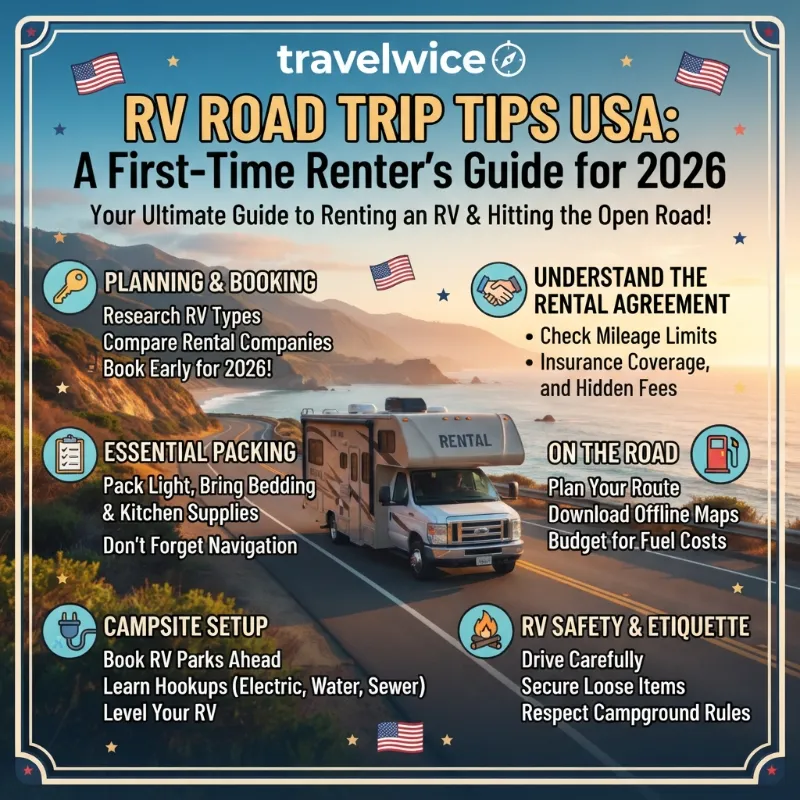
Add a small level, wheel chocks and a water pressure regulator if the rental does not include them. These items cost under $50 and prevent common headaches. For a complete list, see our road trip packing checklist.
When Is the Best Time for an RV Road Trip?
| Season | Pros | Cons | Rental Price Trend |
|---|---|---|---|
| Spring (Apr to May) | Fewer crowds, mild weather | Some high roads still closed | Medium |
| Summer (Jun to Aug) | Everything open | Crowds, heat, sold-out sites | Highest |
| Fall (Sep to Oct) | Great weather, fall colors | Shorter days | Medium to low |
| Winter (Nov to Mar) | Cheap rates, southern warmth | Freeze risk, closed parks | Lowest |
Fall is my favorite. Weather stays comfortable, and many families are back at school, so campgrounds relax. If you want warmth in winter, aim for Arizona, Florida or south Texas.
Frequently Asked Questions
What are the best RV road trip tips USA first-timers should follow?
Rent a Class C or small trailer, keep drives under 250 miles a day, and book campgrounds early. Walk through the RV at pickup and record everything. Use a budget of $350 to $500 per night for a family of four.
How do I rent an RV in the USA for the first time?
Choose your dates, pick a size, and compare national companies with peer-to-peer sites. Confirm age rules, insurance and deposits before you pay. Then book your campsites right away.
How much does it cost to rent an RV per day?
Most rentals cost $75 to $500 per night, depending on type and season. Add fuel, mileage, campsite fees and insurance for the true total.
Do I need a special license to drive an RV?
Most rental RVs need only a regular driver’s license. Very large motorhomes may need special rules in some states, so check the local law and the rental terms.
Is it better to rent a motorhome or a travel trailer?
A motorhome is simpler because you drive one vehicle. A trailer costs less but needs a capable tow vehicle and some towing skill. Beginners usually prefer a Class C.
How far in advance should I book RV campgrounds?
Book 4 to 6 months ahead for national parks and summer weekends. Shoulder seasons often allow booking a few weeks ahead.
Can I sleep in an RV anywhere?
No. You need a campground, permitted public land or a business that allows overnight parking. Always read local rules to avoid fines.
Test Yourself: 5-Question RV Quiz
1. What is the best RV type for most first-time renters?
A) Class A bus-style motorhome
B) Class C motorhome under 28 feet
C) A 40-foot fifth-wheel trailer
2. How far ahead should you reserve popular national park campgrounds?
A) The same day
B) Two weeks
C) About 4 to 6 months
3. Which tank do you empty first at a dump station?
A) Gray tank
B) Black tank
C) Fresh water tank
4. What daily driving distance keeps a first RV trip relaxing?
A) 150 to 250 miles
B) 400 to 500 miles
C) Over 600 miles
5. What should you do at pickup before leaving the lot?
A) Skip the inspection to save time
B) Film the RV and test all systems
C) Only check the fuel gauge
Answers: 1) B. 2) C. 3) B. 4) A. 5) B.
Quick Facts Chart
| Fact | Number |
|---|---|
| US households that own an RV | About 11 million |
| Typical Class C rental per night | $150 to $300 |
| Average first-trip budget (family of 4, 7 nights) | About $3,350 |
| Free mileage included (common) | 100 miles per night |
| Ideal daily drive | 150 to 250 miles |
| BLM free camping stay limit | 14 days |
| Booking window for popular sites | 4 to 6 months |
Conclusion
A first RV trip does not have to be hard. Pick a simple Class C, plan short driving days, and book your campsites early. Walk through the RV with care at pickup, and build a budget that includes every extra fee. With these RV road trip tips USA travelers can follow, you will spend less time worrying and more time enjoying the road.
Start small, learn your rig, and add bigger adventures next season. Explore more ideas on TravelWice and start your plan today.
References
- RV Industry Association. RV ownership and industry data. https://www.rvia.org/
- Recreation.gov. Federal campground reservations and booking windows. https://www.recreation.gov/
- National Park Service. Zion National Park traffic and tunnel information. https://www.nps.gov/zion/
- Bureau of Land Management. Dispersed camping information. https://www.blm.gov/
- Neighbor. Best RV road trip routes. https://www.neighbor.com/storage-blog/best-rv-road-trip-routes/
- Cinders Travels. Summer RV road trip guide. https://www.cinderstravels.com/summer-rv-road-trip/guide
- Fox RV Travel. RV travel resources. https://foxrvtravel.com/
- TravelWice. Road trip travel tips USA. https://travelwice.com/road-trip-travel-tips-usa/