
If you’re mapping out places to visit in Montana, USA, you’re looking at one of the least crowded, most dramatic landscapes in the country. Big Sky Country stretches across mountains, prairies, and river valleys, so the “best” stops depend heavily on whether you want glaciers, geysers, or a quiet main street with good coffee. This guide breaks down the destinations that consistently deliver, along with practical details for planning your trip.
Quick Answer
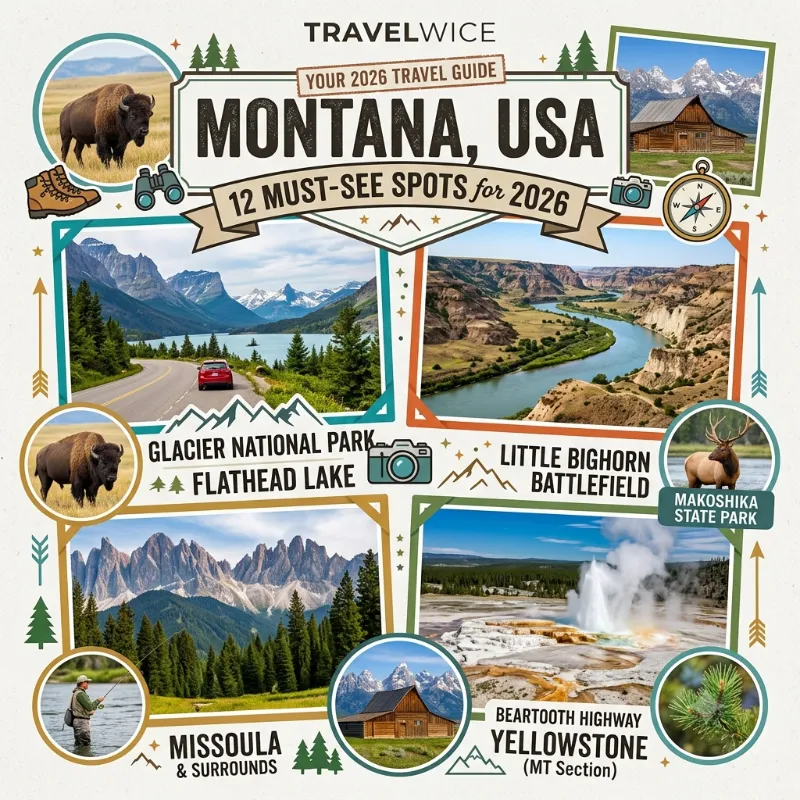
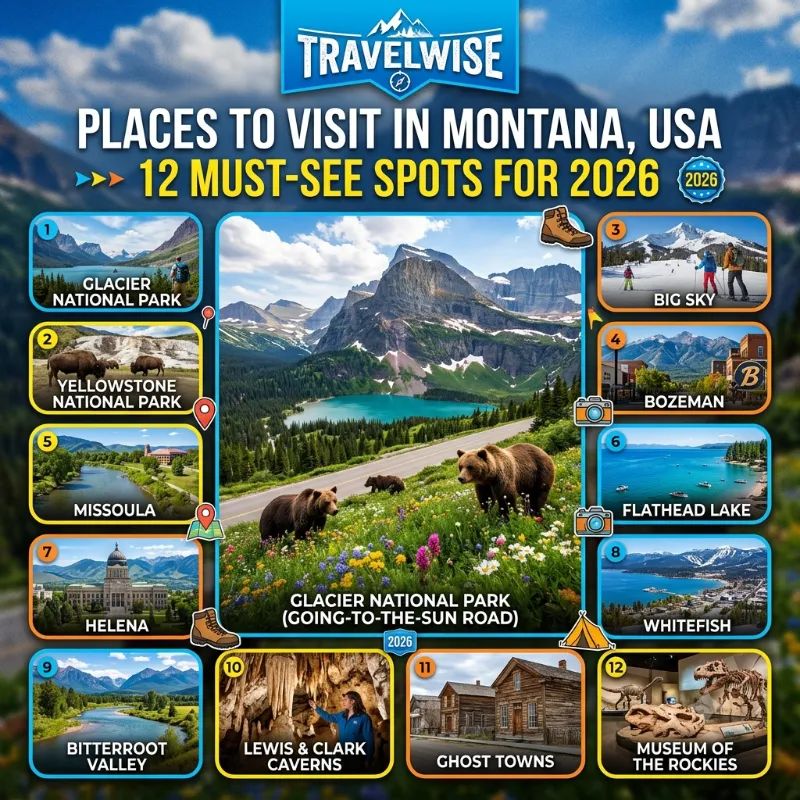
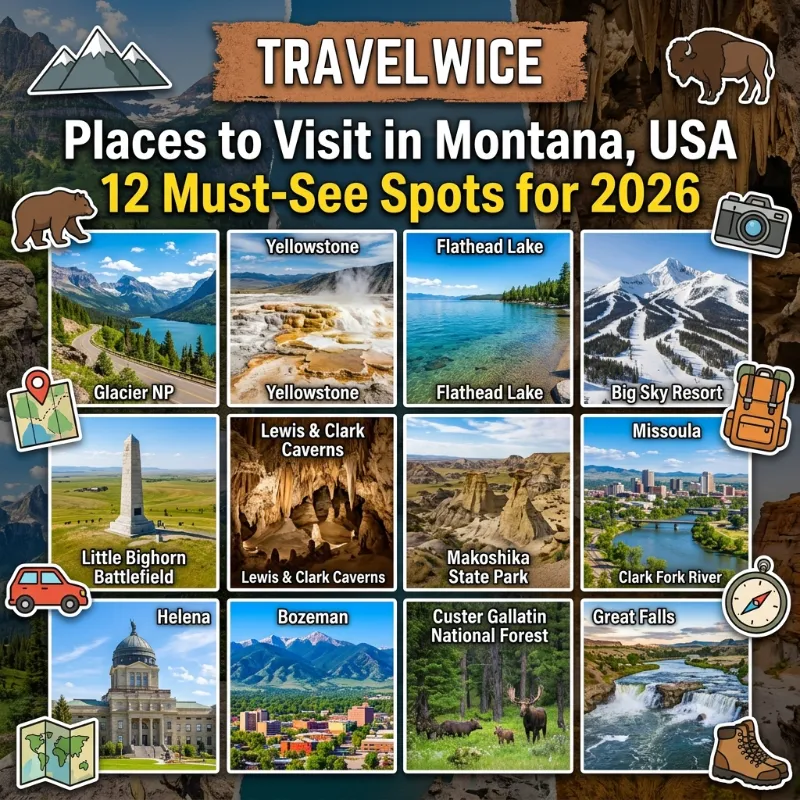
The top places to visit in Montana, USA, include Glacier National Park, Yellowstone National Park’s northern entrances, Bozeman, Missoula, Big Sky, Flathead Lake, Helena, the Beartooth Highway, and Little Bighorn Battlefield. Glacier and Yellowstone anchor most itineraries, while towns like Bozeman and Missoula offer food, museums, and easy access to outdoor adventure. Plan around summer for full park access or September for smaller crowds.
TL;DR
- Glacier National Park no longer requires a vehicle reservation in 2026, though Logan Pass now has a three-hour parking limit and a $1 ticketed shuttle.
- Yellowstone is reachable from Montana’s northern entrances near Gardiner and West Yellowstone; a vehicle pass costs $35 for seven days.
- Bozeman and Missoula work well as home bases, mixing walkable downtowns with quick access to trails and rivers.
- Smaller stops like Big Sky, Flathead Lake, and the Beartooth Highway reward travelers who have extra days to spare.
- Fall (mid-September to early October) offers golden larch trees and thinner crowds, while summer gives full access to high-elevation roads and trails.
Glacier National Park
Glacier National Park sits in northwestern Montana and remains the state’s signature destination. Jagged peaks, more than 700 lakes, and the Going-to-the-Sun Road combine to create scenery that few places in the Lower 48 can match.
Travel planning changed for 2026. The National Park Service eliminated vehicle reservations across the entire park, including Going-to-the-Sun Road, Many Glacier, Two Medicine, and the North Fork. However, a new three-hour parking limit now applies at Logan Pass, and a $1 ticketed express shuttle replaced the previous free hop-on system. If you’re planning a longer hike from Logan Pass, such as the Highline Trail, booking a shuttle ticket in advance is worth the effort, since overnight parking there is restricted to permitted backcountry users. Glacierhikesandbikesrecreation
International visitors should also budget for a new surcharge. Non-U.S. residents aged 16 and older must pay a $100 per-person fee in addition to the standard park entrance fee, though the $250 Non-Resident Annual Pass covers the entrance fee and waives that surcharge for the whole vehicle. Glacier Guides
Beyond the famous road, Many Glacier and Two Medicine offer quieter trailheads with excellent wildlife viewing, including mountain goats, bighorn sheep, and the occasional grizzly bear at a safe distance.
Yellowstone National Park’s Montana Gateways
Most of Yellowstone sits in Wyoming, but three of its five entrances open through Montana towns: Gardiner, West Yellowstone, and Cooke City. As a result, Montana functions as the practical base camp for a huge share of Yellowstone visitors.
Gardiner sits at the park’s North Entrance, the only one open to vehicles year-round, making it a smart choice for winter trips focused on wildlife watching in the Lamar Valley. West Yellowstone, meanwhile, offers more lodging and dining options and puts you close to Old Faithful and the park’s geyser basins.
Entrance fees for 2026 stand at $35 for a private vehicle, $30 for motorcycles or snowmobiles, and $20 per person for those arriving on foot or by bicycle. Travelers planning multiple park visits within the year should compare that against the $80 America the Beautiful annual pass, which covers admission to all public lands that charge an entrance fee. As with Glacier, a new $100 nonresident surcharge applies to non-U.S. visitors aged 16 and older starting in 2026, unless they hold an annual or interagency pass. nps + 2
United States: Domestic travelers pay the standard fees listed above with no additional surcharge.
United Kingdom: UK visitors and other international travelers should factor in the $100 per-person surcharge unless purchasing an annual pass, since it applies regardless of nationality.
Bozeman
Bozeman has grown into Montana’s most energetic small city, and it earns that reputation through a genuine mix of culture and access to wilderness. The Museum of the Rockies houses one of the country’s strongest dinosaur fossil collections, including specimens tied to paleontologist Jack Horner’s research on Montana’s dinosaur-rich Hell Creek Formation.
Downtown Bozeman’s Main Street is walkable, with breweries, bookstores, and restaurants clustered within a few blocks. From here, the Bridger Mountains and Hyalite Canyon are both under 30 minutes away, offering hiking and waterfall trails without a long drive. Bozeman also sits about 90 minutes from Yellowstone’s West Entrance, so many travelers use it as a first or last stop on a national park trip.
Big Sky
Just south of Bozeman, Big Sky blends a major ski resort with year-round outdoor recreation. In winter, it’s home to one of the largest connected ski areas in the country. Once the snow melts, the same terrain shifts to mountain biking, hiking, and access to the Gallatin River, a favorite for fly fishing.
Big Sky also sits close to Yellowstone’s western boundary, making it a convenient stop for travelers combining a ski or golf trip with a park visit. Because lodging here tends to run pricier than in Bozeman, many visitors treat it as a day trip rather than a full base.
Missoula
Missoula anchors western Montana and has a distinctly different feel from the ranch towns further east. Five rivers converge near the city, and the University of Montana keeps the downtown lively with bookshops, breweries, and a strong local food scene.
The Clark Fork River runs directly through town, with a riverfront trail system that makes it easy to walk or bike between downtown and the university district. Missoula also serves as a practical stop for travelers heading toward Glacier from the south, since it sits roughly two hours from the park’s West Entrance.
Helena
Montana’s capital city often gets overlooked in favor of the national parks, but it holds genuine historic value. The Montana State Capitol features a distinctive copper dome and murals depicting the state’s history, while the nearby Cathedral of St. Helena showcases detailed stained glass in a neo-Gothic design.
Helena also sits close to the Gates of the Mountains, a limestone canyon along the Missouri River that Meriwether Lewis named during the Lewis and Clark expedition. Boat tours through the canyon run seasonally and offer a quieter alternative to the state’s busier parks.
Flathead Lake
Flathead Lake is the largest natural freshwater lake west of the Mississippi River, and its clear blue water surprises many first-time visitors. Cherry orchards line the eastern shore, particularly around Bigfork and Polson, and roadside stands sell fresh fruit through late summer.
Bigfork itself has developed a reputation for its arts scene, with galleries and a summer playhouse drawing visitors beyond the lake. Because Flathead Lake sits directly on the route between Missoula and Glacier National Park, it works well as a scenic stopover rather than a separate destination.
| Region | Best For | Typical Base Town |
|---|---|---|
| Glacier National Park | Alpine scenery, hiking | West Glacier, Whitefish |
| Yellowstone (Montana entrances) | Wildlife, geysers | Gardiner, West Yellowstone |
| Bozeman/Big Sky | Culture plus outdoor access | Bozeman |
| Flathead Lake | Relaxed lake towns | Bigfork, Polson |
| Southeast Montana | History, open plains | Billings, Hardin |
Beartooth Highway
Often called one of the most scenic drives in the country, the Beartooth Highway connects Red Lodge, Montana, to Yellowstone’s Northeast Entrance. The road climbs above 10,000 feet, weaving past alpine lakes and switchbacks with views that stretch across multiple mountain ranges.
Because of heavy snowfall at elevation, the highway typically opens in late May and closes by mid-October, so travelers should check current road conditions before planning a trip outside peak summer months. The drive itself takes about two hours without stops, though most visitors add significant time for photos and short trail walks near the summit.
Little Bighorn Battlefield National Monument
Southeast Montana holds a different kind of historic weight. Little Bighorn Battlefield preserves the site of the 1876 battle between the U.S. 7th Cavalry, led by Lieutenant Colonel George Armstrong Custer, and combined forces of the Lakota, Northern Cheyenne, and Arapaho nations.
Interpretive markers throughout the site explain the battle from multiple perspectives, and the visitor center includes exhibits on the Indigenous nations involved. For travelers interested in Montana’s Native American history more broadly, the state is home to twelve federally recognized tribes, and several reservations offer cultural centers and guided experiences worth building into a longer itinerary.
Billings
As Montana’s largest city, Billings often serves as a transportation hub rather than a headline destination, but it has genuine attractions of its own. The Rimrocks, a line of sandstone cliffs overlooking the city, offer hiking trails and sunset viewpoints just minutes from downtown.
Billings also sits within reach of several day trips, including Pompeys Pillar National Monument, where William Clark carved his name into sandstone during the Lewis and Clark expedition. For travelers driving between Yellowstone and eastern attractions like Little Bighorn, Billings makes a practical overnight stop.
Planning Your Trip: When to Go
Timing shapes what you’ll actually be able to see. Summer, roughly June through August, opens full access to high-elevation roads and trails, though it also brings the largest crowds and occasional wildfire smoke. September offers a genuine sweet spot, with thinner crowds and fall color starting to appear in higher elevations.
Winter travel works well if your focus is skiing or wildlife watching near Yellowstone’s North Entrance, since that road stays open year-round. Spring, by contrast, is often the least rewarding season, since many high-country roads and trails remain snow-covered well into May or June.
FAQs
Do I need a reservation to visit Glacier National Park in 2026?
No. The National Park Service eliminated vehicle reservations park-wide for 2026, covering Going-to-the-Sun Road, Many Glacier, Two Medicine, and the North Fork. You’ll still need a standard entrance pass, and Logan Pass now enforces a three-hour parking limit. Glacierhikesandbikes
How many days do I need to see Montana’s top places to visit?
A week gives you enough time to combine Glacier, Yellowstone’s Montana entrances, and one or two towns like Bozeman or Missoula without rushing. Ten days to two weeks allows for a fuller loop that includes eastern Montana sites like Little Bighorn.
Is Yellowstone in Montana or Wyoming?
Most of Yellowstone National Park sits within Wyoming, but three of its five entrances, Gardiner, West Yellowstone, and Cooke City, open through Montana, making the state a common home base.
What’s the best month to visit Montana for fewer crowds?
September consistently draws the fewest visitors while still offering good weather and full road access, along with early fall color at higher elevations.
Final Thoughts
Montana rewards travelers willing to slow down. Whether you’re drawn to Glacier’s alpine trails, Yellowstone’s geothermal basins, or a quiet afternoon in Helena or Bigfork, the state’s biggest asset is space: fewer people, longer views, and towns that haven’t been reshaped entirely around tourism. Start with one or two anchor destinations, build your route around them, and leave room for the smaller stops in between.