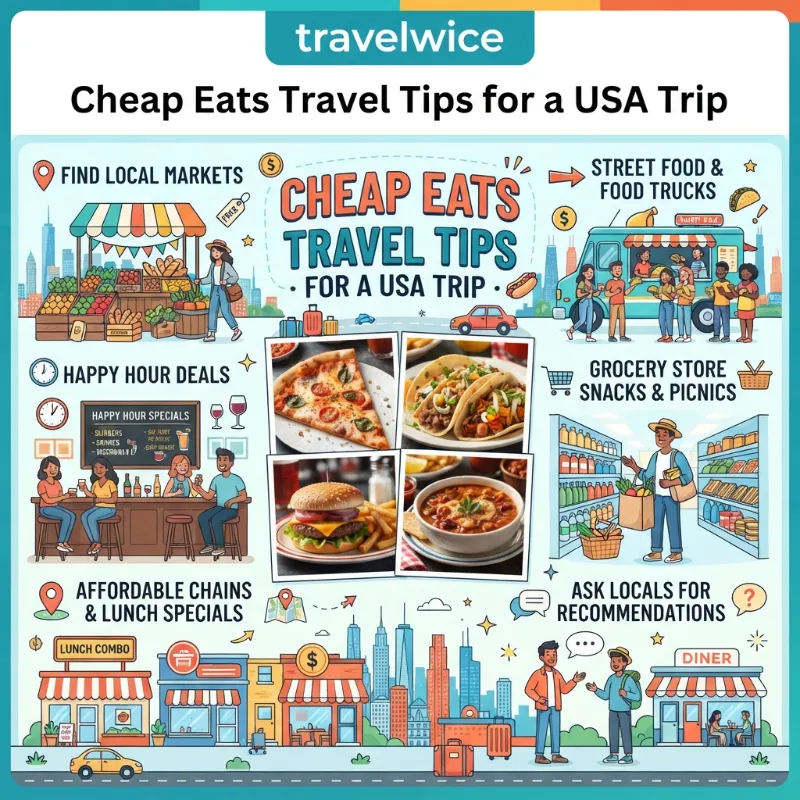

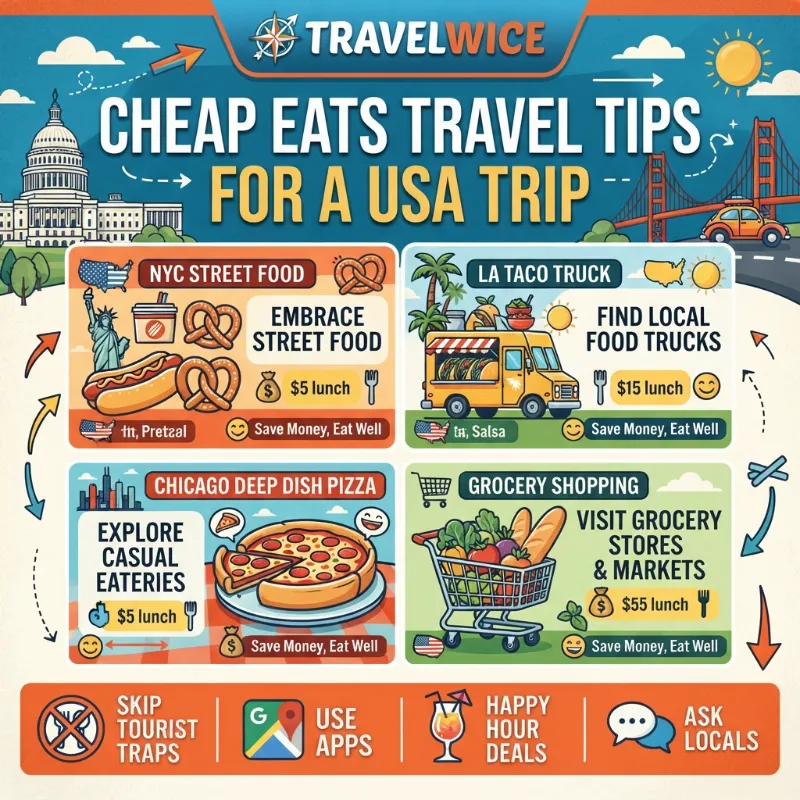
Food is the budget line that surprises most visitors to America. Flights and hotels get all the planning, yet a few careless meals a day can quietly add $100 or more. These cheap eats travel tips USA readers ask about most will keep that from happening. You will learn where to eat, what to order, and how to set a daily food budget that still feels like a real holiday.
TL;DR
- Plan on $35 to $50 a day for food if you mix cheap restaurants with grocery stops. Plan on $60 to $90 if you want mostly sit-down meals.
- Eat your biggest meal at lunch. Lunch menus often cost 20% to 40% less than dinner for the same dish.
- Use food trucks, delis, bakeries, and ethnic neighborhoods for the best value in big cities.
Key Takeaways
| Question | Short Answer |
|---|---|
| Daily food budget (shoestring) | $30 to $45 per person |
| Daily food budget (smart mix) | $50 to $70 per person |
| Daily food budget (comfortable) | $80 to $120 per person |
| Best cheap meal type | Lunch specials, food trucks, delis |
| Biggest hidden cost | Tip (18% to 20%) and sales tax (0% to 10%) |
| Best money saver | A cooler bag plus one grocery stop every two days |
| Most expensive cities for food | New York, San Francisco, Honolulu, Boston |
Why Food Costs Feel Higher in the USA
Menu prices in America do not include tax or tip. A $14 burrito bowl often ends up near $17 after both. In restaurants with table service, most people tip 18% to 20%. Sales tax also changes from state to state. Oregon has none, while parts of Louisiana and Tennessee charge close to 10% once local tax is added.
Portions are large, which works in your favor. One entree often feeds a hungry traveler twice. Many locals ask for a box and eat the rest as dinner. You can do the same.
Grocery prices also rose in recent years. Grocery prices have climbed about 29% since February 2020, and the USDA expected another 2.3% rise in 2026. That means a grocery stop saves less than it did in 2019, but it still beats eating out three times a day. nasdaq
How Much Should You Budget? USA Food Budget Per Day
Your USA food budget per day depends on your style, your city, and how often you cook. Use this table as a starting point. Numbers are per person in USD and reflect typical 2026 ranges.
| Travel Style | Breakfast | Lunch | Dinner | Snacks/Drinks | Daily Total |
|---|---|---|---|---|---|
| Shoestring | $3 to $6 | $8 to $11 | $12 to $18 | $3 to $6 | $30 to $45 |
| Smart mix | $6 to $10 | $11 to $15 | $18 to $28 | $5 to $10 | $50 to $70 |
| Comfortable | $10 to $15 | $15 to $22 | $30 to $50 | $10 to $18 | $80 to $120 |
Add 20% to 30% in New York City, San Francisco, Boston, and Hawaii. Subtract 10% to 20% in the Midwest and much of the South.
Here is a quick bar view of average daily food costs by region. These are planning estimates for a smart mix traveler, not official statistics.
| Region | Estimated Daily Food Cost | Bar |
|---|---|---|
| Midwest | $50 | ██████████ |
| South | $52 | ██████████▌ |
| Southwest | $55 | ███████████ |
| Pacific Northwest | $62 | ████████████▌ |
| Northeast (outside NYC) | $65 | █████████████ |
| California coast | $72 | ██████████████▌ |
| New York City | $80 | ████████████████ |
| Hawaii | $85 | █████████████████ |
If you want the full picture beyond food, our budget travel tips for USA guide covers lodging, transport, and sightseeing in one plan.
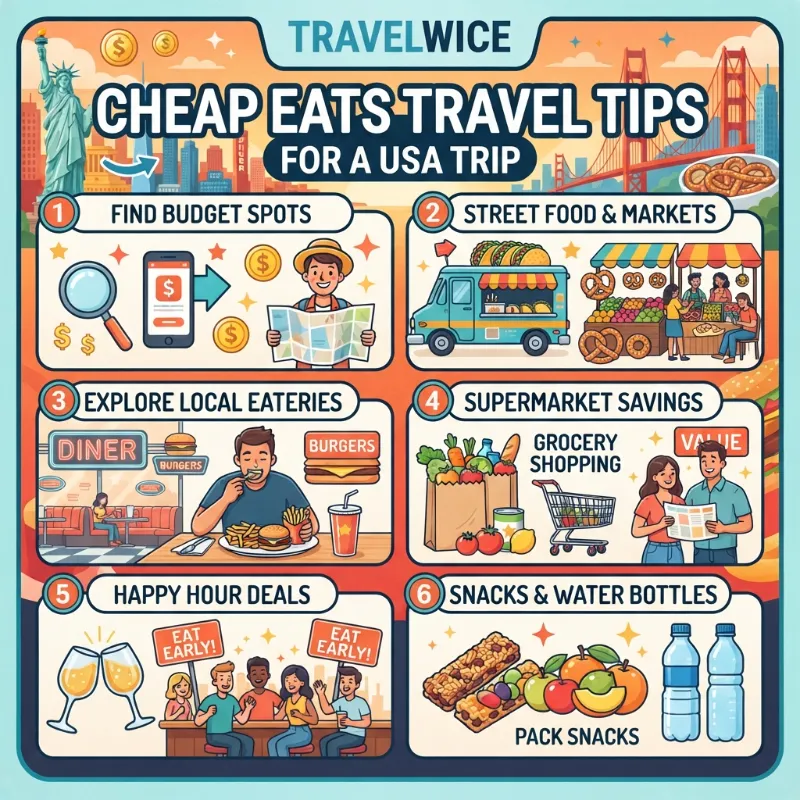
The Golden Rules to Eat Cheap Traveling USA
Learning how to eat cheap traveling USA style comes down to a handful of habits. They are simple, and they work in almost every city.
- Make lunch your main meal. Many restaurants run lunch specials from 11 a.m. to 3 p.m. A $22 dinner plate may cost $13 at noon.
- Skip the drinks. A soda or cocktail can add $4 to $14. Ask for tap water, which is free and safe almost everywhere in the country.
- Check for free refills and free sides. Diners, Mexican restaurants, and many pizza chains offer them.
- Share and box. Order one fewer dish than your group would normally. Take leftovers with you.
- Eat where locals eat. If the place is near a major landmark with a laminated menu, walk two blocks away and compare prices.
- Use a grocery stop twice a week. Buy fruit, bread, peanut butter, yogurt, and snacks.
Rules like these sound basic, but they add up. A couple who follows them for seven days can save $150 to $250 compared with eating every meal at a tourist area restaurant.
Cheap Local Food USA Cities: What to Order and What It Costs
Every city has a signature cheap meal. Order that one first. It is usually the best value and the most local.
| City | Cheap Local Pick | Typical Price | Where to Look |
|---|---|---|---|
| New York City | Slice of pizza or halal cart platter | $1.50 to $4 slice, $8 to $10 platter | Street carts, corner pizzerias |
| Philadelphia | Cheesesteak or roast pork sandwich | $12 to $16 | South Philly sandwich shops |
| Chicago | Italian beef or hot dog | $9 to $14 | Neighborhood beef stands |
| Austin / Texas | Breakfast tacos | $3 to $5 each | Trailers and taquerias |
| Los Angeles | Taco truck plate | $2 to $4 per taco | Trucks in Boyle Heights and Koreatown |
| New Orleans | Po’boy | $12 to $17 | Corner delis and lunch counters |
| Seattle | Banh mi or teriyaki | $8 to $13 | International District |
| Nashville | Meat and three plate | $11 to $16 | Family diners |
| Honolulu | Plate lunch | $12 to $16 | Local lunch counters |
| Miami | Cuban sandwich and cafecito | $9 to $13 | Little Havana walk-up windows |
Prices move up every year, so treat them as ranges. The pattern stays the same. The cheapest meals usually come from immigrant-owned counters, trucks, and family diners. Fancy dining rooms cost more, even if the food is similar.
Want more affordable things to do between meals? See our list of free things to do in the USA to fill the gaps in your day without spending anything.
Breakfast: Start Cheap and Stay Full
Hotel breakfast is sometimes free, and that is a real money saver. Before you book, read our budget hotel booking tips for USA to see which hotel types include breakfast for free. A free waffle and fruit bar can save a couple $20 to $30 a day.
If your room has no breakfast, try these options.
- Bakery or bagel shop: A bagel with cream cheese costs about $4 to $7.
- Diner special: Two eggs, toast, and potatoes often cost $8 to $12.
- Grocery store: A banana, yogurt, and granola cost about $3.
- Coffee shop: A plain drip coffee costs $2 to $3.50. Fancy lattes cost $5 to $7.
Bring a reusable cup when you can. Some cafes give a small discount.
Lunch: Where the Best Deals Hide
Lunch is where you can eat the best food for the lowest price. Many sit-down places cut prices for midday, and delis often sell huge sandwiches for $10 to $14.
Some strong options include the following.
- Lunch specials at Indian, Thai, and Mexican restaurants. They often include rice, soup, or a drink.
- Food halls and food courts. These let each person pick a different meal, so nobody overspends.
- Delis and sandwich counters. Buy one sandwich and split it if you are not very hungry.
- Food trucks. A full meal can cost $8 to $12, and the cook is often the owner.
- Costco food court. A hot dog and soda combo has sat at $1.50 for years, but you need a membership or a guest.
A useful tip from experience in tourist-heavy areas: walk at least three blocks from the main attraction before you pick a restaurant. Prices often drop 15% to 25%, and the crowd shifts from visitors to locals.
Dinner: Keep It Smart, Not Sad
Dinner does not have to be the most expensive meal. Many travelers overspend here because they feel tired and pick the easiest place. Plan your dinner spot in the morning, and you will avoid that.
Try happy hour. Many bars and casual restaurants run happy hour from 3 p.m. to 6 p.m. Appetizers often drop to $5 to $9, and that can easily replace dinner. Burgers, wings, and nachos are common deals.
Try early bird menus. Some diners and family restaurants offer fixed price meals before 6 p.m. These can run $12 to $18.
Try ethnic neighborhoods. Chinatowns, Little Italys, Koreatowns, and Mexican districts offer large plates at fair prices. Dim sum for two often costs $25 to $35.
Try “BYO” spots. In some cities, restaurants allow you to bring your own wine or beer. You skip the big markup on drinks.
Fast Food and Chains: Good for Budget, Not for Every Meal
Chains get a bad reputation, but they are useful for travelers in a hurry. West Coast travelers often like In-N-Out for a burger combo around $9 to $12. Texas has Whataburger. The Southeast has Waffle House and Publix subs. These brands also help on highways when small towns have few options.
Use apps. Many chains give app-only coupons and free items. Download the app before you walk in, and you can often save $2 to $5 per order. Just remember to delete the apps after your trip.
Group Travel Discount Tips for USA Vacations
That said, try not to eat at chains more than once a day. The best memories of a trip usually come from local counters, not drive-throughs.
Grocery Stops: The Quiet Hero of Budget Food
A grocery store can cut your food cost by half if you use it well. Grocery shopping works even without a kitchen, because you can buy ready-to-eat items.
The USDA tracks what a healthy diet costs at home. In May 2026, a woman aged 19 to 50 on the moderate-cost plan was estimated at about $77.50 per week for food at home. You will not shop at that level on a holiday, but it shows how much cheaper groceries can be than restaurants. You can read the full plans on the USDA Food and Nutrition Service site. azureedge
Good travel grocery items include:
- Bread, tortillas, and peanut butter
- Bananas, apples, and baby carrots
- Yogurt, cheese sticks, and hummus
- Deli meat and pre-washed salad bags
- Nuts, granola bars, and trail mix
Aldi, Trader Joe’s, Walmart, and Kroger brands usually cost less than corner stores. Whole Foods has a hot bar, but it is priced by weight and can hit $12 to $16 fast. Fill the container with lighter foods, and it stays cheaper.
A small soft cooler bag costs about $15 and pays for itself in two days. Keep it in the car or the hotel room.
Road Trip Food Strategy
Driving gives you the most control over food costs. You can stock a cooler, skip overpriced airport food, and stop at local places on your route. If you plan to drive, read our budget road trip tips for USA guide for gas and route savings too.
Here is a simple road trip food plan.
- Morning: Eat breakfast at the hotel or from the cooler.
- Midday: Stop at a local diner or roadside stand for the main meal.
- Afternoon: Snack from the cooler to avoid gas station prices.
- Evening: Choose an affordable dinner near your hotel, or grab a grocery deli meal.
Gas station food is the most expensive option per calorie. A bag of chips costs $3 to $4 there, and a bottle of water can hit $3. Fill your water bottle at hotels and rest stops instead.
National Parks: Plan Food Before You Go
National park food is convenient, but it is usually pricey and limited. Many lodges sell a burger and fries for $18 to $26. Bring your own picnic lunch and save $30 to $50 for a couple each day.
Shop before you arrive, because the last town before a park often has higher prices. Also check whether your park has a picnic area, since most do. Our guide on national park pass savings tips shows how to cut entry fees too, so you can spend more on good meals in the gateway towns.
Cheap Flights, Cheap Food: Pair Your Savings
Food is only one part of a low-cost trip. If your airfare costs too much, every dollar saved on meals is wasted. Learn how to find cheap flights first, then build your food plan around the money left over.
Student Travel Discounts in USA for 2026: Real Ways to Cut Your Trip Cost
Airport food is one of the priciest places to eat. A sandwich often costs $14 to $18. Bring an empty water bottle through security and fill it after. You can also carry solid snacks like sandwiches, fruit, and granola bars in your bag in most cases.
Sample Daily Food Plans
These examples show how a real day could look. The prices are typical for a mid-size US city in 2026.
| Meal | Shoestring Day | Smart Mix Day |
|---|---|---|
| Breakfast | Hotel breakfast (free) plus banana ($0.50) | Bagel and coffee ($8) |
| Lunch | Taco truck plate ($9) | Deli sandwich and chips ($13) |
| Snack | Grocery yogurt and nuts ($4) | Iced tea and cookie ($6) |
| Dinner | Happy hour appetizers ($12) | Family diner plate with tip ($22) |
| Total | about $25.50 | about $49 |
Notice that the shoestring plan still includes hot meals and a real dinner. You do not have to live on instant noodles to save.
Apps, Coupons, and Loyalty Tricks That Work
A few digital tools can save serious money if you use them wisely.
- Too Good To Go: Buy surprise bags of unsold food from cafes and bakeries for $4 to $6. Availability depends on your city.
- Google Maps filters: Sort by “$” and read recent photos and reviews.
- Restaurant apps: Chains like Chipotle, Panera, and Chick-fil-A give points and free items.
- Groupon and local deal sites: These help in bigger cities, but read the fine print.
- Credit card dining credits: Some travel cards refund small amounts at restaurants, so check your benefits.
Use these tools carefully. Do not buy a deal just because it feels cheap. If you would not eat there at full price, skip it.
Mistakes That Drain Your Food Budget
Even experienced travelers fall into these traps. Avoid them and you will keep more cash for the fun parts.
- Eating at the main tourist square. Prices jump and quality drops.
- Ordering bottled drinks at every meal. Tap water is free.
- Forgetting tip and tax. Always add 25% to a menu price in your head.
- Skipping breakfast, then overspending at dinner. Hunger makes you pay more.
- Using delivery apps. Fees and markups can add 30% to a meal.
- Buying snacks at hotel or gas station shops. They cost much more than grocery stores.
Off Season Travel Savings Tips for the USA: A Practical 2026 Guide
What Other Budget Travel Writers Say
Other budget travel writers share many of the same ideas. The team at Beyond My Door shares a practical list of tips for eating cheap while traveling, and it supports the lunch-first, grocery-stop approach in this guide. Hangry Backpacker has a helpful article on cheap food while traveling that focuses on street food and local markets. If you like food-focused travel stories, the blog at Eat Travel Hustle offers real-world ideas from people who travel often.
The shared pattern is clear. Eat local, plan ahead, and avoid paying for convenience.
Real-World Case Study: A Week in Three Cities
Here is a sample week, built from typical 2026 prices, for one traveler who follows the rules above. It is a planning model, so replace it with your own receipts when you publish.
| Stop | Days | Food Strategy | Estimated Food Total |
|---|---|---|---|
| Chicago | 3 | Hotel breakfast, beef stand lunch, one sit-down dinner | $165 |
| Nashville | 2 | Meat and three lunch, grocery dinner once | $95 |
| New Orleans | 2 | Po’boy lunch, happy hour dinner | $105 |
| Total | 7 | $365 |
That comes to about $52 a day. A traveler who ate every meal in a full-service restaurant in the same cities could easily spend $90 to $110 a day, so the saving is roughly $270 to $400 over the week.
Expert View: Where Value Really Lives
After comparing menus across many US cities, one pattern stands out. The best value almost never sits at the top of a review list. It sits in family-run places with short menus and a line at lunch. A short menu means fresh food and low waste, and that keeps prices fair.
My honest opinion is that the “$10 meal” is fading in big cities, but the “$15 great meal” is still very real. Set your expectations around $12 to $16 for a filling lunch, and you will rarely be disappointed.
FAQ
How much should I budget for food per day in the USA?
Most travelers spend $50 to $70 a day with a smart mix of cheap restaurants and grocery stops. Shoestring travelers can manage $30 to $45, and comfortable travelers often spend $80 to $120.
What is the cheapest way to eat in the USA?
Buy groceries, eat lunch specials, and use food trucks and delis. Avoid tourist areas, airport food, and delivery apps.
Is tipping required at cheap restaurants?
Tipping is expected at table service restaurants, usually 18% to 20%. You do not need to tip at counters where you order at the register, though many people leave a small amount.
Which US cities are cheapest for food?
Smaller cities in the Midwest and South usually cost less, including Kansas City, Memphis, and Indianapolis. New York, San Francisco, and Honolulu cost the most.
Can I drink tap water in the USA?
Yes. Tap water is safe to drink in nearly all cities, and restaurants give it for free on request.
Are food trucks really cheaper than restaurants?
Often yes, because they have lower overhead. A food truck meal typically costs $8 to $14, while a similar restaurant plate costs $15 to $22.
Should I buy a cooler for a USA trip?
If you are driving, yes. A $15 to $25 cooler bag can save $20 to $40 a day.
Quiz: Test Your Cheap Eats Knowledge
1. When are menu prices usually lowest at sit-down restaurants?
a) Late night
b) Lunch
c) Weekend brunch
2. What should you add to a menu price to estimate your real bill?
a) About 5%
b) About 10%
c) About 25%
3. Which item is usually free in US restaurants?
a) Bottled water
b) Tap water
c) Sparkling water
4. Where is the best place to find a cheap, local meal in a big city?
a) Next to the main landmark
b) In an ethnic neighborhood or food truck area
c) In the airport
5. Which item saves the most money on a road trip?
a) A cooler with groceries
b) Gas station snacks
c) Delivery apps
Answers: 1) b, 2) c, 3) b, 4) b, 5) a
Conclusion
Eating well on a USA trip is very possible, even with higher prices. Start with a realistic daily budget, make lunch your main meal, and use grocery stops to fill the gaps. Then pick one local specialty in each city and look for the small family-run place that sells it. Follow these cheap eats travel tips USA habits, and you will keep more money for the experiences that matter. For the full money plan, return to our main budget travel tips for USA guide, or explore more ideas at TravelWice.
References
- USDA Food and Nutrition Service. Official USDA Food Plans: Cost of Food at Home, May 2026. https://www.fns.usda.gov/cnpp/usda-food-plans-cost-food-reports-monthly-reports
- U.S. Bureau of Labor Statistics. Consumer Price Index, Food. https://www.bls.gov/cpi/
- National Park Service. Plan Your Visit. https://www.nps.gov/
- Beyond My Door. Tips for Eating Cheap While Traveling. https://www.beyondmydoor.com/tips-eating-cheap-traveling/
- Hangry Backpacker. Cheap Food While Traveling. https://hangrybackpacker.com/cheap-food-travel/
- Eat Travel Hustle. https://eattravelhustle.com/
- Nasdaq / MoneyLion. How Much the Average American Should Aim to Spend on Groceries in 2026. https://www.nasdaq.com/articles/how-much-average-american-should-aim-spend-groceries-2026