
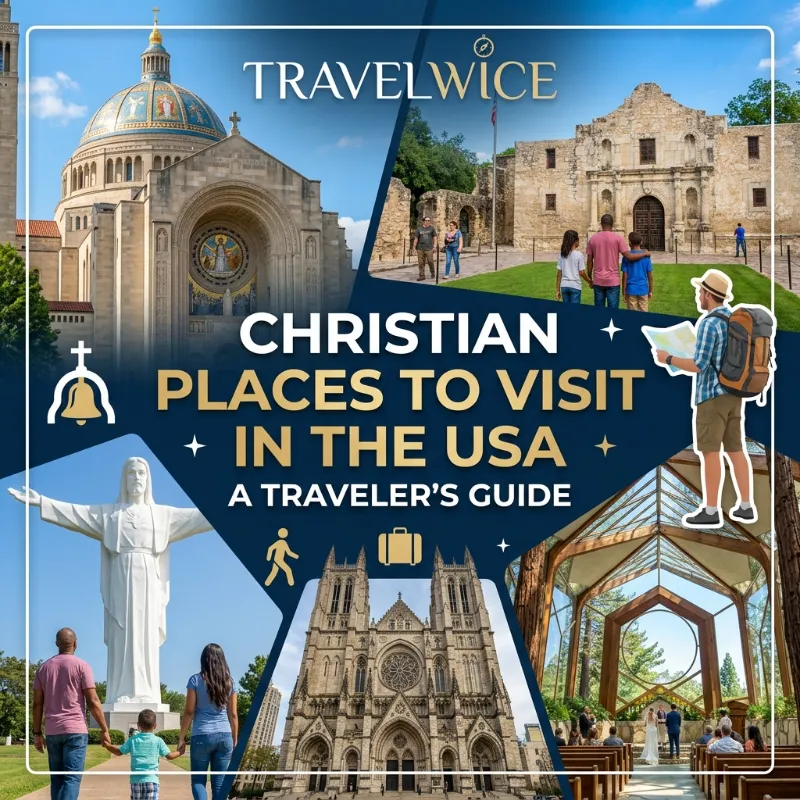

The United States holds hundreds of Christian places to visit, from colonial-era cathedrals to modern Bible museums and quiet monasteries. These sites span nearly every state and denomination, offering history, architecture, and moments of reflection. Whether you’re planning a pilgrimage or a family trip, understanding which sites fit your interests makes the difference between a rushed stop and a meaningful visit. This guide organizes the most significant options by type so you can plan with confidence.
Quick Answer
The best Christian places to visit in the USA include national shrines like the Basilica of the National Shrine of the Immaculate Conception in Washington, D.C., Bible-themed museums such as the Museum of the Bible, historic missions across California and the Southwest, and monasteries offering quiet retreats. Civil rights-era churches and Marian shrines round out a well-balanced itinerary for most travelers.
Key Takeaways
- Christian sites in the USA span Catholic, Protestant, and interdenominational traditions.
- Washington, D.C. and Orlando host some of the largest single attractions.
- Mission trails in California offer a self-guided, multi-stop pilgrimage option.
- Monasteries welcome overnight retreats, but require advance booking.
- Civil rights-era churches add historical depth beyond traditional pilgrimage sites.
- Dress codes and quiet hours apply at most working religious sites.
Christian Places to Visit in the USA at a Glance
| Category | Example Site | Best For | Typical Visit Length |
|---|---|---|---|
| National Shrine | Basilica of the National Shrine of the Immaculate Conception, Washington, D.C. | Architecture and Mass attendance | 1–2 hours |
| Bible Museum | Museum of the Bible, Washington, D.C. | History and education | 3–4 hours |
| Living History Park | Holy Land Experience, Orlando, FL | Families with children | Half day |
| Mission Trail | California Missions Trail | Multi-day pilgrimage | Several days |
| Monastery | Abbey of Gethsemani, Trappist, KY | Quiet retreat | 1 night or more |
| Marian Shrine | National Shrine of Our Lady of Good Help, WI | Church-approved apparition site | 1–2 hours |
| Civil Rights Landmark | 16th Street Baptist Church, Birmingham, AL | Historical reflection | 1 hour |
Historic Churches and Cathedrals Along the East Coast
The East Coast holds some of the country’s oldest Christian places to visit, many dating to colonial settlement. St. Augustine, Florida, home to the oldest shrine in the United States, marks where Spanish missionaries celebrated the first recorded Christian Mass in what is now the continental U.S. Farther north, cathedrals in Baltimore and Washington, D.C. showcase architecture spanning Gothic Revival to Byzantine influence.
Many of these buildings remain active parishes, so visiting hours can be limited around services. Checking a cathedral’s website before arriving avoids conflicts with weddings, funerals, or scheduled Mass times.
National Shrines and Basilicas Worth a Visit
National shrines rank among the largest and most visited Christian sites in the country. The Basilica of the National Shrine of the Immaculate Conception in Washington, D.C. is the largest Catholic church in North America, with more than 70 chapels reflecting different cultures and devotions. In Orlando, the Basilica of the National Shrine of Mary, Queen of the Universe serves both local worshippers and traveling pilgrims.
These shrines typically offer guided tours, gift shops, and daily Mass, making them accessible even for visitors unfamiliar with Catholic tradition. Admission is usually free, though donations support ongoing maintenance.
Bible-Themed Museums and Living History Parks
For travelers who want an educational angle, Bible-themed museums and parks recreate biblical settings and history. The Museum of the Bible in Washington, D.C. houses artifacts and interactive exhibits on the Bible’s history and impact. In Orlando, the Holy Land Experience recreates first-century Jerusalem, including a replica of the tomb associated with Jesus’s burial.
Kentucky’s Creation Museum and the nearby Ark Encounter draw families interested in a faith-based perspective on biblical history, often paired together on a single trip using combination tickets.
Catholic Missions and Pilgrimage Trails
The California Missions Trail links 21 Spanish missions founded by Franciscan friars, including St. Junipero Serra, stretching from San Diego to north of San Francisco. Each mission reflects a distinct chapter of the state’s Catholic history, and many remain active parishes today.
In New Mexico, Santa Fe’s Loretto Chapel and the Shrine of Our Lord of Esquipulas in Chimayó draw pilgrims seeking both architecture and reported spiritual healing traditions. Unlike a single-stop attraction, mission trails reward travelers willing to plan a multi-day route.
Monasteries and Abbeys for Quiet Retreat
Monasteries offer a slower, more contemplative alternative to major tourist sites. The Abbey of Gethsemani in Kentucky, home to Cistercian monks, welcomes visitors for prayer, meditation, and short retreats. Mount Angel Abbey in Oregon and St. Joseph’s Abbey in Massachusetts offer similar programs, often requiring advance reservations.
These are working religious communities, not tourist attractions, so visitors should expect quiet hours, modest dress expectations, and structured daily schedules built around prayer.
Marian Apparition Sites and Shrines
A small number of U.S. sites hold official Church recognition as Marian apparition locations. The National Shrine of Our Lady of Good Help in Champion, Wisconsin, marks the only Church-approved Marian apparition site in the United States, tied to a reported 1859 appearance to Adele Brise.
Other shrines, such as the one in Chimayó, New Mexico, draw pilgrims for reported healing traditions without formal Church-approved apparition status. Understanding this distinction helps travelers set accurate expectations before visiting.
Christian Sites Tied to Civil Rights History
Christian churches played a central role in the American civil rights movement, and several remain significant pilgrimage-style destinations today. The 16th Street Baptist Church in Birmingham, Alabama, site of the 1963 bombing that killed four young girls, now operates as both an active congregation and a historical landmark.
Visiting these sites connects faith history with broader American history, offering a perspective that purely devotional sites don’t provide. Many offer guided tours focused on their civil rights significance.
Planning a Christian Travel Itinerary in the U.S.
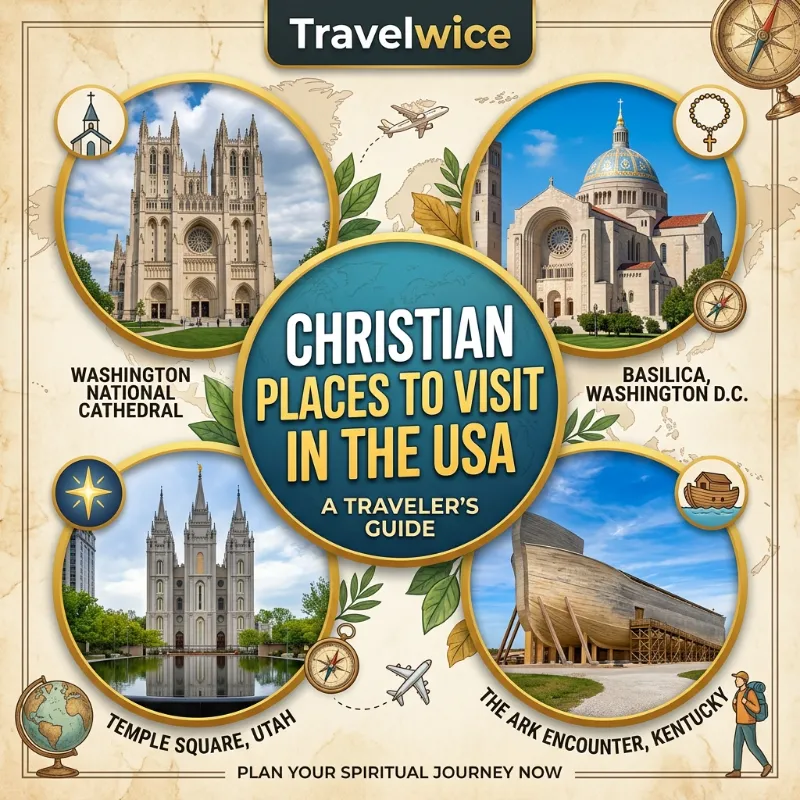
Building an itinerary starts with choosing a region and a focus, since sites are spread across the entire country. A Washington, D.C. trip can combine a national shrine, a Bible museum, and a cathedral in a single day. A Southwest itinerary might follow the California Missions Trail or New Mexico’s pilgrimage sites over several days.
Booking ahead matters most for monasteries and retreat centers, which limit overnight guests. Many shrines and museums, by contrast, welcome walk-in visitors year-round.
Etiquette and Practical Tips for Visiting Sacred Sites
Most Christian places to visit in the USA are active places of worship, not museums, and etiquette matters. Modest dress, quiet voices, and turned-off phones are expected in chapels, cathedrals, and monasteries. Photography is often restricted during services or in specific chapels, so checking posted signage avoids an awkward moment.
Arriving outside scheduled Mass or service times generally allows more freedom to explore. Donations, even small ones, help maintain many of these historic and often centuries-old buildings.
The Basilica of the National Shrine of the Immaculate Conception in Washington, D.C. draws some of the highest visitor numbers as the largest Catholic church in North America, alongside the Museum of the Bible nearby.
Yes, most sites welcome all visitors regardless of faith background. Respectful behavior and modest dress are expected, but formal religious affiliation is not required for entry or general touring.
Overnight retreats typically require advance reservations, sometimes weeks ahead. Day visits for prayer or a self-guided tour are usually possible without booking, though checking the monastery’s website first is recommended.
The full trail spans hundreds of miles and works best over several days. Travelers with limited time can focus on two or three nearby missions instead of attempting the entire route.
The 16th Street Baptist Church in Birmingham is the most widely recognized example, alongside several other Southern congregations that served as organizing centers during the civil rights movement.
Many national shrines and historic cathedrals offer free admission with suggested donations. Bible museums and living history parks, such as the Holy Land Experience, typically charge standard ticket prices.
Conclusion
Christian places to visit in the USA range from grand national shrines to quiet rural monasteries, each offering a different kind of experience. Focusing on one region or theme, whether historic cathedrals, mission trails, or civil rights landmarks, makes for a more meaningful trip than trying to cover everything at once. Checking visiting hours and dress expectations beforehand helps any traveler make the most of these historic and spiritually significant destinations.