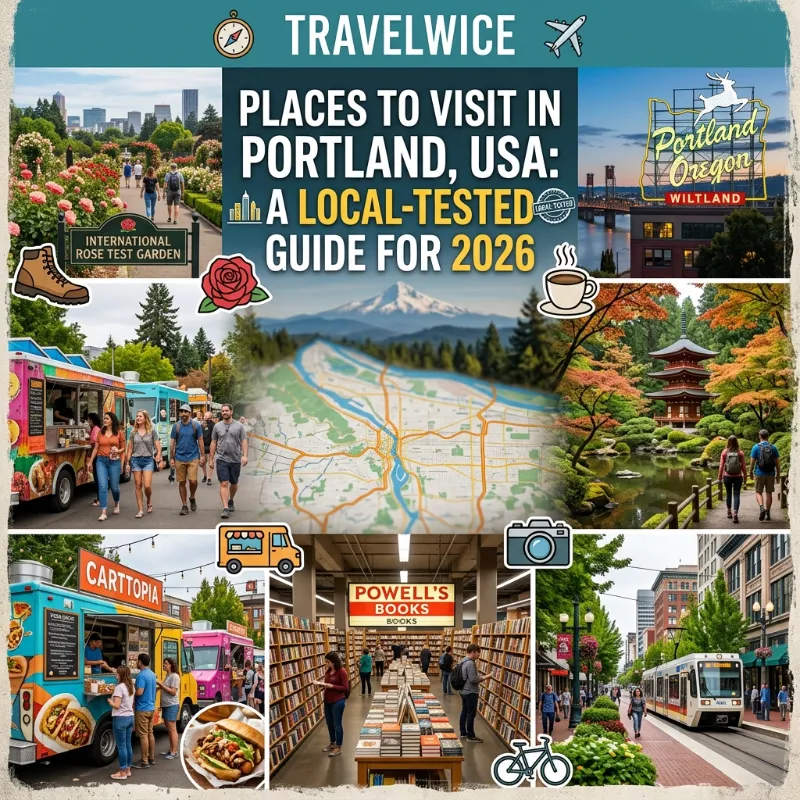

Rain jacket on, coffee in hand, and no plan beyond “walk until something interesting happens.” That is how most good days in Portland start. It is also the honest reason this city is so hard to sum up in a single top ten list. Anyone searching for the best places to visit in Portland USA usually finds the same recycled roundup of a rose garden and a bookstore. Both deserve their spot, but they are only the opening act. So this guide digs deeper, with current 2026 prices, real visiting hours, and the kind of practical detail that comes from actually standing in these places.
Portland rewards travelers who slow down. It is a city where a two hour hike through old growth forest sits fifteen minutes from a world class art museum. Meanwhile, a $5 doughnut can somehow become the most talked about souvenir of the trip. So before booking flights, here is the honest, first hand version of what to see. It covers what it costs in USD and how to move around without wasting a single day.
On a July afternoon in 2025, a wrong turn out of the Japanese Garden led straight into a quiet stretch of Forest Park. Almost no one else was on the trail, and that kind of accidental discovery is exactly what keeps pulling travelers back to this city. In fact, that mix of polish and unpredictability is what separates Portland from a checklist destination. The sections below break down where that mix shows up best, along with the numbers needed to plan around it.
Key Takeaways
| Category | Quick Answer |
|---|---|
| Best time to visit | June through September for dry weather; October for fall colors and lower hotel rates |
| Top free attraction | International Rose Test Garden, no admission fee |
| Must book ahead | Portland Japanese Garden, timed entry, from $22.50 |
| Best neighborhood for food | Pearl District and the SW 5th Avenue food cart pod |
| Best day trip | Columbia River Gorge and Multnomah Falls, roughly 40 minutes from downtown |
| Average daily budget | $90 to $180 per person, excluding hotel |
| Getting around | Walkable downtown, plus MAX light rail and the free Washington Park shuttle |
TL;DR
- Washington Park is the single best area for first timers. It packs the Japanese Garden, Rose Garden, and Pittock Mansion into one walkable hillside.
- Summer, from June to August, brings the driest weather and blooming roses. Still, book Japanese Garden tickets and hotels early since this is peak season.
- Skip pricey sit down lunches at least once. Instead, eat at a food cart pod, since it is cheaper, faster, and more Portland than almost anything else on this list.
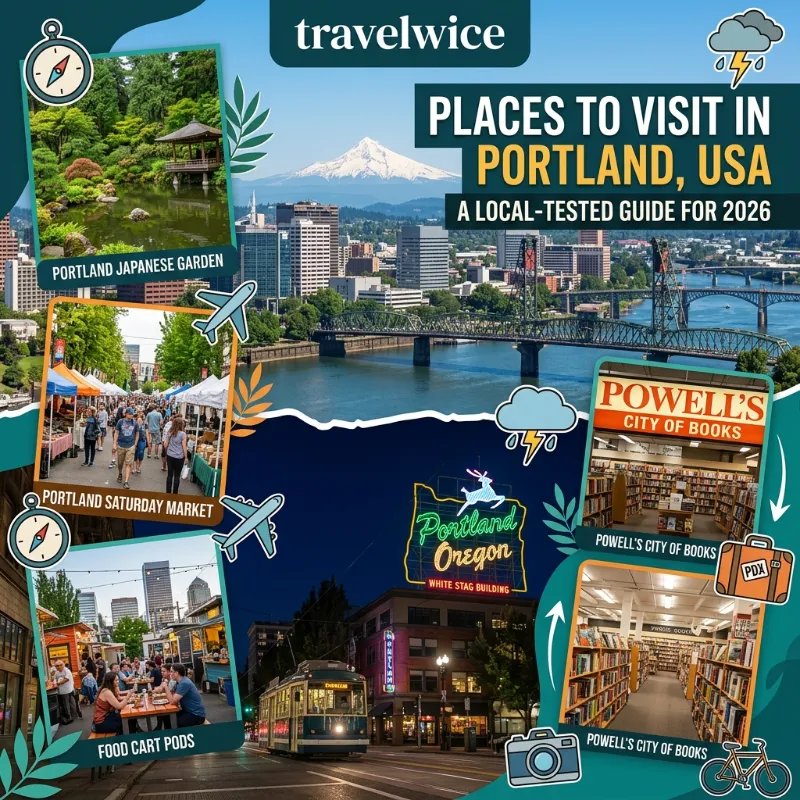
When Is the Best Time to Visit Portland, Oregon?
Weather genuinely shapes a Portland trip more than in most US cities. So it is worth planning around it rather than fighting it. The city sits in a Mediterranean type climate, which means winters stay mild but wet. Meanwhile, summers turn dry and comfortably warm. Average highs climb from around 68°F in May to roughly 80°F to 82°F in July and August. December is the wettest month, bringing close to 7 inches of rain.
Because of that pattern, most travelers plan their trip for June through September. During this window, daytime highs generally hover between 68°F and 82°F, and rain becomes rare. This is also when the International Rose Test Garden hits full bloom, which is honestly worth building an entire day around. Meanwhile, October is an underrated pick for anyone chasing fall color and thinner crowds. Hotel rates begin dropping from their summer peak, yet daytime temperatures still average around 64°F.
Monthly weather snapshot:
| Month | Avg. High | Rain Days | Good For |
|---|---|---|---|
| Mar to May | 55°F to 68°F | Frequent, pack layers | Cherry blossoms, fewer tourists |
| Jun to Aug | 73°F to 82°F | Rare, driest stretch | Rose Garden, hiking, festivals |
| Sep to Oct | 64°F to 73°F | Occasional | Fall colors, lower hotel rates |
| Nov to Feb | 41°F to 47°F | Frequent, wettest months | Budget travel, cozy indoor days |
If a rainy day sneaks into the itinerary anyway, that is not actually a bad thing here. After all, Portland has more indoor charm per square mile than most cities give it credit for. That runs from Powell’s City of Books to the Portland Art Museum. So a downpour rarely ruins the day.
Best Places to Visit in Portland USA for First-Time Visitors
Anyone with only two or three days should build the trip around three zones. These are Washington Park, downtown plus the Pearl District, and one neighborhood strip for food and people watching. Here is how to spend that time well, based on what actually earns a repeat visit.
Washington Park: The Green Heart of the City
Washington Park does more heavy lifting for Portland tourism than any other single spot, and for good reason. Within a short walk or shuttle ride, visitors reach the Portland Japanese Garden, the International Rose Test Garden, Pittock Mansion, and the trailhead into Forest Park. This last one happens to be one of the largest urban forest reserves in the country.
The Portland Japanese Garden is widely considered one of the most authentic gardens of its kind outside Japan itself. It spreads across 12 acres and eight distinct garden styles. As of 2026, adult admission runs $22.50, and tickets are sold in timed 30 minute entry slots. Note that the garden closes on Tuesdays. Most visitors spend one and a half to two hours wandering the paths, though a free guided tour, included with admission, easily stretches that to three.
Right downhill sits the International Rose Test Garden, which charges no entry fee at all. It blooms most dramatically from June through September. Meanwhile, Pittock Mansion, a 1914 French Renaissance style estate perched above the park, charges around $16 for adults. It offers arguably the best skyline view in the city, and Mount Hood is visible on a clear day. For a deeper dive into pairing gardens with hiking, our guide to seasonal city escapes has more ideas for building a full day here.
Washington Park quick reference:
- Portland Japanese Garden, adults $22.50, closed Tuesdays, open Wednesday to Monday 10am to 4:30pm
- International Rose Test Garden, free entry, best bloom June to September
- Pittock Mansion, around $16 for adults, best for sunset views
- Forest Park trailheads, free, over 80 miles of hiking and running trails
Powell’s City of Books and the Pearl District
No guide to Portland’s must-see spots is complete without Powell’s City of Books, and honestly, it earns every bit of the hype. It spans an entire city block in the Pearl District, holding more than one million new and used books across nine color coded rooms. It also stays open 365 days a year, from 10am to 9pm. Entry is free, and used paperbacks typically run $4 to $12, often shelved right beside the new copies at nearly half the price.
After browsing, the Pearl District itself is worth an unhurried afternoon. It mixes art galleries and boutique shops, plus a streetcar line that makes hopping between blocks effortless. Not surprisingly, TripAdvisor’s ranked list of Portland attractions consistently places this pocket of downtown near the top for walkability.
Best Museums and Indoor Attractions in Portland
Rainy days are common enough here that Portland has built genuinely excellent indoor options, not just backup plans. The Portland Art Museum, the oldest art museum on the West Coast, charges around $20 for adults. It rotates strong touring exhibitions alongside its permanent Northwest art collection. Since it sits right downtown, pairing it with a coffee stop and an hour of window shopping makes for an easy half day.
OMSI, the Oregon Museum of Science and Industry, works well for both families and curious adults. It offers hands on exhibits, a planetarium, and a submarine tour docked on the Willamette River. Admission runs about $14 for adults, and the museum sits directly on the east bank of the river. From there, several food cart pods are within easy walking distance for a quick lunch. For a quieter, free alternative, try the Oregon Historical Society museum downtown. It covers the state’s history in a compact space, and it rarely takes more than an hour to see properly.
- Portland Art Museum: around $20, best for a rainy afternoon downtown
- OMSI: around $14, best for families and hands on science
- Oregon Historical Society: free admission, best for a quick, low cost stop
Where to Stay in Portland: Best Areas by Traveler Type
Choosing the right base matters more in Portland than in many US cities. That is simply because each neighborhood has such a distinct personality. Downtown and the Pearl District suit first time visitors best, since both sit within walking distance of Powell’s, the MAX line, and the Washington Park shuttle. Expect to pay roughly $180 to $250 a night for a solid mid-range hotel here during peak summer months.
Travelers chasing a quieter, more residential feel often prefer the Hawthorne or Division neighborhoods. Both sit a short rideshare or bus ride from downtown, and boutique guesthouses there generally run $130 to $180 a night. Meanwhile, anyone prioritizing Washington Park itself might consider one of the smaller inns near NW 23rd. That works well for an early morning garden visit or sunset views from Pittock Mansion. These keep the park within easy walking distance year round.
Where to Eat: Portland’s Food Cart Culture and Craft Beer Scene
Portland’s food scene deserves its own paragraph, because skipping it means missing half of what makes this city distinct. The metro area has more than 70 breweries within city limits, giving it one of the highest brewery densities of any US city. Flagship spots like Deschutes Brewery in the Pearl District make for an easy first stop.
Food cart pods are the other essential experience. The SW 5th Avenue pod, known locally as Midtown Beer Garden, has operated since the early 1980s and remains the city’s oldest. Dozens of vendors there serve everything from Thai food to Korean fusion for $8 to $15 a plate. Meanwhile, Voodoo Doughnut in Old Town, open 24 hours, is a rite of passage for first timers, even if the lines can run long on weekends.
For a Saturday specifically, the Portland Saturday Market along the waterfront runs local craft vendors and food stalls. It pairs perfectly with a stroll under the Japanese cherry blossoms planted along the river, a gift from the Japanese Grain Importers Association back in 1990. Those 100 Akebono trees turn into a genuine pink canopy every spring. In short, it is one of those free, low key moments that ends up in more trip photos than the paid attractions.
Best Portland Neighborhoods to Explore on Foot
Beyond downtown, Portland’s neighborhoods carry their own personality. Picking two or three to wander through beats trying to see everything. Each one has a distinct feel, so match the neighborhood to the kind of afternoon being planned.
- Hawthorne District: Vintage shops, indie coffee houses, and a laid back, artsy crowd.
- Alberta Arts District: Colorful murals, galleries, and a strong monthly street fair called Last Thursday.
- Mississippi and Williams: Craft cocktail bars and a dense cluster of food carts in a compact, walkable strip.
- Division and Clinton: Newer restaurants and a quieter, more residential pace, good for a slower dinner.
- NW 23rd and 21st: Boutique shopping streets often compared to a smaller scale version of a European high street.
Locals and visiting families alike tend to describe these strips as clean, safe, and easy to navigate without a car. That is not something every US city can claim.
Family-Friendly Portland: Zoo, OMSI, and the Aerial Tram
Traveling with kids changes the priority list somewhat, and Portland actually handles that well. The Oregon Zoo, with admission between $16 and $20 depending on season, remains a consistent favorite. Meanwhile, OMSI charges around $14 for adults and keeps hands on exhibits running most of the day.
The Portland Aerial Tram connects the South Waterfront to Oregon Health and Science University on Marquam Hill. It is a quick and cheap way to get sweeping city views without a hike. Better still, it doubles as genuine public transit rather than a pure tourist gimmick. Combine that with an hour at the Oregon Maritime Museum on the waterfront, and a full family day comes together without much driving at all.
Best Day Trips from Portland
Portland’s location is genuinely one of its biggest advantages. After all, a short drive unlocks scenery that easily rivals anything in the city itself. These trips are worth carving out a half or full day for, especially for travelers spending four or more nights in the region.
- Columbia River Gorge and Multnomah Falls: About 40 minutes from downtown, this National Scenic Area holds dozens of hiking trails, plus Multnomah Falls itself, one of the most photographed waterfalls in the country. Parking fills up fast on weekends, so an early start genuinely matters here.
- Cannon Beach: Roughly 90 minutes away, famous for Haystack Rock and a wide, walkable stretch of Oregon coastline. Weekday visits before late October help avoid the heaviest traffic.
- Mount Hood: About 75 miles southeast, offering hiking in summer and skiing in winter on Oregon’s tallest peak.
- Ecola State Park: Reopened for day use in April 2026, with coastal viewpoints that pair well with a Cannon Beach afternoon. That said, the western Clatsop Loop Trail remains closed due to a landslide.
Each of these trips works comfortably without renting a car for the whole stay. Day tour operators run regular routes to the Gorge and the coast, typically priced between $80 and $150 per person including transportation. That said, self driving gives more flexibility for stopping at smaller viewpoints along Highway 30 or Highway 101. Rental cars in Portland generally start around $45 to $60 a day in the summer season. Either approach works, and the choice mostly comes down to whether the plan includes multiple stops or a single destination.
For anyone building a broader itinerary that stretches beyond Oregon, our February travel planning guide for the USA has useful seasonal context for combining Pacific Northwest stops with other regions.
Getting Around Portland: Practical Tips
Portland is one of the more walkable and transit friendly cities in the western United States. So renting a car is genuinely optional for most downtown based itineraries. The MAX light rail connects the airport, downtown, and Washington Park directly. Meanwhile, the free Washington Park shuttle loop handles the last stretch to the Japanese Garden and Rose Garden without a fee.
For visitors headed further out, such as wine country near Newberg or towns like Corvallis and Albany, ride share options work well. That said, availability can thin out in more remote stretches. Street parking downtown typically runs about $2 per hour with a two hour limit, while nearby lots charge closer to $4 per hour. So budgeting a bit extra for parking near Powell’s or the waterfront avoids last minute stress.
What a Portland Trip Actually Costs
Budgets vary widely depending on style of travel. Still, here is a realistic daily breakdown based on mid-range choices. It is useful for anyone comparing Portland against other US city break options like our full destination directory.
| Expense | Budget Traveler | Mid-Range Traveler |
|---|---|---|
| Hotel (per night) | $110 to $150 | $180 to $250 |
| Food (per day) | $30 to $45 | $60 to $90 |
| Attractions (per day) | $15 to $25 | $30 to $50 |
| Local transit | $5 to $8 (day pass) | $15 to $20 (rideshare mix) |
| Estimated daily total | $160 to $228 | $285 to $410 |
Skipping paid museums on one day and leaning on free spots like the Rose Garden, Forest Park trails, and the waterfront cuts costs noticeably. Yet it does not cut the quality of the trip.
Attraction Costs at a Glance
A quick visual reference makes budgeting easier. So here is a simple bar comparison of the main paid attractions in this guide, based on standard 2026 adult admission in USD. Copy this table directly into a spreadsheet or chart tool for a clean visual.
| Attraction | Adult Price (USD) | Bar |
|---|---|---|
| Portland Art Museum | $20 | ████████████████████ |
| Portland Japanese Garden | $22.50 | ██████████████████████ |
| Oregon Zoo (peak season) | $20 | ████████████████████ |
| Pittock Mansion | $16 | ████████████████ |
| OMSI | $14 | ██████████████ |
| International Rose Test Garden | $0 | (free) |
Frequently Asked Questions
What are the top places to visit in Portland USA for a first trip? Washington Park, home to the Japanese Garden, Rose Garden, and Pittock Mansion, covers the essentials well. Add Powell’s City of Books and a food cart pod, and two to three days is enough.
Is Portland walkable without a car? Yes. Downtown, the Pearl District, and Washington Park connect well by foot, MAX light rail, and the free Washington Park shuttle. So a rental car is optional for most city based itineraries.
How many days are enough to see Portland? Three full days covers the main attractions comfortably. Meanwhile, four or five days allows time for a day trip to the Columbia River Gorge or the Oregon coast.
What is the cheapest time to visit Portland? Late fall through winter, excluding major holidays, brings the lowest hotel rates. That said, rain becomes more frequent from November through February.
Do I need to book Portland Japanese Garden tickets in advance? Yes. Tickets are sold in timed 30 minute entry slots and often sell out on sunny weekends, so booking a few days ahead is strongly recommended.
Is Portland safe for solo travelers? Most neighborhoods in this guide, including downtown, the Pearl District, Hawthorne, and Alberta, are considered safe for solo exploration during the day. Still, normal city precautions are recommended after dark, as in any major US city.
Quick Portland Trivia Quiz
Test how much of this guide stuck. Answers appear at the end.
- Approximately how far is the Columbia River Gorge from downtown Portland? A) 10 minutes B) 40 minutes C) Three hours
- Which Portland attraction charges no admission fee? A) Portland Japanese Garden B) International Rose Test Garden C) Pittock Mansion
- What is Powell’s City of Books best known for? A) The world’s largest independent bookstore B) A rooftop planetarium C) A private members only reading room
- Which season typically brings Portland’s driest, warmest weather? A) December to February B) June to August C) November only
- What connects the South Waterfront to Oregon Health and Science University? A) A ferry B) The Portland Aerial Tram C) A funicular railway
Answers: 1) B, 2) B, 3) A, 4) B, 5) B
Final Thoughts
Portland rewards travelers who mix a little planning with a lot of wandering. Between the greenery of Washington Park and the food cart culture, this city fits a rushed weekend easily. Add in a coast or Gorge day trip in under two hours, and it fits a slow week just as well. So whatever the length of the trip, prioritize Washington Park early. Then eat at least one meal from a food cart pod, and leave a spare afternoon for wandering a neighborhood strip. That combination covers what makes Portland worth the flight.