
Napa Valley Travel Guide: Wine Tasting, Food & Vineyard Drives
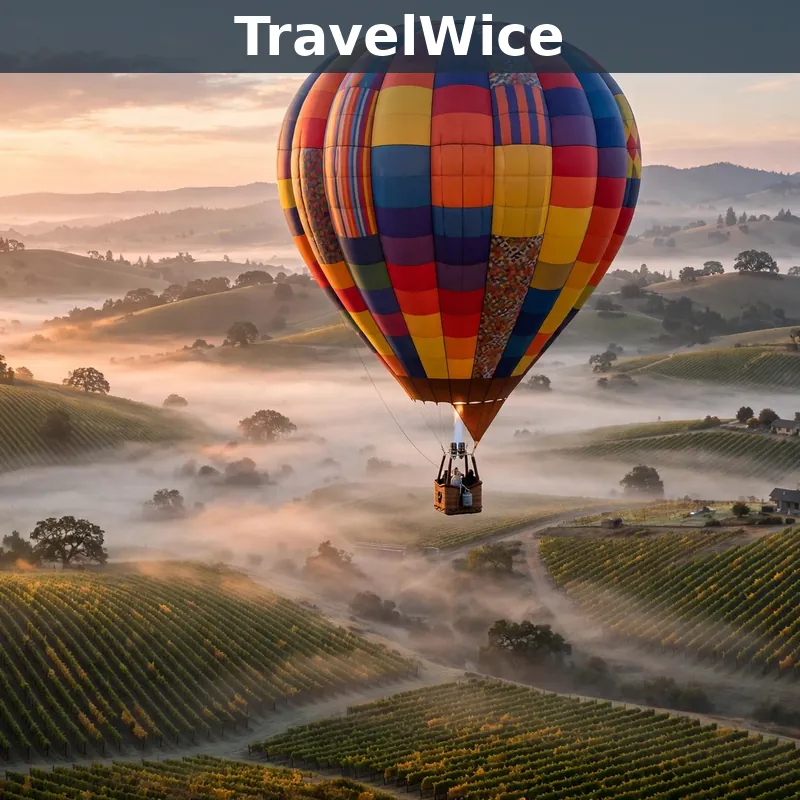
My first morning in Napa Valley started the way every good Napa morning starts: fog in the valley, sun breaking over the hills, and a hot air balloon drifting silently over the vineyards while I stood on a terrace with a coffee in my hands. By noon I was sitting at a wooden bar in a stone winery, tasting a Cabernet Sauvignon grown a hundred yards from where I sat. By dinner I was eating food I still think about. That is Napa in a nutshell: it is beautiful, it is delicious, and it rewards anyone who plans even a little. This Napa Valley travel guide covers the best time to go, how wine tasting actually works here in 2026, the wineries and towns to build a trip around, where to stay and eat, and what it will cost.
TL;DR: Stay 2–3 nights, base yourself in the city of Napa, St. Helena or Yountville, and budget roughly $250–$400 per person per day. Book winery tastings 2–6 weeks ahead — most are appointment-only in 2026, and tasting fees vary widely by winery, so check each winery’s official site for current prices before you book. September and October are harvest season and the busiest months; May and early November give you great weather with fewer crowds. Plan two to three tastings a day at most, and book a driver or a tour so nobody has to skip the wine.

Why Visit Napa Valley in 2026
Napa Valley is a 30-mile-long valley in Northern California, about 50 miles northeast of San Francisco, and it is the most famous wine region in the United States. More than 400 wineries are packed into that small corridor, along with some of the best restaurants in the country, and the whole valley has a polish that comes from fifty years of practice. The valley’s reputation was sealed in 1976, when Napa wines beat the best French wines in a blind tasting in Paris — an event now known as the Judgment of Paris — and it has been the standard-bearer for American wine ever since.
The wine is the first reason to come, and Cabernet Sauvignon is the headline. Napa Cab is big, structured and age-worthy, grown in volcanic and alluvial soils across the valley floor and the hillsides, and the flagship producers — names like Opus One, Stag’s Leap Wine Cellars, Caymus, Far Niente and Robert Mondavi — are pilgrimage stops for wine lovers. But the valley grows far more than Cabernet: Chardonnay, Sauvignon Blanc, Merlot, Pinot Noir, Zinfandel and sparkling wine all have a home here, and the smaller family estates are often where the most memorable tastings happen. You do not need to be a wine expert to enjoy Napa. You just need curiosity and a plan.
The second reason is the food. Napa Valley has one of the highest concentrations of great restaurants in America, from the French Laundry in Yountville — one of the most famous restaurants in the world — to casual farm-to-table spots where the menu changes with the season and the vegetables come from a garden you can see from your table. The valley’s food culture grew up alongside the wine, and the two are inseparable: a tasting menu here is built around the wines, and a winery visit often ends with a food pairing. Even a simple lunch — a sandwich from a deli in St. Helena eaten on a picnic table between the vines — tastes better here.
The third reason is the landscape. The valley is beautiful in a way that sneaks up on you: rolling hills covered in neat rows of vines, stone wineries, oak trees, olive groves and mustard flowers in winter, all under a big California sky. The two main roads, Highway 29 and the Silverado Trail, run the length of the valley in parallel, and the drive itself is one of the great pleasures of the trip. Napa is also a natural add-on to a San Francisco trip — our San Francisco travel guide for 2026 covers the city an hour south, and our California travel guide for 2026 shows how the valley fits into a wider California road trip.
Best Time to Visit Napa Valley
September and October are harvest season, and the classic time to visit Napa. The grapes come off the vines, the crush is in full swing, the vine leaves turn red and gold, and the weather is warm and clear, with highs around 75–80°F. It is also the busiest and most expensive time: roads are crowded, hotel rates peak, and the popular wineries book out weeks ahead. If you want the harvest atmosphere, book everything early — tastings, hotels, restaurants and drivers — and accept that you will pay peak prices.
May and early June are my favourite alternative. The vines are green and full, the days are long and sunny, the weather is warm without being hot, and the crowds are thinner than in harvest season. Early November is the other sweet spot: the last reds are still being picked, the leaves have turned, highs sit in the mid-60s, and the crowds have gone home. The valley feels calm and unhurried in November, and it is one of the best times for a first visit.
Winter, from December to February, is the quietest and cheapest season. Highs run in the upper 50s to low 60s, most of the valley’s rain falls in these months, and the vines are bare and pruned. But winter has its own magic: yellow mustard flowers bloom between the dormant vine rows from January to March, the tasting rooms are unhurried, and you can often walk in somewhere that would need a reservation in October. Spring, from March to May, brings bud break, green hills and mild temperatures in the 60s and 70s, and it is one of the most beautiful times to see the valley. Summer, from June to August, is hot and dry, with highs near 84°F in the city of Napa and closer to 90°F up-valley in St. Helena and Calistoga, where afternoons can pass 100°F during heat waves. Morning fog is common in summer, usually burning off by mid-morning, and outdoor tastings need a hat and sunscreen. Check the National Weather Service forecasts before you travel, since a heat wave or a winter storm can change the plan.
How Wine Tasting Works in Napa in 2026
This is the most important section in the guide, because Napa tasting works differently from most wine regions, and first-timers get caught out by it.
Most Napa wineries now require advance reservations. Roughly two-thirds to three-quarters of producers are appointment-only in 2026, and at the top estates a booking is not a formality — it is the only way in. Walk-in tasting is no longer the default, and the wineries that do take walk-ins tend to cluster along Highway 29 and in downtown Napa. Book two to six weeks ahead for mid-tier estates, and six to twelve weeks ahead for the flagships. The Visit Napa Valley official tourism site is the best place to start: it lists wineries, explains the reservation system, and links to each winery’s booking page.
Tasting fees vary widely by winery, and they have climbed steadily in recent years. A standard tasting at a mid-tier estate commonly runs in the $50–$100 range per person, while flagship and reserve experiences can run well over $100, and some of the most famous names charge considerably more. The average standard tasting in Napa in 2026 was reported at around $79 per person, with reserve tastings averaging about $125, but the spread is wide: some small family estates start around $40–$50, and the top experiences can reach $150–$200 or more. Many wineries waive or credit the tasting fee if you buy bottles, often two bottles per person. Because prices change often and vary so much between wineries, check each winery’s official site for its current prices before you book, and treat any number in a guide — including this one — as a planning range, not a quote.
Pace yourself. Two to three tastings a day is the right number for most people; four is a long day, and five is a mistake. Tastings usually last 60 to 90 minutes, and the wineries are spread along a 30-mile valley, so driving between them takes real time. Book a driver, a private car or a small-group tour so nobody in your group has to stay sober, and tip your tasting room hosts — $10–$15 per couple at a standing bar and $20 or more at a seated or private tasting is the usual guidance. Bring water, eat lunch, and spit if you want to stay sharp: nobody at a Napa tasting room judges you for it.
A practical tip: mix one flagship with one or two smaller estates each day. The flagships give you the famous names and the architecture, and the small family wineries give you the personal attention, the stories and often the best value. And if the fees feel steep, remember that downtown Napa has tasting rooms where you can try several producers in one walkable area, and that a day in neighbouring Sonoma — where tasting fees average considerably less — is an easy and cheaper add-on.

The Best Wineries to Visit
With more than 400 wineries in the valley, choosing is the hard part. These are the stops I would build a first trip around, grouped by what they are best for.
The Flagships: Opus One, Robert Mondavi, Stag’s Leap
Opus One, in Oakville, is the most famous winery in Napa, a joint venture founded by Robert Mondavi and Baron Philippe de Rothschild, and the building itself is a work of modern architecture. The tasting is a formal, seated experience, and it is expensive — check the official site for current prices — but it is the one tasting every serious wine lover wants to have done once. Book six to twelve weeks ahead.
Robert Mondavi Winery, also in Oakville, is the most visitor-friendly of the big names, with well-organised tours and tastings that suit first-timers, and its To Kalon vineyard is one of the most celebrated sites in California. Stag’s Leap Wine Cellars, in the Stags Leap District, is the winery that won the red wine category at the 1976 Judgment of Paris, and its estate visit is a structured, story-rich experience. These three are the classic Napa introduction, and they sit within a few miles of each other on Highway 29.
The Classics: Beringer, Inglenook, Castello di Amorosa
Beringer Vineyards, in St. Helena, is Napa’s oldest continuously operating winery, founded in 1876, and its Rhine House is a stone mansion that looks like it belongs in Germany. It is one of the most welcoming stops in the valley, with a range of tastings at different price points, and same-day visits are sometimes possible. Inglenook, in Rutherford, is the Francis Ford Coppola estate, a grand chateau with a film-museum feel and a range of tasting tiers. Castello di Amorosa, in Calistoga, is a 13th-century-style Tuscan castle winery — a full medieval castle, complete with a dungeon and a torture chamber — and it is reservation-only, with a small online booking fee. It is the most fun stop in the valley, and the wine is better than the gimmick suggests.
Sparkling Wine and Caves: Schramsberg, Domaine Carneros, Far Niente
If you like sparkling wine, Schramsberg, in Calistoga, is the essential stop: a cave tour through hand-dug cellars followed by a tasting of their sparkling wines, which have been served at the White House. Domaine Carneros, at the southern end of the valley near the city of Napa, is a grand chateau specialising in sparkling wine and Pinot Noir, with a terrace that has one of the best views in the valley. Far Niente, in Oakville, pairs a cave tour with a tasting of its Cabernet and Chardonnay in one of the most beautiful settings in Napa. Cave tours are a good choice on a hot day — the caves stay cool year-round — and they need a reservation.
Small and Personal: Family Estates and Downtown Tasting Rooms
The valley’s smaller family estates are where I had my best tastings: seated flights with a host who knew the vineyard, stories about the family, and wines you cannot buy anywhere else. Look for estates in the Stags Leap District, on Spring Mountain and in the Howell Mountain area, and book ahead — the small ones are almost all appointment-only. If you want to taste without driving all over the valley, downtown Napa has dozens of tasting rooms within walking distance of each other, and Oxbow Public Market is a good base for a tasting-room crawl. The city of Napa is also where the valley’s best-value tastings tend to be, and where you can try several producers in an afternoon without a car.
Napa Valley Towns at a Glance
The valley’s towns each have a distinct feel, and picking the right base changes the trip. This table is my honest summary of the main stops.
| Town | Best for | Vibe | Typical hotel rate |
|---|---|---|---|
| Napa (city) | First-timers, food, tasting rooms | Lively, walkable, riverside | $200–$350 |
| Yountville | Fine dining, luxury stays | Small, elegant, food-focused | $350–$600 |
| St. Helena | Classic wineries, small-town charm | Pretty, relaxed, historic | $250–$450 |
| Calistoga | Hot springs, spas, laid-back days | Rustic, friendly, old-school | $180–$320 |
| Oakville / Rutherford | Flagship wineries, vineyard views | Quiet, rural, wine-first | $300–$500 |
| Sonoma (day trip) | Cheaper tastings, plaza town | Relaxed, historic, less formal | $180–$300 |
The city of Napa is the easiest base for a first visit — the most hotels, the most restaurants, the most tasting rooms, and the Oxbow Public Market for casual food. Yountville is the food capital, a tiny town of about 3,000 people with more Michelin stars per capita than almost anywhere on earth, and it is the most expensive place to stay. St. Helena is my favourite base: a pretty main street, great wineries on the doorstep, and a relaxed small-town feel. Calistoga, at the northern end of the valley, is the place to soak in hot springs and mud baths, and it is the most laid-back town in the valley. If you want to stay among the vines, look at the inns and lodges along Highway 29 and the Silverado Trail between Oakville and Rutherford.
Getting to Napa Valley and Getting Around
Napa Valley is about 50 miles northeast of San Francisco, and the drive takes about an hour and fifteen minutes without traffic — though traffic on the Bay Area freeways can easily double that, so leave early. San Francisco International Airport (SFO) and Oakland International Airport (OAK) are the main gateways, and Sacramento International Airport (SMF) is about an hour and a half away to the northeast. If you are flying in just for Napa, Oakland is often the easier airport. There is also a small airport in Napa itself, but it has no scheduled commercial flights.
You need a car, or a driver, for most of the trip. The valley is 30 miles long, the wineries are spread out, and public transport is limited. The Napa Valley Vine Trail, a paved walking and biking path that runs from Vallejo through Napa toward Calistoga, is a lovely way to move between the city of Napa and Yountville without a car, and bike rentals are available in Napa and St. Helena. Several companies run e-bike wine tours, which are a good option if you want to taste and ride, though you will still need a plan for getting home with any bottles you buy.
The smartest move for most visitors is to hire a driver or book a small-group tour for your tasting days. A private driver for the day typically costs a few hundred dollars, split between your group, and it changes the trip: nobody has to watch the clock, nobody has to skip a tasting, and your driver knows the back roads and the wineries. The Napa Valley Wine Train is the other classic option: a restored vintage train that runs from downtown Napa up the valley to St. Helena and back, with lunch or dinner served on board and winery stops along the way. It is a full-day experience, and it is worth booking ahead. Rideshares work in the city of Napa and between the main towns, but they can be slow and expensive up-valley, especially at the end of the day when everyone is leaving the wineries at once. The Visit Napa Valley official tourism site has current transport information and driver and tour listings.
Scenic Drives: Highway 29 and the Silverado Trail
The two main roads through the valley run in parallel, and choosing between them is part of the pleasure of the trip. Highway 29 is the main road, and it is where most of the famous wineries sit: Opus One, Robert Mondavi, Beringer, Inglenook and dozens more, along with the towns of Napa, Yountville, Oakville, Rutherford, St. Helena and Calistoga. It is the busier road, especially on harvest weekends, and it is the one to take if you want to stop at the big names.
The Silverado Trail, on the eastern side of the valley, is the prettier drive. It winds along the base of the Vaca Mountains through vineyards and oak trees, past stone wineries and smaller estates, with less traffic and better views. It is the road I take when I want to enjoy the drive itself, and it is at its best in autumn, when the vine leaves turn red and gold. The two roads are connected by crossroads at Yountville, Oakville, Rutherford and St. Helena, so you can drive up one and back down the other in a loop. Allow a full day for the drive with stops, and pull over at the viewpoints — the view from the Silverado Trail across the valley floor at sunset is one of the best in California.
What to Eat and Drink in Napa Valley
Napa food runs on three things: seasonal California cooking, the valley’s own produce, and wine — and the standard is the highest in the country.
The French Laundry, in Yountville, is the most famous restaurant in Napa and one of the most famous in the world. Thomas Keller’s tasting menu runs several hundred dollars per person before wine, and reservations open exactly 60 days ahead at 10 a.m. Pacific on Tock, selling out in minutes. It is a once-in-a-lifetime meal, and it is not the only great one in the valley. Yountville alone has a cluster of outstanding restaurants, from the French Laundry’s more casual sibling Bouchon to the farm-to-table spots along Washington Street, and St. Helena and the city of Napa have their own strong lineups. Book restaurants weeks ahead in harvest season, and check the menu and prices on the restaurant’s own site before you book — tasting menus here are a serious investment.
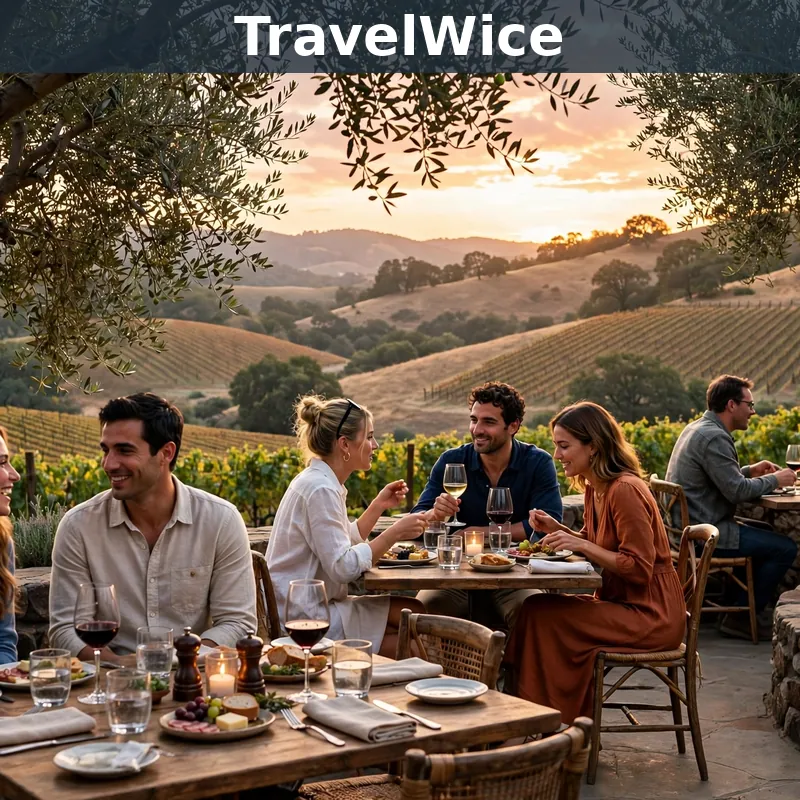
For everyday eating, the valley is full of good casual spots. Oxbow Public Market in downtown Napa is the best place to start: a market hall with oyster bars, taco stands, cheese shops, bakeries and a riverside terrace, and it is where the locals eat lunch. The delis in St. Helena and Yountville make excellent picnic sandwiches — buy one, pick up a bottle at a winery that allows picnics, and eat it at a table between the vines. Many wineries offer food pairings with their tastings, and several have their own restaurants or picnic grounds, but check the rules: most wineries do not allow outside food unless they say so.
Breakfast is a quieter pleasure here. The bakeries in the city of Napa and St. Helena open early, and a pastry and coffee on a terrace before the first tasting is the right way to start a Napa day. Coffee is good throughout the valley, and the cafes in Yountville and St. Helena are worth a stop. For drinks beyond wine, the valley has a growing craft beer and cocktail scene, centred on downtown Napa, and several of the wineries make excellent olive oil as well as wine. Drink water between tastings, eat a real lunch, and remember that a day of tasting is a marathon, not a sprint.
Where to Stay in Napa Valley
Stay in the city of Napa, St. Helena or Yountville if you want to walk to things; stay up-valley in Calistoga or along the Silverado Trail for quiet and views. A good mid-range hotel in the city of Napa runs about $200–$350 a night, St. Helena about $250–$450, Yountville about $350–$600, and Calistoga about $180–$320. The valley’s best-known stays are the small luxury inns and lodges — places like Auberge du Soleil, Meadowood and the Calistoga resorts — and they are expensive, but they are also the reason many people come. Boutique hotels and bed-and-breakfasts are a strong choice throughout the valley, and they often cost less than the big resort names while giving you more character.
Book early for September and October. Harvest season can push hotel prices to their highest of the year, and the best small inns sell out months ahead. If you are visiting in harvest season, consider staying in the city of Napa rather than up-valley — it is cheaper, and the drive to the wineries is short. Resort fees of $25–$50 a night are common, so check the total before you book. Vacation rentals work well for groups, especially in the city of Napa and Calistoga, where a house with a kitchen and a garden can cost less per person than two hotel rooms. For a mountain contrast after the valley, our Lake Tahoe travel guide covers the Sierra Nevada, and our Palm Springs travel guide covers the desert south — two very different California trips at a similar budget.
Day Trips from Napa Valley
Napa is a great base, and the day trips are worth a day of the trip.
Sonoma County
Sonoma is the obvious day trip, and the one I recommend most. It is about 30 minutes west over the hills, and it is Napa’s quieter, less formal neighbour, with its own wine country, a historic plaza town, and tasting fees that average considerably less than Napa’s — around $47 for a standard tasting against Napa’s roughly $79, according to 2026 industry reports. The town of Sonoma has a beautiful central plaza, tasting rooms you can walk between, and a slower pace that makes a nice contrast after two days in Napa. The Sonoma Coast, about an hour west, has wild beaches, redwood forests and small towns like Bodega Bay, and it is one of the most beautiful drives in Northern California. Plan one day for Sonoma town and its wineries, and treat it as a rest day from Napa’s pace.
San Francisco and the Coast
San Francisco is about an hour south, and it pairs naturally with Napa — many visitors fly into the city, spend two nights there, then drive up to the valley. Our San Francisco travel guide for 2026 covers the Golden Gate Bridge, Alcatraz, the cable cars and the neighbourhoods. For a longer day, the drive south to Big Sur and the Monterey Peninsula is one of the great California road trips, and our Big Sur travel guide covers Highway 1, McWay Falls and Bixby Bridge. If your California trip continues south, our Los Angeles travel guide for 2026 and our Yosemite National Park guide for 2026 cover the two most famous stops in the state.
Calistoga Hot Springs and Bothe-Napa Valley State Park
Closer to home, Calistoga’s hot springs and mud baths are the valley’s best rest day. The town sits on a geothermal aquifer, and its spas offer mineral soaks and the famous mud baths — warm volcanic ash mixed with mineral water — that have drawn visitors since the 1860s. A soak and a mud bath typically run about $80–$150 depending on the spa and the treatment, and they are worth booking ahead on weekends. Bothe-Napa Valley State Park, between St. Helena and Calistoga, has redwood groves, hiking trails and a historic mill, and it is the valley’s best non-wine outdoor stop. The California State Parks site lists current hours and entry information, and campsites in the region book through Recreation.gov bookings.
How Much Does a Napa Valley Trip Cost?
Napa is the most expensive destination in this California series, and it is worth going in with open eyes. For a mid-range trip, plan on roughly $250–$400 per person per day, excluding flights. Our Colorado travel guide for 2026 and our Texas travel guide for 2026 show how that compares with mountain and city trips at a lower budget.

Lodging is the biggest cost: about $200–$350 a night for a good hotel in the city of Napa, $250–$450 in St. Helena, and $350–$600 in Yountville, with harvest season at the top of those ranges and winter at the bottom. Tastings are the second-biggest cost: plan on two to three a day, and remember that fees vary widely by winery, so check each winery’s official site for current prices before you book — a day of tastings can run anywhere from $100 to $300 per person depending on where you go. Food runs about $80–$150 a day per person if you mix market lunches and casual dinners with one nicer meal — a sandwich lunch $15–$20, a casual dinner $30–$50, a fine-dining tasting menu several hundred dollars. A rental car runs about $50–$90 a day, and a private driver for the day typically costs a few hundred dollars split between your group.
Ways to save: visit in January to March or early November instead of harvest season; stay in the city of Napa or Calistoga instead of Yountville; mix one flagship tasting with smaller estates and downtown tasting rooms; eat at the markets and delis; and spend a day in Sonoma, where the tasting fees are lower. Napa gives you a lot for the money — the scenery, the food, the wine — but it is not a budget destination, and it is better to plan for it honestly than to be surprised. If you want more weekend ideas at a lower budget, our roundup of the best weekend getaways in the USA has other short trips, and our hidden beaches to visit in the USA covers the coast for a cheaper escape.
Chart: Napa Valley Average Highs by Month
Napa’s weather shapes the trip more than almost anything else, so this chart shows approximate average daytime highs near the city of Napa across the year.
| Month | Avg high (°F) | Avg rain (inches) |
|---|---|---|
| January | 57 | 3.9 |
| March | 64 | 3.1 |
| May | 73 | 0.8 |
| July | 79 | 0.0 |
| September | 80 | 0.2 |
| November | 64 | 2.0 |
What the chart shows is a valley with a mild Mediterranean climate and a long, dry summer. Highs climb from the high 50s in winter to around 80°F in August and September, and stay in the 70s through October. Rain falls almost entirely from November to March, with February the wettest month, and summer is nearly rainless. The practical takeaway: the valley is pleasant almost all year, but the up-valley towns run about ten degrees warmer than the city of Napa in summer, so plan outdoor tastings for the morning in July and August, and book September or October if you want harvest weather.
References
- Visit Napa Valley official tourism site — Napa Valley wineries, tastings, hotels, restaurants and trip planning.
- Visit California official tourism site — statewide trip planning, road trips and events.
- National Weather Service forecasts — forecasts and heat alerts.
- California State Parks — state parks, trails and passes across California.
- Recreation.gov bookings — federal campgrounds and tours.
Napa Valley Travel Quiz
Test what you picked up from this guide before you go.
1. What share of Napa wineries are appointment-only in 2026?
- A) Roughly two-thirds to three-quarters
- B) Almost none — most take walk-ins
- C) Only the ones in Calistoga
2. How many tastings a day is the right number for most visitors?
- A) Five or six
- B) Two to three
- C) Just one, always
3. When is harvest season in Napa Valley?
- A) January to March
- B) September and October
- C) June and July
4. What is the Silverado Trail best known for?
- A) The prettiest, quieter scenic drive through the valley’s vineyards
- B) The fastest freeway to San Francisco
- C) A hiking trail with no wineries
5. How far is Napa Valley from San Francisco?
- A) About 50 miles, roughly an hour and fifteen minutes by car
- B) About 200 miles, roughly four hours by car
- C) About 10 miles, roughly twenty minutes by car
Quiz Answers
- A) Roughly two-thirds to three-quarters — Most Napa wineries require advance reservations in 2026, and the top estates are appointment-only.
- B) Two to three — Tastings last 60 to 90 minutes and the wineries are spread along a 30-mile valley, so two to three a day is the right pace.
- B) September and October — Harvest runs from August into October, with the crush at its peak in September and October.
- A) The prettiest, quieter scenic drive through the valley’s vineyards — The Silverado Trail runs along the eastern side of the valley with less traffic and better views than Highway 29.
- A) About 50 miles, roughly an hour and fifteen minutes by car — Napa Valley sits about 50 miles northeast of San Francisco, though Bay Area traffic can add time.