
Texas Travel Guide 2026: Big Cities, Desert Parks, Gulf Beaches & Hill Country
Texas is the only US state I have visited where the drive between two cities can take longer than a flight across some countries, and where every stop on that drive feels like a different place entirely. One week I was eating breakfast tacos in Austin, standing in the quiet courtyard of a 300-year-old mission in San Antonio, watching the sun drop behind desert mountains in Big Bend, and dipping my toes in the Gulf of Mexico at Galveston. Texas is that big, and that varied. This Texas travel guide 2026 pulls it all together: the best time to go, how to get around, what each city and region is really like, how much it costs, and two road trip routes that actually work.
TL;DR: Give Texas 7–10 days if you can. Fly into Austin, Dallas or Houston, rent a car, and build your trip around two or three bases — Austin plus San Antonio, or Houston plus Galveston, or a dedicated Big Bend road trip. Spring (March–May) and fall (October–November) are the best months statewide. Budget roughly $150–$250 per person per day for a mid-range trip, and book Big Bend lodging months ahead.

Why Visit Texas in 2026
People talk about Texas like it is one thing. It is not. It is at least five different trips wearing one name, and the fun of planning a Texas vacation is picking which ones to combine.
There is the city trip: four major cities, each with a distinct personality. Austin is the live music capital, all food trucks, swimming holes and late nights on Sixth Street. San Antonio is the historic heart, with the Alamo, the River Walk and five Spanish colonial missions that form a UNESCO World Heritage Site. Houston is the big, diverse, food-obsessed metropolis with Space Center Houston and one of the best museum districts in the country. Dallas is polished and ambitious, with a serious arts district, deep history and some of the best shopping and dining in the South. You could spend a week in the cities alone and never repeat yourself.
Then there is the nature trip, and this is the part that surprises first-timers. Big Bend National Park, down on the Mexican border, is one of the largest and least-visited national parks in the country — desert, canyons, the Chisos Mountains, the Rio Grande, and some of the darkest night skies in the United States. The Hill Country, west of Austin and San Antonio, is rolling green hills, wildflower fields, swimming holes and small German-settled towns like Fredericksburg. The Gulf Coast runs for hundreds of miles, from Galveston Island near Houston down to South Padre Island at the southern tip, with wide beaches, fishing piers and sea turtle releases.
Food is a reason to come on its own. Texas barbecue is a religion with its own geography — Central Texas brisket, East Texas chopped beef, South Texas barbacoa — and the breakfast taco might be the state’s greatest contribution to American mornings. Add Tex-Mex, Gulf seafood, Vietnamese food in Houston, and food truck courts in Austin, and you will eat very well for very little money if you know where to look.
Texas also suits almost any style of trip. It works as a family vacation, a couples’ road trip, a friends’ weekend in Austin, or a solo national park adventure. It works on a budget and it works as a splurge. Our Texas family vacation guide for 2026 covers the kid-friendly side in detail, and our Texas trip cost guide for 2026 breaks down real budgets. If you are weighing Texas against other big American trips, our Colorado travel guide for 2026 and our roundup of the best weekend getaways in the USA are good comparisons. For statewide events, road conditions and trip ideas, the Travel Texas official tourism site is the first place I check.
Best Time to Visit Texas
Texas is huge, so the “best time” depends on where you are going — but a few rules hold statewide.
Spring, from March to May, is my top pick for most trips. Temperatures sit in the 70s and low 80s across most of the state, wildflowers cover the Hill Country — bluebonnets peak from late March into April — and the big music and food festivals fill the calendar. Austin’s South by Southwest runs in March, and spring is also the best season for hiking in Big Bend before the desert heat arrives. Rain is possible, and spring brings the risk of severe thunderstorms and the occasional tornado in North Texas, so keep an eye on the National Weather Service forecasts during your trip.
Fall, from October to November, is the other sweet spot. The summer heat finally breaks, humidity drops, and the whole state becomes comfortable again. October is a great month for the cities, the coast and the Hill Country alike, and fall is also an excellent time for Big Bend, when daytime highs drop back into the 80s and the night skies are at their clearest. Hotel rates ease after the summer peak, and the crowds thin out.
Summer, from June to August, is hot — properly hot. Austin, Dallas and Houston regularly top 100°F, and Big Bend can reach 110°F or more in the low desert. That does not mean you should rule summer out. The Gulf Coast is at its best, the swimming holes in the Hill Country are the perfect temperature, and the cities run their full summer festival calendars. You just need a plan: do outdoor things early in the morning, swim or stay inside in the afternoon, and drink far more water than you think you need. If you are travelling with kids, summer is often the only option, and our Texas family vacation guide for 2026 has summer-specific tips.
Winter, from December to February, is underrated. South Texas and the Gulf Coast stay mild, with highs in the 60s and 70s, and winter is one of the best times to visit Big Bend — cool days, cold clear nights, and the smallest crowds of the year. North Texas can get genuinely cold, with occasional ice storms in Dallas and the Panhandle, and even Austin and San Antonio get a few freezing nights each winter. But a winter trip to San Antonio, the coast or Big Bend can be wonderful, and prices are at their lowest.
One practical note: Texas weather changes fast. A 40-degree swing in a single day is normal in the Panhandle and the Hill Country, and a cold front can drop the temperature 20 degrees in an hour. Pack layers even in spring and fall.
Getting to Texas and Getting Around
Texas has four major international airports — Dallas–Fort Worth (DFW), Houston George Bush Intercontinental (IAH), Austin–Bergstrom (AUS) and San Antonio (SAT) — plus Houston Hobby (HOU) for domestic flights. Most visitors fly into the city where their trip starts. DFW and IAH have the most flight options and often the best fares from the East Coast and abroad; Austin is the easiest airport to get through, about 15 minutes from downtown. For a one-week trip, I usually fly into one city and out of another — into Austin and out of Houston, for example — which saves a long backtrack drive.
You need a car in Texas. Full stop. The cities have some public transit and rideshares, but the distances between places are enormous — Austin to Big Bend is about 400 miles, Houston to South Padre Island is about 350 miles — and there is no train network that covers the state. Rent a car at the airport, and if you are visiting Big Bend or the desert, get something with decent clearance and check the spare tyre. Gas is generally cheaper than the national average, and the highways are wide, fast and well maintained. Speed limits of 75 mph are common on rural interstates, and some stretches of toll road west of Austin are posted at 85 mph, the highest in the country.
Driving times to keep in mind: Austin to San Antonio is about 80 miles, roughly 1.5 hours. Austin to Houston is about 165 miles, around 3 hours. Austin to Dallas is about 200 miles, around 3.5 hours. Dallas to Houston is about 240 miles, around 3.5–4 hours. San Antonio to Big Bend is about 300 miles, around 5 hours. These are highway times with no stops; add time for food, fuel and the small towns that are worth a detour.
Inside the cities, rideshares are plentiful and cheap compared with New York or San Francisco, and downtown Austin, San Antonio’s River Walk area and Houston’s downtown are all walkable once you are there. Parking in downtown Austin and Dallas runs about $10–$25 a day in garages, and street parking is metered in the city centres. In smaller towns and at state parks, parking is usually free or a few dollars.
One thing worth knowing before you drive: Texas has toll roads around Austin, Dallas and Houston. Most rental cars come with a toll pass or a toll billing option — ask at the counter, because unpaid tolls can turn into hefty admin fees. The Travel Texas official tourism site has driving routes and road trip ideas if you want to plan around the toll roads.
Texas at a Glance: The Big Cities Compared
If you only have a few days, the hardest choice is which cities to prioritise. This table is my honest summary after visiting all four — use it to match a city to your style of trip, then read the detailed guides linked below.
| City | Best for | Vibe | Budget per day | Don’t miss |
|---|---|---|---|---|
| Austin | Live music, food trucks, swimming holes | Young, weird, outdoorsy | $150–$220 | Barton Springs, South Congress, Congress Bridge bats |
| San Antonio | History, River Walk, missions | Historic, relaxed, family-friendly | $130–$200 | The Alamo, River Walk, Mission San José |
| Houston | Food, museums, Space Center | Big, diverse, sprawling | $140–$210 | Space Center Houston, Museum District, food halls |
| Dallas | Arts, history, shopping | Polished, ambitious, big-city | $150–$220 | Sixth Floor Museum, Arts District, Deep Ellum |
Austin is the easiest first stop and the one most first-timers love most. San Antonio is the best value and the best with kids. Houston rewards food lovers and museum fans who give it two full days. Dallas suits a city break built around art, history and shopping. None of them is a bad choice — the mistake is trying to do all four in four days.
Austin: Live Music, Tacos and Swimming Holes
Austin is the city I recommend first to almost everyone, and it is the one I keep going back to. The state capital sits on the edge of the Hill Country, where the Colorado River — dammed here into Lady Bird Lake — cuts through downtown, and the whole city runs on live music, breakfast tacos and outdoor swimming. Our full Austin travel guide for 2026 covers it in depth, but here is the short version.
Start with the classics. Barton Springs Pool, a three-acre spring-fed pool in Zilker Park, stays at about 68°F all year and is the best swim in the city on a hot day. South Congress Avenue — SoCo to locals — is a mile of vintage shops, food trucks, murals and the famous “I love you so much” wall, and it is best in the late afternoon when the light turns golden. At dusk from March to October, head to the Congress Avenue Bridge to watch around 1.5 million Mexican free-tailed bats pour out from under the bridge at sunset. It is free, it is spectacular, and it is the most Austin thing you can do.
Music is everywhere here, not just on Sixth Street. There are more than 250 live music venues in the city, and on any given night you can hear blues, country, indie rock, Tejano and jazz within a few blocks of each other. Sixth Street is the loud, crowded, bar-lined strip — fun for a night out, and worth seeing once. For a better night, try the Red River Cultural District or a listening room on South Lamar, where the sound matters more than the scene. Austin’s official tourism site, Visit Austin, lists shows and festivals, and it is worth checking before you book, because a big festival weekend can double hotel prices.

Food in Austin means tacos and barbecue, and both are taken very seriously. Breakfast tacos — eggs, potatoes, bacon or beans in a flour tortilla, eaten standing up at a truck — cost about $3–$5 each and are the best cheap breakfast in America. Barbecue is a different commitment: the famous spots sell out by early afternoon, lines can run over an hour, and a full plate runs about $20–$30. Go early, order brisket and beef ribs, and eat them hot off the butcher paper. The food truck scene fills the gaps — Thai, Vietnamese, Mexican and vegan trucks parked in courts all over the city, most dishes about $10–$15.
Practical Austin: stay downtown, in South Congress or on South Lamar if you want to walk to things; stay north or east for lower prices. The airport is 15 minutes from downtown. Two full days is the minimum, three is better. And if you visit in March, check the South by Southwest dates before you book — it is a wonderful time to be in the city and a terrible time to find a cheap hotel room.
San Antonio: The Alamo, the River Walk and the Missions
San Antonio is Texas history in one walkable downtown, and it is the most relaxed of the big cities. I like it best in the early morning, before the crowds arrive, when the River Walk is quiet and the Alamo’s limestone facade catches the first light. Our full San Antonio travel guide for 2026 has the complete plan.
The Alamo is the obvious first stop, and it is smaller than most people expect — a modest chapel and a long barrack building on a plaza in the middle of downtown. Go early, take the free guided talk if one is running, and read the exhibits before you walk the grounds, because the story of the 1836 battle makes more sense with the context. Admission to the church and grounds is free. The Alamo official site posts current hours and tour times, and it is worth a look before you go.
The River Walk is the city’s other icon: a network of stone walkways one level below the street, lined with restaurants, bars and hotels along a winding stretch of the San Antonio River. It is at its best at dusk, when the string lights come on and the river barges glide past. Walk the full loop once, then get off the main stretch — the quieter sections near the Pearl District and the Museum Reach are prettier and cheaper to eat in. A river barge cruise runs about $13–$15 and is a good first-day orientation.
The five Spanish colonial missions, including the Alamo, form the San Antonio Missions National Historical Park, a UNESCO World Heritage Site — the only one in Texas. Mission San José, about four miles south of downtown, is the most complete and the most beautiful, with its famous rose window and a working church. You can bike the Mission Reach trail between the missions, about eight miles of paved riverside path. The National Park Service missions page has maps and hours, and the Visit San Antonio official tourism site is good for current events and hotel deals.
San Antonio is also the best-value big city in Texas. Hotels run noticeably cheaper than Austin or Dallas, the food is excellent and inexpensive — puffy tacos, pan dulce from a Mexican bakery, and the Pearl District food hall are all worth your time — and most of the headline sights are free or cheap. Families should plan two to three days here, and it pairs perfectly with Austin, just 80 miles up the highway.
Houston: Space Center, Museums and World Food
Houston is the city people underestimate, and the one that rewards a second look. It is the fourth-largest city in the United States, spread out over a huge area, famously flat, famously humid, and home to one of the most diverse populations in the country — which is exactly why the food is so good. Our full Houston travel guide for 2026 covers it in detail.
Space Center Houston is the headline attraction, and it lives up to the name. The visitor centre for NASA’s Johnson Space Center, about 25 miles southeast of downtown, holds the Apollo 17 command module, a Saturn V rocket, moon rocks you can touch, and the tram tour out to the actual Mission Control rooms. Plan at least half a day, and buy tickets in advance on busy weekends. The Space Center Houston official site posts ticket prices and tram tour times.
The Museum District, just south of downtown, packs 19 museums into a walkable area, and several of them — including the Menil Collection and the Contemporary Arts Museum — are free. The Museum of Fine Arts and the Houston Museum of Natural Science are the big draws, and the Museum District is the kind of place where you can happily lose a whole day. Buffalo Bayou Park, downtown, is the green counterpoint: kayaking on the bayou, bike trails, the Waugh Bridge bat colony at dusk, and skyline views that are best at golden hour. The Visit Houston official tourism site has neighbourhood guides and current events.
Food is where Houston quietly beats every other Texas city. Vietnamese food in Bellaire, Tex-Mex in the East End, Gulf seafood, barbecue, and food halls like the ones downtown and in the Heights — Houston’s restaurant scene is deep, cheap and varied. A great meal at a casual spot runs about $12–$20, and the city has more restaurants per person than almost anywhere in the country.
Practical Houston: you will drive everywhere, so budget for parking and traffic — rush hour on the freeways is real. Stay downtown, in Montrose, the Heights or the Galleria area depending on your plans. Summer is hot and humid, so plan museum mornings and pool afternoons. Two full days is a good minimum, three if you want the museums and the coast together, since Galveston is only about an hour away.
Dallas: Arts, History and Big-City Texas
Dallas is the most polished of the Texas cities, and the one that feels most like a big American metropolis — gleaming towers, a serious arts district, deep history and a shopping scene that takes itself seriously. Our full Dallas travel guide for 2026 has the full story.
The Arts District downtown is the largest contiguous urban arts district in the country, and it is genuinely impressive: the Dallas Museum of Art (free general admission), the Nasher Sculpture Center, the Winspear Opera House and the Wyly Theatre sit within a few blocks of each other, and Klyde Warren Park — a deck park built over a freeway, with food trucks, a lawn and a dog park — ties the whole area together. It is the best free afternoon in Dallas.

Dealey Plaza and the Sixth Floor Museum are the city’s most visited historic site. The museum, in the former Texas School Book Depository, tells the story of President Kennedy’s assassination in 1963 with care and depth, and the view from the sixth-floor window over the plaza is sobering. Book timed tickets in advance — it sells out on weekends. Deep Ellum, just east of downtown, is the counterpoint: street murals, live music venues, craft breweries and late-night tacos in a former warehouse district that has kept its edge.
Dallas food leans toward steakhouse and Tex-Mex, and the city does both well, but the most interesting eating is in the neighbourhoods — Vietnamese in Richardson, Mexican in Oak Cliff, barbecue in Deep Ellum. The Visit Dallas official tourism site is the best source for neighbourhood guides and events.
Practical Dallas: the DART light rail is actually useful here, connecting downtown, the Arts District, Deep Ellum and the airport area, which is rare in Texas. Stay downtown or in Uptown for walkability. Two days covers the highlights; three lets you add Fort Worth, about 30 miles west, with its Stockyards, its world-class museums and a completely different, more western feel.
Big Bend National Park: Desert, Canyons and Dark Skies
If the cities are one Texas, Big Bend is the other — and it is the part of the state that changed how I think about Texas. Big Bend National Park covers more than 800,000 acres of Chihuahuan Desert on the Mexican border, where the Rio Grande bends around the Chisos Mountains. It is remote, it is huge, and it is one of the least-visited national parks in the country, which is exactly the point. Our full Big Bend National Park guide for 2026 has the complete plan.
The park’s big three are the Chisos Mountains, Santa Elena Canyon and the Rio Grande itself. The Chisos Basin, in the middle of the park, sits at about 5,400 feet and is the coolest part of the desert, with the park lodge, a campground and the trailheads for the Lost Mine Trail and the South Rim — the latter is a 12–15 mile loop and one of the best day hikes in Texas. Santa Elena Canyon, on the western side, is a towering limestone gorge where the Rio Grande squeezes between cliffs 1,500 feet high; the short trail into the canyon mouth is one of the most photographed spots in the park. The river itself is the southern border of the park, and you can float it on a half-day or multi-day trip, or soak in the hot springs at the eastern end, where a historic bathhouse sits on the riverbank.
Practical Big Bend matters more here than anywhere else in Texas. The nearest town with full services, Marathon, is about 40 miles from the park entrance, and the park’s lodge and campgrounds book up months ahead — reserve through Recreation.gov as early as you can. Fill your tank before you enter the park, carry more water than you think you need (a gallon per person per day is the park’s own advice), and download offline maps, because cell service is patchy or nonexistent inside the park. The Big Bend National Park official site posts road closures, river conditions and current alerts, and you should read it before you drive out there.
The best time to visit is October to April. Summer in the low desert can top 110°F, and the Chisos are the only escape from the heat. Winter brings cold, clear nights — perfect for stargazing, since Big Bend has some of the darkest skies in the United States and is a certified International Dark Sky Park. Give it three days minimum, and treat the drive in as part of the trip: the road from Marfa or Marathon through the desert is one of the great American drives.
Galveston and the Gulf Coast
Galveston Island sits about an hour southeast of Houston, and it is the easiest beach trip in Texas — a 32-mile-long barrier island with wide sandy beaches, a historic downtown, and a seawall promenade that runs for ten miles. Our full Galveston travel guide for 2026 covers it in detail.
The island’s two faces are the beach and the Strand. The beaches — Stewart Beach and East Beach are the main public ones — are wide and sandy, with warm Gulf water from May to October, and the Pleasure Pier extends out over the water with rides and games. The Strand, the historic downtown, is a street of Victorian iron-front buildings housing shops, galleries and restaurants, and it is the best-preserved 19th-century commercial district in Texas. Moody Gardens, with its three glass pyramids, is a good rainy-day or family stop. The Visit Galveston official tourism site has beach conditions, parking information and events.
Beyond Galveston, the Texas Gulf Coast runs for hundreds of miles, and it is worth knowing the options. Padre Island National Seashore, near Corpus Christi, protects 70 miles of undeveloped barrier island — the longest undeveloped barrier island in the world — with camping on the beach, sea turtle releases in summer and some of the best birdwatching in the country. The Padre Island National Seashore official site posts turtle release schedules and driving-on-the-beach rules. For the warmest water and the most resort-style beaches, keep driving south to South Padre Island, covered in our South Padre Island travel guide for 2026.
One honest note about Texas beaches: the Gulf water here is warm and the sand is wide, but the water is often brownish-green rather than the clear turquoise of Florida, because the Mississippi River sends sediment into the western Gulf. It is clean and swimmable, just not postcard-blue. If the clearest water matters most to you, our roundup of hidden beaches to visit in the USA has alternatives, and South Padre Island, at the southern tip, has the clearest water in the state.
South Padre Island: The Southern Tip
South Padre Island is the Texas beach at its most tropical. A narrow barrier island at the very southern tip of the state, about five miles from the Mexican border, it has the warmest water, the whitest sand and the clearest Gulf water in Texas. Our full South Padre Island travel guide for 2026 has the details.
The island’s best-known attraction is Sea Turtle Inc., a rescue and rehabilitation centre where you can see recovering sea turtles and, in summer, watch hatchling releases on the beach. The releases are scheduled by the centre and announced a few days ahead — check the South Padre Island official tourism site for dates. Laguna Madre Bay, on the island’s west side, is one of the saltiest bays in the world and a famous spot for kayaking, dolphin watching and wind sports. The beach itself is wide, flat and walkable for miles, and the island is small enough to cross on foot or by bike.
South Padre works best as a two- or three-night add-on to a South Texas trip, or as a standalone beach break from late spring to early fall. Spring break brings big college crowds in March, so families should avoid that week. The nearest airport is in Harlingen, about 30 minutes away, with flights from Dallas, Houston and Austin, and the drive from San Antonio is about four hours.
Texas Hill Country: Wildflowers, Swimming Holes and Small Towns
The Hill Country is my favourite part of Texas, and the part I recommend to anyone who wants the state without the cities. It sits west of Austin and north of San Antonio — rolling green hills, live oak trees, clear rivers, and small towns with German names and Czech bakeries.

Fredericksburg is the hub: a Main Street full of tasting rooms, shops and restaurants, and the gateway to more than 50 wineries in the surrounding hills. It is the centre of Texas wine country, and the wines — especially the tempranillo and viognier — are better than most visitors expect. Enchanted Rock State Natural Area, about 20 miles north of Fredericksburg, is a huge pink granite dome you can hike to the top of in about 45 minutes; go at sunrise or sunset, and book a day pass in advance, because the park caps entry and sells out on weekends. The Texas Parks and Wildlife Department site is where you reserve state park passes.
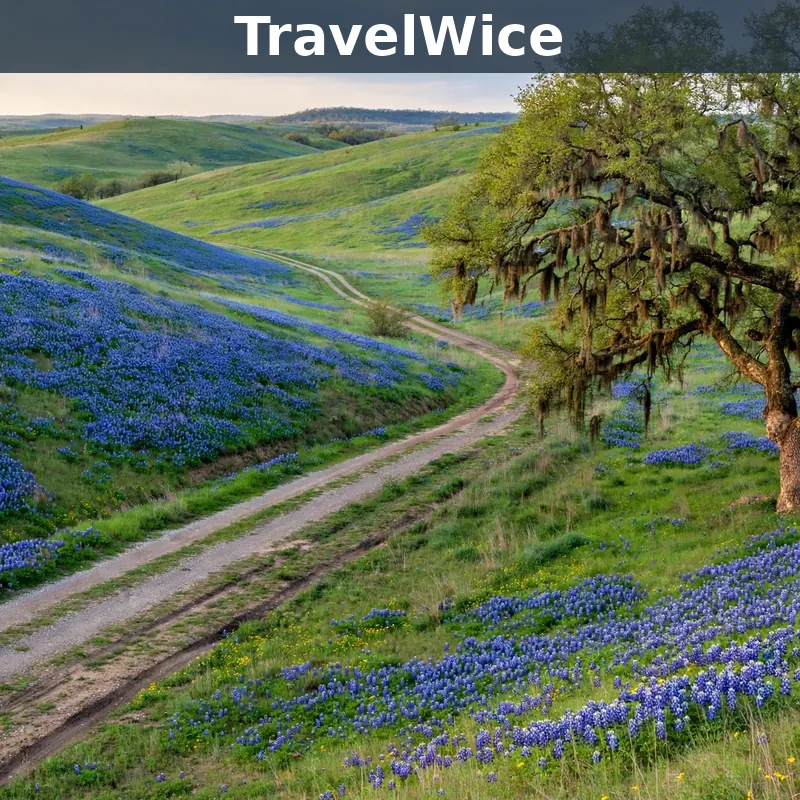
The swimming holes are the Hill Country’s other gift. Hamilton Pool, Jacob’s Well, the Blue Hole in Wimberley and Barton Springs in Austin are all spring-fed, clear and cold, and all of them need reservations in summer — some book out weeks ahead. Bluebonnet season, late March to mid-April, turns the hillsides blue and white, and the wildflower drives around Fredericksburg and Brenham are worth a day on their own. Small towns like Wimberley, Dripping Springs and Boerne are worth a slow afternoon each, with swimming holes, barbecue joints and antique shops. A Hill Country loop from Austin — Fredericksburg, Enchanted Rock, Luckenbach, Wimberley — makes a perfect two- or three-day trip, and it is the most relaxing drive in the state.
Texas Road Trip Itineraries
Texas rewards a road trip more than any other kind of holiday, because the drives themselves are part of the experience. Here are two routes that work, based on trips I have actually done.
The 7-Day Classic: Austin, San Antonio and the Hill Country
Day 1–2: Fly into Austin. Barton Springs, South Congress, the bat bridge at dusk, live music on Red River. Day 3: Drive to the Hill Country — Fredericksburg, wineries, Enchanted Rock at sunset. Day 4: Wimberley and the swimming holes, then drive south to San Antonio. Day 5–6: The Alamo, the River Walk, the missions by bike, the Pearl District. Day 7: Drive back to Austin through the Hill Country, stopping in a small town or two, and fly home. This is the best first Texas trip: three distinct regions, manageable drives, and the best food in the state.
The 10-Day Big Loop: Cities, Coast and Desert
Day 1–2: Dallas — Arts District, Sixth Floor Museum, Deep Ellum. Day 3–4: Austin — music, tacos, Barton Springs, South Congress. Day 5: San Antonio — the Alamo and the River Walk. Day 6: Drive to Houston via the Hill Country or the coast road, stopping for barbecue. Day 7: Space Center Houston and the Museum District. Day 8: Galveston — beach, the Strand, the Pleasure Pier. Day 9–10: Either drive west to Big Bend for a taste of the desert (you will need more time to do it properly — see below) or slow down in the Hill Country. This loop is about 1,200 miles of driving, so it suits confident drivers who like the road as much as the stops.
A dedicated Big Bend trip deserves its own week. Fly into El Paso or Midland, drive to Marfa or Marathon, and give the park three full days: one for the Chisos, one for Santa Elena Canyon and the river, one for the east side and the hot springs. Add a night in Marfa for the art scene and the Marfa Lights, and a night in Terlingua, the old mining town turned desert outpost at the park’s doorstep. Big Bend is not a detour — it is the trip.
One more practical tip for any Texas road trip: the distances look shorter on a map than they feel on the road. A 200-mile drive takes three hours plus stops, and the small towns along the way — barbecue joints, pie shops, courthouse squares — are half the fun. Build in an extra hour a day for the unexpected, and keep a paper map or offline maps downloaded, because cell service disappears in the desert and the Hill Country.
Where to Stay in Texas
Texas lodging is good value by American standards, and the range is wide — from desert lodges and historic hotels to beach condos and Hill Country cabins.
In the cities, expect to pay about $150–$250 a night for a good mid-range hotel downtown in Austin or Dallas, $120–$200 in San Antonio and Houston, and less outside the centre. Boutique hotels are a strong choice in Austin and San Antonio, where historic buildings and converted warehouses make for characterful stays. Vacation rentals work well for families and groups, especially in the Hill Country and on the coast, where a house with a kitchen and a pool can cost less per person than two hotel rooms.
In Big Bend, lodging is the trip’s biggest constraint. The Chisos Mountains Lodge inside the park has a few dozen rooms and books up months ahead; the campgrounds are the same. Outside the park, Marathon, Terlingua and Marfa have small hotels, motels and vacation rentals, and they also book up in spring and fall. Book your Big Bend stay before you book your flights. State parks are the same story — popular parks like Enchanted Rock and Garner sell out their day passes on weekends, so reserve through the Texas Parks and Wildlife Department site well ahead.
On the coast, Galveston and South Padre Island are condo and beach-house territory, with weekly rentals often beating nightly hotel rates in summer. In the Hill Country, look for cabins and guesthouses on ranches — many come with river access, a fire pit and a porch, and they are the most Texas way to sleep.
What to Eat and Drink in Texas
Texas food is a trip in itself, and it is one of the cheapest ways to have a great time in the state. Here is what to prioritise.
Barbecue is the headline, and it is worth planning around. Central Texas style — brisket, beef ribs, sausage, cooked low and slow over post oak, served on butcher paper with white bread, pickles and onions — is the most famous, and the best spots are in and around Austin and Lockhart. The famous places sell out by early afternoon and the lines can run over an hour, so go early and treat the line as part of the experience. A full plate runs about $20–$30. East Texas barbecue leans toward chopped beef with sauce; South Texas has barbacoa, slow-cooked beef cheek traditionally eaten in tacos on weekend mornings. All three are worth trying.
Breakfast tacos are the everyday Texas food, and they are everywhere — gas stations, food trucks, taquerias, cafes. Eggs, potatoes, bacon, beans, cheese, salsa, in a flour tortilla, for about $3–$5 each. They are the best cheap breakfast in the state and the first thing I eat when I land. Tex-Mex is the other staple: queso, enchiladas, puffy tacos in San Antonio, and the combination plate that has fed Texans for a century. Gulf seafood runs along the coast — shrimp, oysters, redfish, crab — and Houston’s Vietnamese food, a legacy of the city’s large Vietnamese community, is some of the best in the country.
Drinks: Texas wine country around Fredericksburg is the real surprise, with more than 50 wineries and tasting rooms. The Hill Country also has a growing craft beer and distilling scene, and Shiner Bock, brewed in the small town of Shiner since 1909, is the state’s hometown beer. In Austin, the food truck courts pair naturally with a local brewery or a cocktail bar on South Congress.
Eating cheap in Texas is easy. A taco truck lunch runs about $10–$15, a barbecue plate $20–$30, a sit-down Tex-Mex dinner $15–$25 per person, and a good restaurant meal $40–$60. The most expensive eating mistake in Texas is eating at the tourist strip — walk two blocks in any direction and the food gets better and cheaper.
How Much Does a Texas Trip Cost?
Texas is a mid-priced American destination — cheaper than New York or California, pricier than the rural South. For a mid-range trip for two, a realistic budget is about $150–$250 per person per day, excluding flights. Our Texas trip cost guide for 2026 breaks this down city by city, but here is the summary.
Lodging is the biggest cost: about $120–$250 a night for a mid-range hotel, less in San Antonio and small towns, more in Austin during festival weekends. Food runs about $40–$70 a day per person if you mix food trucks and casual restaurants with one nicer dinner. A rental car runs about $40–$70 a day, and gas is cheaper than the national average — a full tank on a mid-size car costs about $35–$45. Activities are mostly cheap or free: the Alamo is free, Barton Springs is a few dollars, state parks charge about $7 per person per day, and the big-ticket items are Space Center Houston (about $30 per adult) and Big Bend’s park entry (about $30 per vehicle for a week).
Ways to save: travel in the shoulder seasons, stay outside downtown, eat at food trucks and taquerias, and use the free sights — the bat bridge, the River Walk, the missions, the beaches, the Hill Country drives. Texas gives you a lot for free, and the best memories — a sunset in Big Bend, a swim in a spring-fed pool, a taco at a truck at midnight — cost almost nothing.
Chart: Average High Temperatures Across Texas by Month
Texas is big enough that no single city’s weather tells the whole story, so this chart compares approximate average daytime highs in three places: Austin in the centre, Houston on the Gulf Coast, and Big Bend in the desert southwest. The numbers show why timing matters so much.
| Month | Austin (°F) | Houston (°F) | Big Bend low desert (°F) |
|---|---|---|---|
| January | 62 | 63 | 66 |
| March | 74 | 73 | 79 |
| May | 86 | 87 | 95 |
| July | 97 | 94 | 102 |
| September | 92 | 90 | 97 |
| November | 71 | 73 | 76 |
What the chart shows is a state that is warm most of the year, with a summer peak that is genuinely extreme in the desert. Big Bend’s low desert runs about 5–8 degrees hotter than the cities from May to September, which is why the park’s best season is October to April. Houston stays the most consistent thanks to the Gulf, rarely dropping below 60°F even in January, but it also stays the most humid. Austin sits in the middle, with the biggest swings between winter and summer. The practical takeaway: if your trip includes both the cities and Big Bend, aim for March–April or October–November, when every region on this chart is comfortable at the same time.
References
- Travel Texas official tourism site — statewide trip planning, events and road trip routes.
- Big Bend National Park official site — park alerts, road conditions and camping.
- San Antonio Missions National Historical Park official site — mission maps, hours and history.
- Padre Island National Seashore official site — beach driving rules and sea turtle releases.
- National Weather Service forecasts — forecasts and severe weather alerts.
- Recreation.gov bookings — national park campgrounds and the Chisos Mountains Lodge.
- Visit Austin official tourism site — Austin shows, festivals and lodging.
- Visit San Antonio official tourism site — San Antonio events and hotel deals.
- Visit Houston official tourism site — Houston neighbourhoods, museums and dining.
- Visit Dallas official tourism site — Dallas arts, history and events.
- The Alamo official site — Alamo hours, tours and tickets.
- Space Center Houston official site — tickets, tram tours and exhibits.
- Visit Galveston official tourism site — Galveston beaches, parking and events.
- South Padre Island official tourism site — South Padre events and turtle releases.
- Texas Parks and Wildlife Department — state park passes, hunting and fishing information.
Texas Travel Quiz
Test what you picked up from this guide before you go.
1. Which months are the best all-round time to visit Texas?
- A) July and August
- B) March–May and October–November
- C) December and January only
2. How far is Austin from San Antonio?
- A) About 80 miles, roughly 1.5 hours by car
- B) About 200 miles, roughly 4 hours by car
- C) About 30 miles, roughly 30 minutes by car
3. What is the best time of year to visit Big Bend National Park?
- A) June to August, when the desert is hottest
- B) October to April, when daytime temperatures are comfortable
- C) Only in December
4. Which Texas city is home to Space Center Houston?
- A) Dallas
- B) Austin
- C) Houston
5. What makes the San Antonio Missions special?
- A) They are the only UNESCO World Heritage Site in Texas
- B) They are the oldest buildings in the United States
- C) They are all located on the River Walk
Quiz Answers
- B) March–May and October–November — Spring and fall are comfortable statewide, with wildflowers in spring and clear skies in fall.
- A) About 80 miles, roughly 1.5 hours by car — Austin and San Antonio are an easy drive apart on I-35, which is why they pair so well.
- B) October to April, when daytime temperatures are comfortable — Summer in the low desert can top 110°F, so the cool months are the time to go.
- C) Houston — Space Center Houston is the visitor centre for NASA’s Johnson Space Center, about 25 miles southeast of downtown Houston.
- A) They are the only UNESCO World Heritage Site in Texas — The five Spanish colonial missions, including the Alamo, form the state’s only UNESCO site.