
Adirondacks Travel Guide 2026: High Peaks, Lakes & Lake Placid
I drove north out of Albany on a Friday in late September, and somewhere past Glens Falls the highway went quiet, the towns got smaller, and the trees closed in until the road felt like a tunnel through green and gold. Then I came around a bend on Route 73, the High Peaks filled the windscreen, and I actually laughed out loud. Nobody had told me the Adirondacks were this big. Adirondack Park is about six million acres — bigger than Vermont, bigger than Yellowstone, Yosemite, Glacier and the Great Smokies put together — and it is not a national park with a gate and a fee. It is a patchwork of public forest, private land, lakes and small towns, all inside one park boundary, and it has been protected in the New York State constitution since 1894. This Adirondacks travel guide 2026 covers the High Peaks hikes worth your legs, Lake Placid and its Olympic sites, the canoe routes, the cabins, and what the whole trip costs.
TL;DR: Stay 3–5 nights, base yourself in Lake Placid for the High Peaks or Saranac Lake for a quieter trip, and budget roughly $140–$210 per person per day. Late June to mid-October is the best window for hiking and paddling; late September to early October is the foliage peak. Do not miss a sunrise on Mirror Lake, the drive up Whiteface, a paddle on a quiet pond, and at least one High Peak — Cascade if you are new, Marcy if you are not. Book AMR parking ahead from May to October, arrive at the Loj before 7 a.m. on weekends, and carry a bear canister if you camp overnight in the Eastern High Peaks.
Why the Adirondacks Feel Different
The first thing that struck me was the scale, and the second was the quiet. I have hiked in Colorado and California, where the trails feel like highways and the summits feel like viewpoints with queues. The Adirondacks are older mountains — some of the oldest rock in North America — and they are lower, rounder and wetter, covered in spruce and fir and birch, with trails that go straight up through roots and mud and boulders instead of switchbacking politely. Mount Marcy, the highest peak in New York, is 5,344 feet. That sounds modest until you climb it: the standard route from the Adirondack Loj is about 14.8 miles round trip with roughly 3,200 to 3,590 feet of climbing, and it took me ten hours, two litres of water, and every snack I had packed. I came down with mud to my knees and a grin I could not wipe off.
The park’s strangeness is the point. There are about 3,000 lakes and ponds here, nearly 30,000 miles of rivers and streams, and 2,000 miles of trails. Towns like Lake Placid, Saranac Lake, Old Forge and Lake George sit inside the park boundary, so you can eat a proper dinner, sleep in a real bed, and be on a wilderness trail by 7 a.m. The loons call at dusk on the lakes, the black flies own June, and the fall colour — red maple, yellow birch, orange sugar maple — is the best I have seen anywhere in the east. I went for a weekend and stayed five days, and I still left with a list.
If you are building a wider New York trip, our New York travel guide for 2026 puts the Adirondacks alongside the city, the falls and the wine country, and our Finger Lakes travel guide for 2026 covers the gentler lakes-and-wineries trip south if you want to pair the two.
Best Time to Visit the Adirondacks
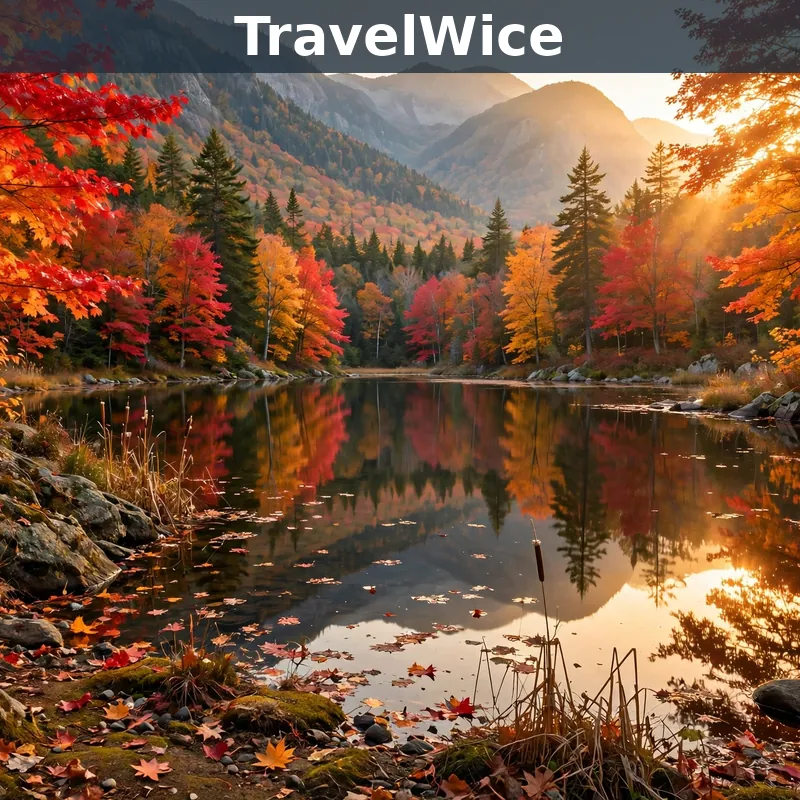
Late June to mid-October is the hiking and paddling season, and late September to early October is the foliage peak — the two weeks I would pick if I could only go once. The maples turn first, then the birches, and the High Peaks look like they have been set on fire in the best way. Daytime highs sit in the 60s, the nights drop into the 40s, and the air is clear enough to see forty peaks from a summit. The catch is the crowds: the Loj lot fills before 6 a.m. on summer weekends, Cascade’s trailhead fills by 7 a.m., and the Lake Placid hotels charge their highest rates. Book early and hike early.
July and August are warm, green and buggy. Highs reach the high 70s, the lakes are warm enough to swim in, and the canoe routes are at their best. The black flies peak in June and fade by July, but the mosquitoes take over at dusk, so pack repellent and a head net if you are camping. I paddled in August once, in the rain, and the lake was so still that the mountains doubled in the water. It rained for an hour, then the sun came out, and I had the whole pond to myself. That is an Adirondack summer in one afternoon.
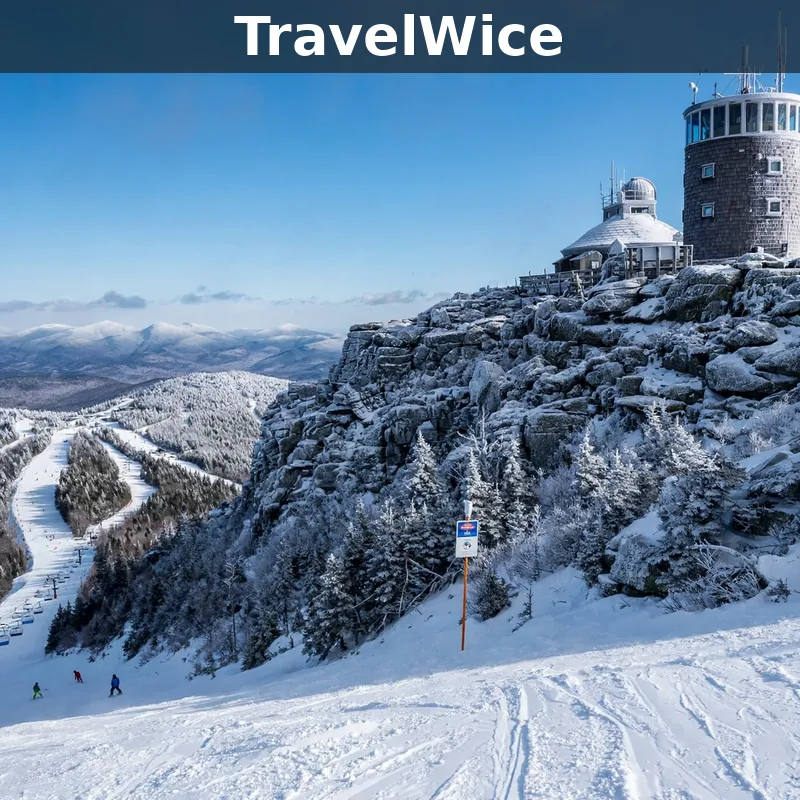
Winter is serious here, and it is wonderful if you respect it. Lake Placid hosted the Winter Olympics in 1932 and again in 1980, and the town still runs on winter: skiing at Whiteface, skating on the Olympic Oval, the toboggan chute onto Mirror Lake, cross-country skiing at Mount Van Hoevenberg. Whiteface’s 2025–26 ski season ran from November 28, 2025 to April 19, 2026, with about 150 inches of average annual snowfall, and the mountain’s 3,430 feet of vertical drop is the largest in the east. But winter hiking needs snowshoes or skis, temperatures drop well below freezing, and the days are short. I have done a February weekend here — skiing by day, a fire by night, the lake frozen solid — and I loved it, but I would not plan a first winter trip without checking conditions daily. Check the National Weather Service forecasts before you drive, because a storm in the High Peaks can close roads and change a hike into a survival exercise.
May is the mud season, and the locals will tell you so with a straight face. The trails are wet, the black flies arrive, and some high-elevation routes are still snow-covered. I like May for the waterfalls and the empty trails, as long as I wear boots I do not care about.
Getting There, and the Parking Rules That Catch Everyone
You need a car, and you need to understand the parking before you go, because the Adirondacks will punish a casual arrival. Lake Placid is about five hours north of New York City, two hours north of Albany, and about two hours south of Montreal. I drove up from Albany on I-87, the Northway, and the last hour on Route 73 from Keene is one of the prettiest drives in the east — the road squeezes through a narrow valley between the peaks, past the Ausable River, and every turn gives you another mountain. From Burlington, Vermont, the ferry across Lake Champlain to Essex is a lovely shortcut in summer.
Now the parking, because this is where first-timers get caught. The Adirondack Loj lot at Heart Lake, the main trailhead for Marcy, Algonquin and Mount Jo, charges $25 a day for non-members before 1 p.m., $15 after 1 p.m., and $10 a day for Adirondack Mountain Club members. It fills before 6 a.m. on summer weekends and before 9 a.m. on weekdays, and there is no reservation — first come, first served. I arrived at 6:30 a.m. on a Saturday in September and got one of the last spots. The car behind me did not. Overflow parking adds about a mile each way on foot, and parking on the roadside is ticketed. Get up early. It is the single best piece of advice in this guide.
The Adirondack Mountain Reserve, the AMR lot at St. Huberts in Keene Valley, is different: a free parking reservation is required from May 1 to October 31, booked through Adirondack Mountain Reserve parking reservations, with no walk-ins and no dogs. This is the trailhead for the Great Range, Indian Head, and some of the best views in the park. I booked mine three weeks ahead and still only got a Tuesday slot. Do not leave it to the week of your trip.
Cascade Mountain’s trailhead on Route 73 needs a free parking permit from May through October, booked in advance. The hike itself is about 5.6 miles round trip with roughly 1,940 feet of climbing, and it is the easiest of the 46 High Peaks — which is to say it is still a proper climb, with open rock near the top and a 360-degree view that makes the effort feel cheap. No permits are needed for day hiking anywhere else in the park, but overnight stays in the Eastern High Peaks require a bear canister from April 1 to November 30, campfires are banned in the Eastern Zone, and camping is banned above 3,500 feet except at lean-tos. The New York Department of Environmental Conservation publishes the current rules, and they change, so check before you pack.

Lake Placid: The Olympic Village
Lake Placid is the town most people picture when they think of the Adirondacks, and it earns the attention. It is the only American village to host the Winter Olympics twice — 1932 and 1980 — and the Olympic history is not a museum piece here. It is the rink on Main Street, the ski jumps on the edge of town, the bobsled track at Mount Van Hoevenberg, and the museum full of torches and medals. I walked into the Olympic Center on Main Street, stood in Herb Brooks Arena where the Miracle on Ice happened in 1980, and felt something I did not expect: the building is small, the seats are close, and you can picture the game in a way a big stadium never allows.
The Lake Placid Legacy Sites Passport is the smart buy if you want the Olympic sites. In 2026 it cost $69 for an adult and covered the Whiteface Veterans Memorial Highway, the Cloudsplitter Gondola, the Olympic Legacy Tour at Mount Van Hoevenberg, the Skyride at the Olympic Jumping Complex, and entry to the Lake Placid Olympic Museum. Bought separately, the same activities added up to about $125. The museum alone is $20 for adults, and it holds Jim Craig’s goalie pads, the torches, and a 12-minute film that I watched twice. The ski jump Skyride — a gondola and then a glass elevator 26 stories up the 128-metre jump tower — is the most vertigo-inducing view in town, and the elevator ride alone is worth the ticket.
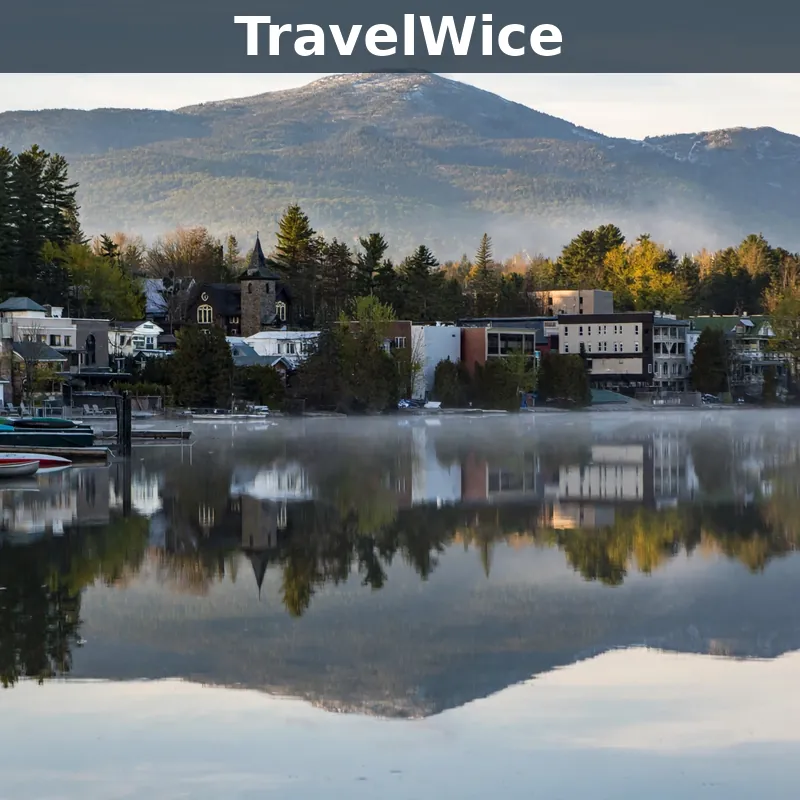
Mirror Lake is the village’s front garden. The 2.6-mile loop around it is flat, paved, and the best easy walk in the Adirondacks — I did it at sunrise with a coffee, and the lake was so still that the village and Whiteface doubled in the water. No motorboats are allowed on Mirror Lake, which keeps it quiet. In winter the lake freezes and the toboggan chute runs, and the Olympic Oval on Main Street opens for public skating. Main Street itself has the usual mix: outdoor shops, cafes, a few good restaurants, and prices that reflect the Olympic postcode. A casual dinner runs $25–$40 a head, a coffee and pastry about $8–$12. I ate at a pub on Main Street after a long hike, ordered a burger and a local beer for about $22, and felt like I had earned every bite.
The High Peaks: Which Hike to Pick
The 46 High Peaks are the mountains over 4,000 feet in the Adirondacks, and climbing all 46 earns you the title of 46er. I am not a 46er, and I do not pretend to be. I have climbed five, and each one taught me something about how serious these mountains are. The trails are steep, rocky and wet, the weather changes fast, and the summits are bare rock with views that go on for fifty miles. Here are the hikes I would actually recommend, in the order I would do them.
Cascade Mountain, about 5.6 miles round trip, is the first High Peak for most people, and the right one. It is the easiest of the 46, the trail is well marked, and the summit is open rock with a 360-degree view that includes Mount Marcy. I climbed it on a clear October morning, and the foliage below looked like a carpet someone had spilled paint on. Get the parking permit ahead, arrive before 7 a.m., and bring layers — the summit is windy and ten degrees colder than the trailhead.
Mount Jo, from the Adirondack Loj, is the best short hike in the park: 2.6 miles round trip, about 700 feet of climbing, and a summit view straight into Indian Pass and along the High Peaks ridge. I took my mother up Mount Jo, and she made it in two hours with stops, which tells you it is doable for anyone reasonably fit. The Loj lot fee is $25, the High Peaks Information Center at the trailhead is free, and the short trail is rocky enough to need proper shoes.
Mount Marcy is the big one: 5,344 feet, the highest peak in New York, about 14.8 miles round trip from the Loj via the Van Hoevenberg Trail, with about 3,200 feet of climbing. It took me ten hours, and I started at 6 a.m. and finished at 4 p.m., tired, muddy and happy. The summit is bare rock, the Hudson River starts nearby at Lake Tear of the Clouds, and on a clear day you can see 43 other High Peaks. Do not attempt Marcy as your first Adirondack hike. Do it after Cascade, with a headlamp, two litres of water, food, and a weather check the morning of. I met a man on the trail who had turned back at the treeline because the wind was too strong, and he made the right call. The mountain will be there next year.
Algonquin Peak, 5,114 feet, is the second-highest peak and, by most accounts, a harder climb than Marcy — steeper, rockier, and exposed near the top. I have not done it yet, and I am honest about that. It is on my list for next year, with a full day and a forecast I trust. Whiteface Mountain, 4,867 feet, is the only High Peak you can drive up, and that is the next section.
Whiteface Mountain: Drive It, Ski It, Ride the Gondola
Whiteface is the Adirondacks’ showpiece, and it works for everyone, which is rare in this park. The Whiteface Veterans Memorial Highway is a five-mile toll road that climbs at an 8% grade to the Castle at 4,610 feet, where you can hike the 0.2-mile Stairway Ridge Trail or ride an elevator through the mountain to the 4,867-foot summit. The toll in 2026 was $25 for the car and driver, $20 for the second passenger, $10 for each additional passenger, and children 6 and under free. The highway is open daily from 8:45 a.m. to 5:30 p.m., roughly mid-May to mid-October — in 2026 the season ran May 15 to October 12. I drove it on a clear September morning, stopped at every overlook, and took an hour to go five miles. The summit is at least ten degrees colder than the base, so bring a jacket even in August. The elevator was the surprise: a tunnel through the rock, then a lift that pops you out on the summit with the whole park spread below you.
In summer and fall, the Cloudsplitter Gondola carries visitors from the Main Base Lodge up Little Whiteface in under 15 minutes, for the High Peaks view and the hiking trails at the top. It opened June 26 in 2026, and a summer ride runs about $30 for adults. In winter, Whiteface is a serious ski mountain: 89 trails, 3,430 feet of vertical, and lift tickets running roughly $79 to $134 for adults depending on the day. The skiing here is steep and cold and not for beginners — the locals joke that the name is a weather report — but the long top-to-bottom runs are the best in the east, and the view from the summit lift on a bluebird day is something I still think about. The Adirondacks tourism official site lists current Whiteface hours, gondola dates and ski conditions.
Canoeing and Kayaking: The Quiet Half of the Park
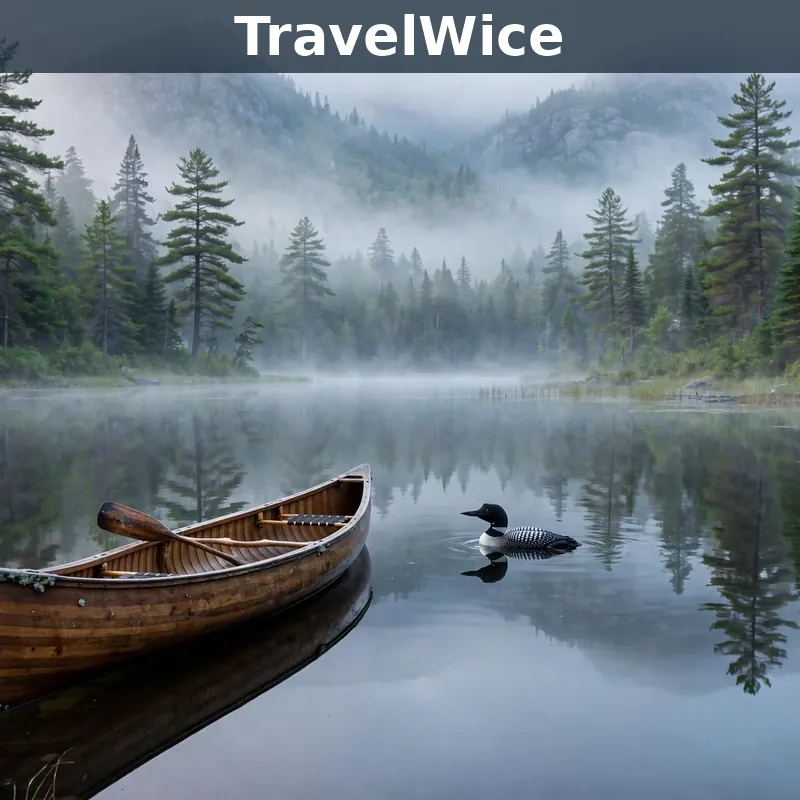
If the High Peaks are the Adirondacks’ loud half, the water is the quiet half, and I like the quiet half more. There are about 3,000 lakes and ponds here, and the paddling is the best in the northeast. I rented a canoe in Saranac Lake on a still August morning, paddled out onto the lake, and heard a loon call — a sound like a laugh and a cry at the same time — and I understood why people come back here for fifty years.
The Saranac Lake chain is the classic route: a series of lakes connected by short carries, with island campsites you can paddle to and sleep on. The campsites are first come, first served, and they fill on summer weekends, so arrive early or go midweek. I did a two-day paddle with a friend, camped on an island, cooked on a small stove, and woke to mist on the water. It cost us almost nothing — a canoe rental, a campsite, food — and it is one of the best trips I have ever taken. Bear canisters are required for overnight stays in the Eastern High Peaks, and the same good sense applies on the water: store food properly, pack out everything, and check the wind before you cross a big lake. The wind on Saranac Lake can pick up fast, and a canoe is not a boat you want to fight a chop in.
The Fulton Chain of Lakes, near Old Forge in the western Adirondacks, is the other classic: eight lakes linked by channels, with boat launches, rentals and a small-town base that feels like a summer camp that never ended. Old Forge is the gateway, and the paddle from First Lake through the chain is gentle enough for beginners. Lake George, at the park’s southeast edge, is the big, busy one — 32 miles long, with steamboats, beaches and a village that fills in summer. I like Lake George for a day: a steamboat cruise, a swim, an ice cream, and then back to the quiet lakes. For a mountain-and-lake contrast after the peaks, our Colorado travel guide for 2026 covers high lakes at a similar budget, and our Catskills travel guide for 2026 covers the smaller mountains south.
Saranac Lake, Old Forge and the Other Towns
Lake Placid gets the attention, but Saranac Lake is the town I would live in. It is ten miles west of Lake Placid, smaller, cheaper, and less polished, with a main street of bookshops and cafes, a riverwalk, and a winter carnival that has run since 1898 — one of the oldest in the world, with an ice palace built from blocks cut from the lake. I stayed in Saranac Lake for three nights in October, paid about $40 less a night than Lake Placid, and drove ten minutes to the trailheads each morning. Baker Mountain, right in town, is a 2.2-mile round-trip climb with a 450-foot gain and an open summit with views over the Saranac chain — the best easy hike in the area, and the one I do first on every trip.
Old Forge, in the west, is the family base: the Fulton Chain, the water park, the train ride, and a main street that runs on summer. It is the least High Peaks of the Adirondack towns, and that is its charm — you come here to paddle, fish, and sit on a dock, not to climb a mountain before breakfast. Tupper Lake, between Saranac Lake and the west, has the Wild Center, a natural history museum with a treetop walkway that is the best family half-day in the park. I went on a rainy day, walked the elevated trail through the treetops, and watched the rain fall on the forest from above. It was the right call.
Lake George Village, at the southeast edge, is the resort town: the lake, the steamboats, the arcades, the crowds. I treat it as a day trip from the High Peaks, not a base, because the traffic in July is slow and the prices are high. But the lake itself is lovely, and a morning cruise before the crowds arrive is worth the early start. Our Hudson Valley travel guide for 2026 covers the river towns south if your trip continues that way, and our Buffalo travel guide for 2026 covers the city west if you are heading to the falls.
Where to Stay in the Adirondacks
Stay in Lake Placid if you want the most choice and the shortest drive to the trailheads, stay in Saranac Lake if you want lower prices and a quieter town, and stay in a cabin if you want the full Adirondack experience. The classic Adirondack cabin — a log or timber lodge on a lake, with a stone fireplace, a screened porch and a dock — is the thing to book if you can. I stayed in a cabin on a small lake near Saranac Lake, paid about $220 a night in September, cooked breakfast on the porch, and watched a loon swim past while I drank my coffee. It was the best $220 I spent on the whole trip.
Hotels and lodges in Lake Placid run about $150–$300 a night in peak season, $100–$180 in winter and on weekdays. Saranac Lake runs about $30–$50 less for the same quality. Bed and breakfasts across the park run $120–$220 and usually include a proper breakfast. Vacation rentals — whole cabins and lake houses — run $200–$400 a night in summer for a two or three-bedroom place, which splits well for a group. Book October weekends months ahead: the foliage season sells out, and I have seen Lake Placid rooms go for double their summer price on the peak foliage weekend.
Camping is the budget option and a good one, if you are prepared. The state campgrounds — Fish Creek Pond, Rollins Pond, Saranac Lake Islands — charge roughly $20–$28 a night for a site, and the island sites on the Saranac chain are first come, first served. Backcountry camping in the High Peaks needs a bear canister from April 1 to November 30, and campfires are banned in the Eastern Zone, so bring a stove. I camped at a lean-to once, woke to rain on the roof, and ate oatmeal watching the mist lift off the pond. It was cold, it was damp, and I would do it again tomorrow. The I LOVE NY official tourism site lists current lodging across the park, and the Adirondacks tourism official site has cabin and lodge listings by region.
What to Eat and Drink in the Adirondacks
The food here is hearty, simple and honest, and after a ten-hour hike that is exactly what you want. Lake Placid’s Main Street has the most choice: pubs, a couple of serious kitchens, pizza, and a bakery that opens early enough for hikers. A pub dinner — a burger, a beer, fries — runs about $20–$25. A proper restaurant dinner runs $30–$45 a head. I ate at a small place on Main Street after Marcy, ordered the trout, and nearly fell asleep at the table. The waitress did not judge me. She had seen it before.
Breakfast is the meal to plan around. The diners and cafes open at 6 or 7 a.m., and a big breakfast — eggs, bacon, home fries, toast, coffee — costs about $12–$18 and fuels a whole day on the trail. I ate breakfast at a counter in Keene Valley one morning, next to a guide who was taking clients up the Great Range, and the coffee was strong enough to wake the dead. Pack trail food from the grocery in Lake Placid or Saranac Lake: sandwiches, fruit, nuts, chocolate, and more water than you think you need. There is no food on the trails, and the summit of Marcy does not have a cafe, however much you wish it did.
Drink-wise, the Adirondacks have a good brewery scene — Lake Placid has a couple of brewpubs, Saranac Lake has a brewery, and the small towns each seem to have one — and a pint runs about $6–$8. The region’s maple syrup is the real local product: the sugar shacks open in March, and a bottle of dark maple syrup from a farm stand is the best souvenir in the park. I brought home two bottles and a jar of maple cream, and the cream did not survive the week.
How Much Does an Adirondacks Trip Cost?
The Adirondacks is a mid-priced mountain trip — cheaper than the Rockies in peak season, pricier than a beach weekend. For a mid-range trip, plan on roughly $140–$210 per person per day, excluding flights. Our Texas travel guide for 2026 shows how that compares with a Texas city break, and our New York City travel guide for 2026 covers the city at roughly double the price.
Lodging is the biggest cost: about $150–$300 a night for a good hotel in Lake Placid in peak season, $120–$220 in Saranac Lake, $200–$400 for a cabin that splits across a group. Food runs about $50–$75 a day per person — breakfast $12–$18, a packed lunch $10–$15, dinner $25–$40. A rental car runs about $45–$75 a day. Activities are mostly cheap or free: day hiking needs no permit, the Loj lot is $25 a car, the AMR reservation is free, the Legacy Sites Passport is $69, the Whiteface highway is $25 for car and driver, and the gondola is about $30. A ski day at Whiteface runs $79–$134 for a lift ticket. The best things here — the sunrise on Mirror Lake, the view from Cascade, the loon on a still pond — cost nothing.
Ways to save: stay in Saranac Lake instead of Lake Placid, visit on weekdays, camp instead of booking a hotel, cook breakfast in a cabin, and buy the Legacy Sites Passport instead of paying for each Olympic site separately. For a family version of this trip, our New York family vacation guide for 2026 covers kid-friendly hikes, museums and lake days across the state, and our roundup of the best weekend getaways in the USA has other mountain trips at a similar budget.
Chart: Lake Placid Average Highs by Month
Lake Placid weather shapes the trip more than almost anything else, so this chart shows approximate average daytime highs across the year.
| Month | Avg high (°F) | Avg low (°F) |
|---|---|---|
| January | 25 | 7 |
| March | 38 | 18 |
| May | 64 | 41 |
| July | 78 | 55 |
| September | 68 | 47 |
| November | 42 | 27 |
What the chart shows is a place with a short, mild summer and a long, cold winter, and two shoulder seasons that do most of the work. Highs sit in the 20s in January, climb through the 30s in March, reach the mid-60s by May, and peak in the high 70s in July — warm days, cool nights, and rarely humid. September is the sweet spot, with highs in the high 60s and the foliage at its best, and by November the highs are back in the low 40s and the ski season is about to start. The practical takeaway: pack layers in every season, because a summit can be 15 to 20 degrees colder and much windier than the village, and check the forecast the morning of any hike — mountain weather changes fast, and a clear morning can turn into an afternoon storm.
References
- Adirondacks tourism official site — Adirondacks towns, hikes, paddling, lodging and events.
- I LOVE NY official tourism site — statewide trip planning, road trips and events.
- New York Department of Environmental Conservation — Adirondack rules, bear canisters, camping and trail conditions.
- Adirondack Mountain Reserve parking reservations — AMR parking reservations, May to October.
- National Weather Service forecasts — forecasts, mountain weather and winter storm alerts.
Adirondacks Travel Quiz
Test what you picked up from this guide before you go.
1. How big is Adirondack Park?
- A) About six million acres
- B) About six hundred thousand acres
- C) About sixty thousand acres
2. What is the parking fee at the Adirondack Loj lot for non-members in 2026?
- A) $10 a day
- B) $25 a day before 1 p.m.
- C) Free
3. How tall is Mount Marcy, the highest peak in New York?
- A) 5,344 feet
- B) 4,867 feet
- C) 6,288 feet
4. What did the Lake Placid Legacy Sites Passport cost for an adult in 2026?
- A) $69
- B) $25
- C) $125
5. When is the foliage peak in the Adirondacks, according to this guide?
- A) Late September to early October
- B) Mid-July
- C) Late November
Quiz Answers
- A) About six million acres — Adirondack Park is about six million acres, bigger than Vermont and bigger than several national parks put together.
- B) $25 a day before 1 p.m. — The Loj lot charges $25 a day for non-members before 1 p.m., $15 after 1 p.m., and $10 for ADK members.
- A) 5,344 feet — Mount Marcy is 5,344 feet high, and the standard route from the Loj is about 14.8 miles round trip.
- A) $69 — The Legacy Sites Passport cost $69 for an adult in 2026 and covered five Olympic sites; bought separately they added up to about $125.
- A) Late September to early October — The maples and birches turn in late September to early October, with daytime highs in the 60s.