
Catskills Travel Guide 2026: Waterfalls, Trails & Small Towns
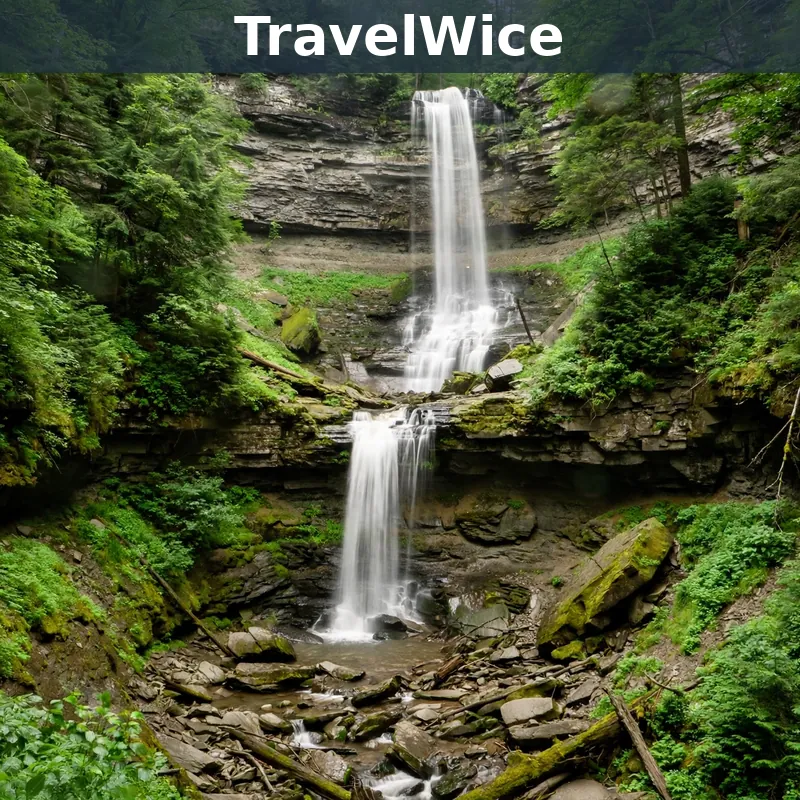
I drove into the Catskills on a Friday in October with the windows down and the radio off, because the road through Kaaterskill Clove does not need a soundtrack. Route 23A winds up a narrow gorge with rock walls on one side and a creek on the other, and then the trees open and there is the waterfall, dropping in two tiers down a cliff face, with the whole valley spread out below it. I pulled over at the first legal spot I could find — and that matters here, as I learned — and stood there for a while just looking. That is the Catskills in one scene: steep, green, a little wild, and closer to New York City than most people realise. This Catskills travel guide 2026 covers the waterfalls, the hikes, the ski slopes, the small towns, where to stay and what it will cost.
TL;DR: Stay 2–4 nights, base yourself in Phoenicia, Hunter or Woodstock, and budget roughly $140–$220 per person per day. A car is essential — there is no useful train into the mountains. Do not miss Kaaterskill Falls, Giant Ledge, a morning in Woodstock, a swim or a paddle at North-South Lake, and one long dinner in a small-town restaurant. Arrive at the popular trailheads before 9 a.m. on weekends, park only in marked lots, and check the weather before any hike — the rocks here are slick when wet.
Why Visit the Catskills in 2026
The Catskills are a mountain range in south-eastern New York, about two hours north-west of New York City by car, covering roughly 700,000 acres of state Forest Preserve and private land across Ulster, Greene, Delaware and Sullivan counties. The highest peak, Slide Mountain, stands at 4,180 feet, and 35 peaks in the range top 3,500 feet. None of them breaks the treeline — these are forested mountains, not bare rock — which gives the whole range a green, enclosed feeling that is very different from the open summits of the Adirondacks to the north.
People have been coming here for the air and the water for two hundred years. In the 1800s the mountain hotels on the escarpment drew city families escaping the summer heat, and artists and writers came for the views. The grand hotels are mostly gone, but the reasons they came are still here: cold clear streams, waterfalls, deep forest, and small towns that have kept their main streets. What I like about the Catskills now is the mix. On the same weekend I hiked a serious mountain trail in the morning, ate lunch in a Phoenicia cafe full of fly-fishermen, and spent the evening in Woodstock listening to live music in a bar that has been doing that since before I was born.
The range is also the quieter half of New York’s mountains. The Adirondacks travel guide for 2026 covers the bigger, wilder park to the north, but the Catskills are closer to the city, easier to reach for a weekend, and the towns are closer together, which makes a base-and-day-trip plan work well. If you are building a wider New York trip, our New York travel guide for 2026 shows how the Catskills fit between the Hudson Valley and the Finger Lakes, and our Hudson Valley travel guide for 2026 covers the river towns you will drive through on the way in.
Best Time to Visit the Catskills
Late September to mid-October is the peak, and the colour here is as good as anywhere in the north-east. The maples turn red and orange, the oaks go gold, and the views from the escarpment trails open up as the leaves thin. The weekends in early October are the busiest of the year — the Kaaterskill Falls car parks fill by 10 a.m., the restaurants in Phoenicia and Hunter have waits at lunch, and the hotels book up weeks ahead. Go on a weekday if you can, and if you must come on a weekend, start hiking before 9 a.m.
Summer, June to August, is the best season for the water: swimming at North-South Lake, tubing and fly-fishing on the Esopus Creek, and the waterfalls running full after rain. The trails are green and shaded, the towns are lively, and the evenings are cool enough for a campfire. Afternoon thunderstorms build fast on hot days, so start hikes early and get off the open ledges if the sky darkens — lightning is a real risk on Giant Ledge and the Slide summit.
Winter is ski season, and the Catskills have four ski areas: Hunter Mountain, Windham, Belleayre and Plattekill. Hunter is the biggest and closest to the city, about two and a half hours from Manhattan, with a summit at 3,199 feet, 67 trails and 1,600 feet of vertical. The 2026–27 season runs from late November to early April. Winter in the Catskills is cold and snowy, and the towns are at their cosiest — wood stoves, hot chocolate, early nights. Spring, April and May, is mud season: the trails are wet, the waterfalls are at their strongest, the black flies arrive in May, and the crowds have not. It is the cheapest time to visit, and the best time for the waterfalls, but wear boots you do not mind getting muddy. Check the National Weather Service forecasts before any hike — conditions on a 4,000-foot summit can be very different from the valley floor.
Getting to the Catskills and Getting Around
You need a car. There is no train into the Catskills, and the bus service is thin. Driving from Manhattan takes about two hours to Phoenicia or Woodstock, and two and a half hours to Hunter, mostly on I-87 and then west on Route 28 or Route 23A. The drive itself is part of the trip — Route 28 along the Esopus Creek and Route 23A up Kaaterskill Clove are two of the prettiest roads in the state. Rental cars in the city run about $50–$80 a day. If you do not want to drive from the city, you can take Amtrak to Hudson and rent a car there, or take a bus to Kingston and rent from there, but the car is the point either way — the trailheads, the waterfalls and the farm stands are all spread out, and there is no practical way to reach them without one.
Once you are here, the driving is easy but slow. The roads are narrow and winding, the speed limits are low, and in October you will be stuck behind someone admiring the leaves at 25 miles an hour. Allow more time than the map says. Parking is the one thing to take seriously. At Kaaterskill Falls, the state environmental department directs visitors to three marked lots — Laurel House Road, Scutt Road and South Lake — and parking is banned in the pull-offs along Route 23A from May through October. Illegally parked cars are ticketed and towed, and I watched it happen on a Saturday in October, which is a miserable way to end a hike. The Laurel House Road lot fills first and is the closest to the falls; Scutt Road is bigger and a half-mile walk along the trail. Arrive before 9 a.m. on weekends or go on a weekday, and if a lot is full, move on to another trail rather than parking on the roadside. For trail conditions and parking updates, the NYS Department of Environmental Conservation posts current information.
Top Things to Do in the Catskills
The Catskills reward a simple plan: one hike or waterfall in the morning, one town in the afternoon, one good dinner. These are the stops I would not skip.
Kaaterskill Falls
Kaaterskill Falls is the waterfall that made the Catskills famous, and it earns it. The falls drop about 260 feet in two tiers down a cliff in Kaaterskill Clove, and the upper tier alone is taller than Niagara Falls. From the Laurel House Road car park, a firm gravel path runs about 0.3 miles to an observation platform with a view of the upper falls — the path is wide and gentle, and the state lists it as wheelchair accessible. The longer trail continues about 0.7 miles down to the pools at the base, with a stone staircase that is a real workout on the way back up. The round trip to the base is about 1.4 miles and takes one to three hours depending on how long you linger. There is no entry fee, and the area is open year-round, closed from half an hour after sunset to half an hour before sunrise. The rules matter here: stay on the marked trails, stay at least six feet from cliff edges except on marked trails, and stay out of the water within 150 feet upstream of the top of the falls. People have died at these falls, and the warning signs are not decoration. Go early in the morning, when the light is in the gorge and the crowds have not arrived, and carry water — there are no facilities at the trailhead beyond a portable toilet at Scutt Road.
Giant Ledge and Panther Mountain
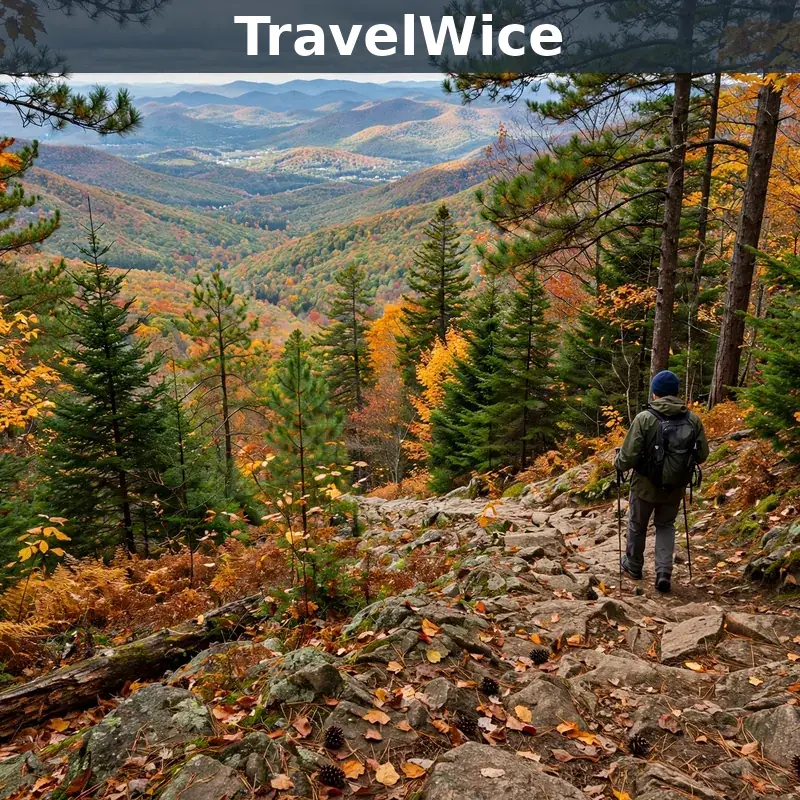
Giant Ledge is the best view in the Catskills for the least effort, and the locals know it, so it is busy on weekends. The trail starts on Oliverea Road, off Route 47, and climbs about 1,100 feet over 1.6 miles to a series of open rock ledges with views across Woodland Valley and the surrounding peaks. The round trip is 3.2 miles, and the ledges are the payoff — flat rock, big sky, the whole valley below. A few short rock scrambles on the way up can be tricky when wet, so wear shoes with grip and take your time. If you have the legs for it, the trail continues past the ledges to Panther Mountain, making a 6.8-mile round trip with about 1,800 feet of gain. I did Giant Ledge on a weekday in September and sat on the first ledge for half an hour with a sandwich, watching the light move across the valley. It was the best lunch of the trip, and it cost me nothing. Start before 9 a.m. on weekends — the car park is small and fills fast — and carry more water than you think you need, because there is none on the trail.
Slide Mountain, the Highest Peak
Slide Mountain, at 4,180 feet, is the highest peak in the Catskills, and the climb is a proper half-day. The most direct route starts at the Slide Mountain trailhead on Oliverea Road and follows the Phoenicia-East Branch Trail before joining the Burroughs Range Trail for the final climb — about 5.4 miles round trip with roughly 1,780 feet of elevation gain. The summit itself is wooded, with no big open view, but a ledge just south of the top gives you the panorama: Table and Peekamoose to the south, the Wittenberg–Cornell ridge to the east, the Devil’s Path summits to the north. The Burroughs Range traverse — Wittenberg, Cornell and Slide in one day — is the classic hard hike here: nearly 10 miles and more than 3,600 feet of gain, with steep scrambles and some of the finest summit views in the range. I have done it once, on a clear October day, and I was tired in a good way for two days after. Do not attempt the traverse as your first Catskills hike. Build up to it, carry a map, and tell someone where you are going — phone signal is patchy in the valleys.
Woodstock and the Small Towns
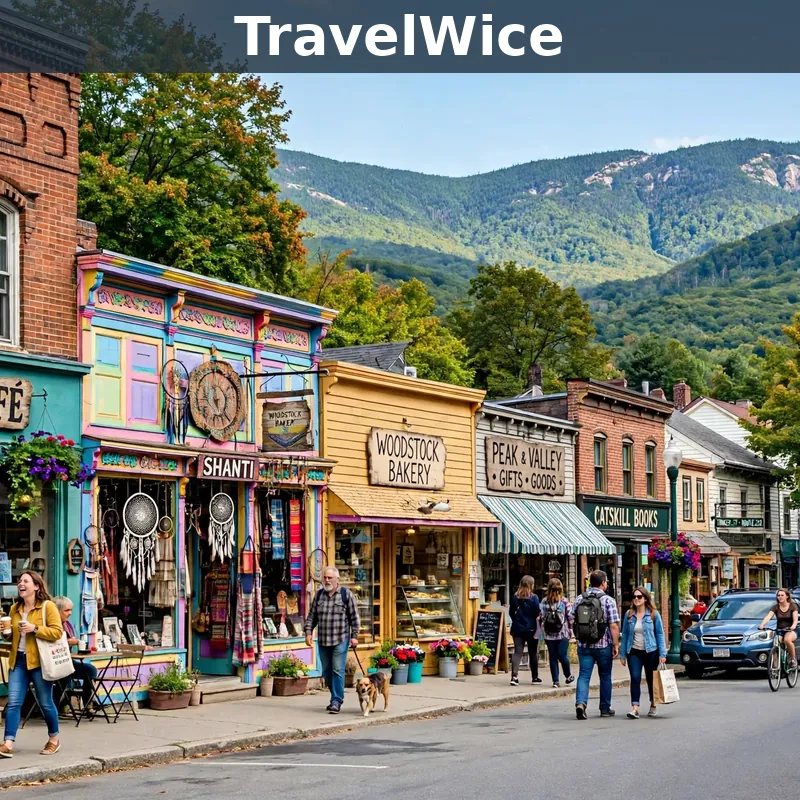
Woodstock is the town everybody has heard of, and the first thing to know is that the 1969 festival did not happen here — it happened in Bethel, about 60 miles south-west, after the Woodstock site fell through. The town itself is older than the festival: an art colony since the early 1900s, with a main street, Tinker Street, full of shops, cafes, galleries and music venues, and the mountains rising behind it. I spent an afternoon there in June, browsing the shops, eating lunch at a cafe on Tinker Street, and listening to a guitarist playing on the village green. It is touristy in the best sense — the shops are independent, the food is good, and the town knows what it is without trying too hard. Phoenicia, twenty minutes north, is the smaller, quieter alternative: a main street along Route 28 with a famous diner, the Phoenicia Diner, where the pancakes and the breakfast sandwiches draw a line out the door on weekend mornings. Get there before 9 a.m. or be ready to wait. Hunter and Tannersville, up on the mountain, are ski towns with a different feel — practical, a little rough around the edges, full of ski shops and bars. Livingston Manor and Andes, in the western Catskills, are the slow-food end of the range: farm-to-table restaurants, a brewery, a fly-fishing shop, and main streets that feel like they have not changed in fifty years.
North-South Lake and the Escarpment
North-South Lake Campground, in Haines Falls, is the Catskills’ best base for a slow day outdoors. The campground sits on two lakes at about 2,200 feet, with a beach, a boat launch, picnic areas and trails in every direction, including the Escarpment Trail to Kaaterskill Falls and to North Point, one of the finest viewpoints in the range. A day-use fee applies to parking inside the campground — check the current rate before you go — and the campground itself is one of the most popular in the state, so book campsites well ahead on Recreation.gov bookings if you want a summer weekend. I spent a July afternoon here swimming in the lake and then walking the short trail to the old Catskill Mountain House site, where the grand hotel once stood and the view down the Hudson Valley is still the same one the 19th-century guests paid for. It is an easy walk, it is free, and it is one of the best viewpoints in the state.
Skiing at Hunter, Windham and Belleayre
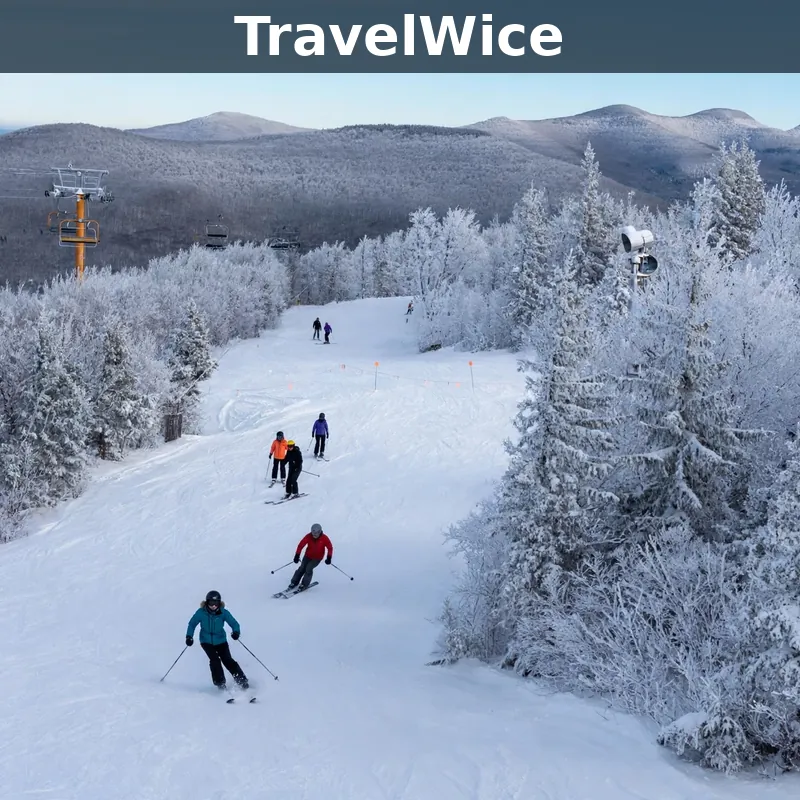
Winter in the Catskills means skiing, and the four mountains split the market neatly. Hunter Mountain is the biggest and closest to the city — summit 3,199 feet, 67 trails, 1,600 feet of vertical, about two and a half hours from Manhattan — and it is where New York learns to ski. Day tickets run about $89 to $139 depending on the date and how far ahead you buy, and can reach $179 on peak weekends; children six and under ski free. Buy online in advance — the resort limits day-ticket sales, and the gate price is the worst price. Hunter is on the Epic Pass, so pass holders ski free, and the mountain’s weekend lifts typically open at 8:30 a.m. Windham, twenty minutes north, is smaller, quieter and more family-oriented, with a mountain-top lodge and a gentler feel. Belleayre, run by the state, is the best value of the three, with a season pass that costs less than a week of Hunter day tickets and a relaxed, local atmosphere. Plattekill, near Roxbury, is the smallest and steepest, beloved by serious skiers and empty on weekdays. If you are skiing with kids, the SKI NY passport gives third, fourth and fifth graders up to two free one-day tickets at participating mountains when they ski with a paying adult — Hunter is the one mountain that does not take it, so check before you plan around it. Rentals run about $45–$60 a day for adults, group lessons from about $150 a day for kids, so a family ski day adds up fast. Book the lesson and the rental when you book the ticket.
The Esopus Creek: Fishing, Tubing and Swimming
The Esopus Creek runs the length of the central Catskills, cold and clear, and it is one of the best trout streams in the north-east. Fly-fishermen come from all over the country for it, and the stretch through Phoenicia is the most famous — the Phoenicia Diner crowd in the morning is half fishermen. You need a New York State fishing licence, and the creek has special regulations on some stretches, so check the rules before you cast. In summer, the creek is also the valley’s swimming hole: the deep pools near Phoenicia and along Route 28 are where locals cool off on hot days, and tubing the gentler stretches is a slow, lovely way to spend an afternoon. The water is cold even in August — it comes out of the mountains — so do not plan on a long swim. Check the water level before you go: after heavy rain the creek rises fast, and the current is stronger than it looks.
Catskills Towns at a Glance
Each town has its own feel, and picking the right base matters more than picking the right hotel. This table is my honest summary.
| Town | Best for | Getting there | Typical hotel rate |
|---|---|---|---|
| Phoenicia | Hiking, fishing, food | Car, ~2 hrs from NYC | $130–$250 |
| Woodstock | Music, shops, art | Car, ~2 hrs from NYC | $150–$300 |
| Hunter | Skiing, mountain base | Car, ~2.5 hrs from NYC | $140–$280 |
| Tannersville | Waterfalls, quiet base | Car, ~2.5 hrs from NYC | $120–$220 |
| Windham | Family skiing, golf | Car, ~2.5 hrs from NYC | $130–$260 |
| Livingston Manor | Food, fly-fishing, calm | Car, ~2.5 hrs from NYC | $120–$220 |
| Andes | Slow food, antiques | Car, ~3 hrs from NYC | $110–$200 |
Phoenicia is the best base for hikers — central, with the creek, the diner and the trailheads all close. Woodstock is the best base for a first visit, with the most to do on a rainy day. Hunter and Windham are the ski bases, and the most expensive in winter. Tannersville is the quietest base near Kaaterskill Falls. Livingston Manor and Andes suit a slower trip, with the best food in the western Catskills. If you are combining the mountains with the river towns, the Hudson Valley travel guide for 2026 covers the towns you will pass on the way in, and the Finger Lakes travel guide for 2026 covers the wine country further west.
Where to Stay in the Catskills
Stay in Phoenicia or Woodstock for a first visit, and in Hunter or Windham if you are skiing. A good mid-range hotel, inn or motel in Phoenicia runs about $130–$250 a night, in Woodstock $150–$300, in Hunter $140–$280, and in the western towns $110–$220. October weekends and ski weekends are the exception — rates can jump by half, and the best places sell out weeks ahead. The Catskills’ best stays are the small inns and motels that have been renovated in the last ten years: old roadside motels turned into design-led stays, farmhouses turned into bed-and-breakfasts, cabins in the woods with a fire pit and no neighbours. Vacation rentals work well for families and groups, especially around Hunter and Windham in ski season, where a house with a kitchen and a hot tub costs less per person than two hotel rooms. Check the total before you book: cleaning fees and local taxes add up, and some places have a two-night minimum on October and ski weekends. If you are camping, North-South Lake is the best campground in the range, and the state campgrounds book up months ahead on Recreation.gov. If you are visiting in winter, ask about heating, parking and the driveway — the old houses are charming and the mountain roads are steep, and a January ice storm is no joke on a hill above Phoenicia.
What to Eat and Drink in the Catskills
The Catskills eat well, and the food is the kind that sticks with you. Breakfast is the meal I plan around: the Phoenicia Diner serves pancakes, breakfast sandwiches and strong coffee for $12–$20, and the line out the door on a Saturday morning tells you everything you need to know. Get there before 9 a.m. Lunch is usually casual — a sandwich or a bowl of soup in a Woodstock cafe for $12–$18, or a slice of pizza in Hunter after a morning on the slopes. Dinner is where the western Catskills show off: farm-to-table restaurants in Livingston Manor and Andes serve mains at $28–$45, with menus that change with the season and list the farms by name. I had a dinner in Livingston Manor once — trout from the local stream, vegetables from a farm down the road, a glass of cider — that cost about $60 with a drink, and I still think about it.
The Catskills are also a brewing and distilling region now. The small breweries in Livingston Manor and Roscoe — Roscoe calls itself Trout Town USA, and the fly-fishing shops outnumber the bars — serve pints for $7–$9, and the distilleries along Route 28 make whiskey and gin from local grain. The farm stands along Route 28 and Route 32 sell apples, pumpkins, sweet corn and maple syrup in season, and the cider doughnuts at the orchards are worth the stop on their own. One practical note: the good restaurants book up on October weekends and ski weekends, sometimes a week ahead, so make a reservation when you book the hotel, not when you arrive hungry.
Day Trips from the Catskills
The Catskills sit in the middle of a lot of good day trips. East, the Hudson Valley is an hour away — the river towns, the Walkway Over the Hudson and Storm King all make an easy day out, and our Hudson Valley travel guide for 2026 covers them in detail. South, Bethel Woods, the site of the 1969 Woodstock festival, is about an hour from Livingston Manor, with a museum and a concert pavilion on the original festival field. West, the Delaware River offers kayaking and canoeing in summer, and the small towns along it — Callicoon, Narrowsburg — are worth an afternoon. North, the city of Albany is about an hour and a half, and the Niagara Falls travel guide for 2026 covers the far end of the state if your trip keeps going west.
My favourite day trip is the one that needs no planning: driving Route 28 west from Phoenicia to Andes, stopping at every farm stand and viewpoint. The road follows the Esopus and then the Delaware, the mountains rise on both sides, and the towns along the way — Shandaken, Margaretville, Andes — are the Catskills at their most unhurried. Allow a full day, leave early, and do not try to fit the whole range into it. The Texas travel guide for 2026 shows how a mountain trip compares with a big-city Texas break at a similar budget, and our California travel guide for 2026 is the one to read if your next trip heads west.
How Much Does a Catskills Trip Cost?
The Catskills are a mid-priced trip — cheaper than New York City, and the hiking is mostly free. For a mid-range trip, plan on roughly $140–$220 per person per day, excluding transport to New York. Lodging is the biggest cost: about $130–$250 a night for a good hotel or inn in Phoenicia or Woodstock, more in ski season, and more again on October weekends. Food runs about $50–$75 a day per person if you mix diner breakfasts and cafe lunches with one sit-down dinner — breakfast $12–$20, lunch $12–$18, dinner $28–$45, plus drinks. A rental car runs about $50–$80 a day, and petrol is cheaper upstate than in the city. Activities are mostly cheap or free: Kaaterskill Falls free, Giant Ledge free, North-South Lake a small day-use fee, a ski day $89–$179 for the lift ticket plus $45–$60 for rentals, a fly-fishing licence extra. The mountains give you a lot for free, and the best memories — a morning on Giant Ledge, a swim in the lake, a walk down Tinker Street — cost almost nothing. If you want more short-trip ideas at this budget, our roundup of the best weekend getaways in the USA has other weekend trips in the same range.
Chart: Catskills Average Highs by Month
The mountains’ weather shapes the trip more than almost anything else, so this chart shows approximate average daytime highs across the year.
| Month | Avg high (°F) | Avg low (°F) |
|---|---|---|
| January | 31 | 14 |
| March | 43 | 23 |
| May | 66 | 43 |
| July | 80 | 58 |
| September | 71 | 50 |
| November | 46 | 27 |
What the chart shows is a mountain range with four real seasons and a short, cool summer. Highs sit in the 30s from December through February, climb through the 40s and 60s in spring, peak around 80°F in July, then fall back through the 70s in September and the 40s in November. The shoulder months of May–June and September–October are the sweet spot, with highs in the 60s and 70s and cool nights — good hiking weather, and the waterfalls at their best after spring rain. The practical takeaway: the summits run 10 to 15 degrees colder than the valley towns, and the weather changes fast, so pack a layer even on a warm day, and check the forecast the morning you hike, because a sunny valley morning can turn into rain and wind on a 4,000-foot ridge by midday.
References
- NYS Department of Environmental Conservation — Catskill trails, parking, fishing rules and outdoor conditions.
- I LOVE NY official tourism site — statewide trip planning, regions and events.
- Hudson Valley tourism — Hudson Valley towns, events and things to do near the Catskills.
- National Weather Service forecasts — forecasts and mountain weather alerts.
- Recreation.gov bookings — federal and state campgrounds, including North-South Lake.
Catskills Travel Quiz
Test what you picked up from this guide before you go.
1. How tall is Kaaterskill Falls, and how many tiers does it have?
- A) About 260 feet in two tiers
- B) About 100 feet in one tier
- C) About 500 feet in three tiers
2. What is the highest peak in the Catskills, and how high is it?
- A) Hunter Mountain, 3,199 feet
- B) Slide Mountain, 4,180 feet
- C) Panther Mountain, 3,720 feet
3. How long is the round trip to Giant Ledge?
- A) 3.2 miles
- B) 10 miles
- C) 1 mile
4. Where did the 1969 Woodstock festival actually take place?
- A) In Woodstock itself
- B) In Bethel, about 60 miles south-west of Woodstock
- C) In New York City
5. How much do Hunter Mountain day lift tickets roughly cost in 2026–27?
- A) $20–$30
- B) $89–$139, up to $179 on peak weekends
- C) $300–$400
Quiz Answers
- A) About 260 feet in two tiers — Kaaterskill Falls drops in two tiers down the cliff in Kaaterskill Clove, and the upper tier alone is taller than Niagara Falls.
- B) Slide Mountain, 4,180 feet — Slide is the highest peak in the Catskills, and 35 peaks in the range top 3,500 feet.
- A) 3.2 miles — The Giant Ledge round trip is 3.2 miles with about 1,100 feet of gain; continuing to Panther Mountain makes it 6.8 miles.
- B) In Bethel, about 60 miles south-west of Woodstock — The festival site fell through in Woodstock and moved to Bethel, where the Bethel Woods museum now stands.
- B) $89–$139, up to $179 on peak weekends — Hunter day tickets vary by date and advance purchase, and children six and under ski free.