

Buffalo Travel Guide 2026: Architecture, Wings & the Waterfront
I went to Buffalo expecting snow jokes and chicken wings, and I left thinking about buildings. That was not the trip I planned. I planned a quick stop on the way to Niagara Falls — one night, one plate of wings, one photo of the waterfront — and then I walked into the lobby of City Hall, looked up at thirty storeys of Art Deco stone and brass, and realised I had misjudged the place completely. Buffalo is New York’s second city, a Great Lakes port that got rich on grain and steel, built some of the finest architecture in America with the money, lost the industry, and kept the buildings. This Buffalo travel guide 2026 is the trip I actually took: the Martin House, the AKG, Canalside, the wings — and the parts I stumbled into by accident that turned out to be the best bits.
TL;DR: Give Buffalo two full days, three if you love architecture or art. Base yourself downtown or in the Elmwood Village, budget roughly $140–$210 per person per day, and come May to October for the waterfront, the patios and the festivals. Book the Martin House tour ($25, plus a $4 fee) before you arrive — it sells out. Eat wings at the Anchor Bar on Main Street, walk the free Metro Rail downtown, ride the elevator to the City Hall observation deck on a weekday, and save a day for Niagara Falls, twenty minutes north. Winter is cold and quiet and cheap, and the snow is real, but the museums and the bars are warm and the city is at its most itself.

Why Buffalo Surprised Me
Buffalo was once one of the richest cities in America. The Erie Canal ended here, at Canalside, where canal boats met Lake Erie, and grain from the Midwest poured through the city’s elevators on its way east. The money built things: the Guaranty Building, one of the first skyscrapers in the country; the Ellicott Square Building; the Art Deco City Hall, finished in 1931, with its 28th-floor observation deck; and a whole neighbourhood of houses by Frank Lloyd Wright. Then the St. Lawrence Seaway opened in 1959, the grain traffic moved away, the steel mills closed, and the population fell by half. Buffalo spent decades being the punchline to a snow joke.
What I found was a city that had stopped apologising. Canalside, where the canal met the lake, is a proper waterfront park now, with a boardwalk, kayaks, concerts, an ice rink in winter and a children’s museum. The grain elevators — those huge concrete silos along the Buffalo River — are being turned into climbing walls, breweries, event spaces and boat tours. The Elmwood Village, a long strip of shops, cafes and old houses along Elmwood Avenue, is the kind of neighbourhood most cities would kill for. And the food scene is serious: not just wings, though the wings are serious too, but Italian food on Hertel Avenue, Polish food on the East Side, a fish fry on Friday nights that is practically a civic institution.
The other thing that surprised me was how easy Buffalo is. Downtown is compact and walkable, the above-ground Metro Rail along Main Street is free, parking is cheap compared with New York City, and the people are friendly in a way that feels unforced — a bus driver who told me which stop to get off at, a bartender who argued with me about which wing place was best and then wrote down three more on a napkin. I came for a night and stayed for three. If you are building a wider New York trip, our New York travel guide for 2026 shows how Buffalo pairs with Niagara Falls, the Finger Lakes and the city — and our Niagara Falls travel guide for 2026 covers the falls twenty minutes north, which is the day trip almost every Buffalo visitor takes.
Best Time to Visit Buffalo
May to October is the best season, and June to September is the sweet spot. The waterfront is open, the patios are out, the farmers’ markets are running, Canalside has concerts and kayaks, and the Naval Park ships are open daily. July and August are warm — highs around 80°F, with a breeze off Lake Erie that keeps the humidity down — and the city fills up for festivals: the Taste of Buffalo in July, the National Buffalo Wing Festival over Labor Day weekend, the Thursday night concerts at Canalside that draw thousands. I went in late June, and the evenings were the best part: long light, warm air, people out on the Elmwood Avenue sidewalks until late.
September and October are my pick if you can choose. The summer crowds thin out, the air gets crisp, the trees in Delaware Park turn gold and red, and the Bills are playing at Highmark Stadium, which changes the whole mood of the city on a Sunday. October also brings the last weeks of the Naval Park’s daily hours — it switches to weekends only in November, then guided weekend tours from Thanksgiving to March — so go before then if the ships matter to you. The AKG and the Martin House are open year-round, so an autumn weekend of museums and food works even when the waterfront quiets down.
Winter in Buffalo is not a joke, and I want to be straight about that. The city gets lake-effect snow off Lake Erie, and a single storm can drop a foot or two in a day while the sun shines ten miles away. The average high in January is around 31°F, and the wind off the lake is sharp. But winter Buffalo has its own pull: the hotels are cheap, the restaurants are full of locals, the Canalside ice rink opens, the Sabres play at KeyBank Center, and the museums are quiet. If you go in winter, bring proper boots with grip, a warm coat, a hat and gloves, and build slack into your plans — a snow band can close a road for a few hours and then clear. Check the National Weather Service forecasts before you travel, and take the lake-effect warnings seriously.
Spring, April into May, is the season of thaw and mud and the first green in Delaware Park. The waterfront reopens, the gardens wake up, and the city shakes off winter. It can still be cold and grey in April, and the rain is real, but the hotel rates are low and the crowds have not arrived. I would take a sunny May weekend in Buffalo over a crowded July one, and the lilacs in Delaware Park in May are worth timing a trip around.
Getting to Buffalo and Getting Around
Buffalo Niagara International Airport (BUF) is about fifteen minutes from downtown by car, with direct flights from New York, Boston, Chicago, Atlanta, Washington and Florida, and it is one of the easiest airports I have used — small, calm, and a short walk from the gate to the rental cars. A rideshare or taxi downtown costs about $20–$30. Driving from New York City takes about seven hours on I-90, from Cleveland about three hours, and from Toronto about two hours plus the border crossing. Amtrak serves Buffalo at two stations, Buffalo–Depew and Buffalo–Exchange Street, with trains from New York City, Albany and Chicago, and the Exchange Street station is downtown, a short walk from Canalside.
Once you are there, downtown Buffalo is walkable, and the free part of the Metro Rail makes it easier. The NFTA Metro Rail runs along Main Street from Canalside up through the Theater District to the University at Buffalo’s South Campus, and the above-ground stretch downtown is free — I rode it three or four times a day, hopping on and off between City Hall, the Theater District and Canalside, and never paid a cent. The underground stretch beyond downtown needs a ticket, and it is the way to get to the Elmwood Village and the museums if you do not want to drive. Buses cover the rest of the city, and rideshares are plentiful downtown and in Elmwood, though they can be slower late at night.
You will want a car for some of the trip: the Martin House, Delaware Park and the AKG are a short drive or bus ride from downtown, the Naval Park and Canalside are walkable from each other, and Niagara Falls, East Aurora and the wine country all need a car. Rental cars at the airport run about $45–$75 a day. Parking downtown is easy and cheap by big-city standards — street meters, surface lots and garages, mostly $5–$15 for the day — and Canalside, the Outer Harbor, the History Museum and the zoo all have free lots. The AKG charges $12 for three hours of parking, and the zoo charges $6 for the first two hours, so check before you go.
Top Things to Do in Buffalo
Buffalo rewards a slow pace and a plan that respects the calendar — several of the big stops close on Tuesdays and Wednesdays, and the waterfront runs on a summer clock. These are the experiences I would not skip.

Tour the Martin House
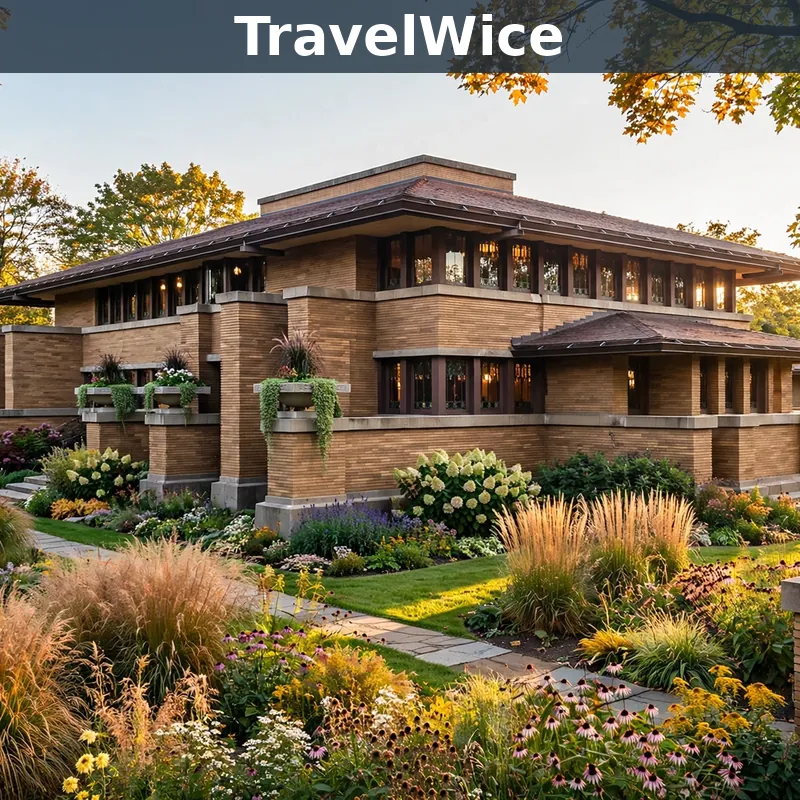
Frank Lloyd Wright’s Darwin D. Martin House, at 125 Jewett Parkway, is the best single building to visit in Buffalo, and one of the finest Prairie houses Wright ever built. Darwin Martin was a Larkin Soap Company executive, and Wright designed him not just a house but a whole estate between 1903 and 1905: the main house, a carriage house, a conservatory, a pergola and a gardener’s cottage, all in low horizontal lines, with art glass windows, built-in furniture and a landscape that was part of the design. The house was neglected for decades, the pergola and conservatory were torn down, and then a long restoration rebuilt them — walking through it now, you see what Wright meant by a house that belongs to its site.
You can only go inside on a tour, and you should book ahead, because tours sell out. The standard 75-minute Martin House Tour costs $25 for adults, $23 for seniors, $10 for students and is free for children 8 and under, plus a $4 ticketing fee per ticket. The two-hour Martin House Plus tour, at $50, adds the Barton House and the Gardener’s Cottage. I took the standard tour, and my guide — a retired teacher who had been leading tours for years — pointed out details I would have walked straight past: the way the art glass in the windows repeats the pattern of the trees outside, the way the low ceilings in the hallway open up into the living room, the way Wright hid the radiators behind grilles so nothing broke the line of the room. Check in at the Greatbatch Pavilion, arrive ten minutes early, and allow time to walk the grounds afterwards. The house is closed on Tuesdays and Wednesdays, and open Monday, Thursday and Friday from 10:30 a.m. to 3:30 p.m., weekends until 4:30 p.m. in late 2026. The Visit Buffalo Niagara official tourism site has current tour times.
Spend an Afternoon at the Buffalo AKG Art Museum
The Buffalo AKG Art Museum, at 1285 Elmwood Avenue, is one of the oldest public art institutions in the United States, founded in 1862, and it reopened in June 2023 after a major expansion that added the glass-walled Gundlach Building and a mirrored canopy called Common Sky over the courtyard of the 1962 Knox Building. The collection is modern and contemporary art, bought over a century and a half, often directly from living artists, and it is stronger than a city Buffalo’s size has any right to expect: Gauguin, Picasso, Warhol, and a whole wing of work made in the last twenty years.
Allow two to three hours. Admission is $24 for adults, $20 for seniors 62 and over and college students, $10 for ages 5 to 18, and free for children 4 and under. The museum is open Monday and Thursday to Sunday from 10 a.m., closing at 5 p.m. except Fridays (8 p.m.) and Saturdays (6 p.m.), and closed on Tuesdays and Wednesdays. The best deal in the city is M&T First Fridays: on the first Friday of each month the museum is pay what you wish from 10 a.m. to 9 p.m., on site only, with no advance tickets. I went on a Friday afternoon, stayed for dinner at Cornelia, the museum restaurant, and walked out into Delaware Park at dusk. Parking is $12 for three hours. If you go, do not rush the Gundlach Building — the glass walls look out over the park, and the light in there in the late afternoon is worth sitting with for a while.
Canalside and the Naval Park
Canalside is where the Erie Canal met Lake Erie, and it is the most changed place in Buffalo. The old canal terminus is a waterfront park now, with a boardwalk, lawns, a beach, kayaks and water bikes in summer, concerts on Thursday nights, and an ice rink in winter. It is free, it is flat, and it is the best place in the city to watch the sun go down over the lake. I walked there on my first evening, bought a coffee from a food truck, and sat on the boardwalk watching a kayaker paddle past the grain elevators. The Buffalo Heritage Carousel, a restored 1924 carousel in a roundhouse at Canalside, costs $3 a ride, and the quiet rides on Sunday mornings from 11 a.m. to noon, with the music turned down, are a thoughtful touch for kids who are sensitive to noise.
Next door, the Buffalo Naval & Military Park is the largest inland naval park in America, and it is the most hands-on museum in the city. You board three ships: the destroyer USS The Sullivans, the cruiser USS Little Rock and the submarine USS Croaker, climbing steep ladders, ducking through hatches, and standing in the compartments where sailors lived and worked. Admission is $23 for adults, $18 for ages 5 to 13 and seniors 65 and over, $16 for veterans, and free for children 4 and under. It is open daily through October, then weekends only in November, with guided tours on Saturdays and Sundays from Thanksgiving to March. Allow about two hours, wear shoes with grip — the steel decks are slippery when wet — and skip it with toddlers, because the ladders and hatches are not built for small children or strollers. The museum building on shore has exhibits on Buffalo’s military past, and the park’s location, right on the water with the city behind it, makes it a good photo stop even if you do not go aboard.
City Hall and Downtown Architecture
Buffalo City Hall, at 65 Niagara Square, is free, and it is the best free thing in the city. The Art Deco tower, finished in 1931, rises 32 storeys over Niagara Square, and the lobby is a cathedral of stone, brass and murals. The observation deck on the 28th floor gives you a view over the whole city, the lake, the river and, on a clear day, Canada — and it is free, open on weekdays only. A free guided tour runs at noon on weekdays, and it is worth timing your visit for: the guide told me stories about the building I would never have guessed, including the friezes on the outside that tell the story of Buffalo’s past. I went up at noon on a Friday, and the view from the deck — the lake glittering to the west, the grain elevators along the river, the whole grid of downtown below — was the moment Buffalo clicked for me.
Downtown has more architecture than most visitors expect, and it is all within a short walk. The Guaranty Building, at 140 Pearl Street, was one of the first skyscrapers in America, designed by Louis Sullivan and Dankmar Adler in 1896, with terracotta ornament that rewards a slow look. The Ellicott Square Building, the Brisbane Building, the old Market Arcade — they are all within a few blocks of each other, and the free Metro Rail makes it easy to hop between them. Shea’s Buffalo Theatre, at 646 Main Street, is a 1926 movie palace with a grand interior that hosts Broadway tours, concerts and the Buffalo Philharmonic, and if a show is on during your visit, book it — the building is half the experience.
Delaware Park, Elmwood Village and the Zoo
Delaware Park, designed by Frederick Law Olmsted — the same man who designed Central Park in New York — is Buffalo’s front lawn, and it is where the city goes to breathe. Hoyt Lake, the meadow, the golf course, the paths under the old trees: I walked there on a Sunday morning, past joggers, a youth soccer game, a man feeding ducks, and a couple of rowers on the lake, and it felt like the most normal, most pleasant morning of the trip. The park connects to the AKG, the Burchfield Penney Art Center and the Buffalo History Museum, all within a short walk of each other on Elmwood Avenue, so you can build a whole museum afternoon around it. Our New York City travel guide for 2026 covers Central Park, Olmsted’s more famous work, if you want to compare the two.
Elmwood Village, the strip of Elmwood Avenue that runs from the park down to Allen Street, is the best neighbourhood in Buffalo to wander: bookshops, cafes, vintage stores, restaurants with patios, and old houses with porches. I spent a whole afternoon there, starting with coffee, ending with dinner, and stopping in three shops I had no intention of entering. The Buffalo Zoo, at 300 Parkside Avenue in Delaware Park, is open daily from 10 a.m. to 5 p.m., with last entry at 4 p.m., and admission is $25.95 for ages 13 to 64, $19.95 for ages 2 to 12, and free for children under 2. It is a good family half-day, and the rainforest building is a warm escape on a cold day.
Where to Stay: Buffalo Neighbourhoods at a Glance
Buffalo is compact, and each neighbourhood has a distinct feel. This table is my honest summary of the main areas.
| Neighbourhood | Best for | Feel | Typical hotel rate |
|---|---|---|---|
| Downtown / Canalside | First-timers, walkers | Central, waterfront, easy | $130–$220 |
| Elmwood Village | Cafes, shops, nightlife | Leafy, lively, walkable | $120–$200 |
| Allentown | Bars, art, Theatre District | Historic, bohemian, late | $100–$180 |
| North Buffalo / Hertel Avenue | Food, local life, value | Residential, friendly, calm | $90–$160 |
| Airport / Cheektowaga | Early flights, budget | Practical, car-dependent | $80–$140 |
| East Aurora | Village stay, Roycroft, quiet | Small town, craft, pretty | $130–$210 |
Downtown is the easiest base for a first visit. You walk to Canalside, the Naval Park, City Hall and the Theater District, ride the free Metro Rail up Main Street, and you do not need the car every day. The hotels downtown range from big chains to a couple of converted historic buildings, and the rates are reasonable compared with New York City — a good room downtown runs about $130–$220 a night in summer, and less in winter. The Elmwood Village is my favourite place to stay: quieter at night, prettier in the morning, and full of cafes and restaurants within walking distance, though the hotels there are smaller and fewer, so book early.
Allentown, just north of downtown around Allen Street, is the old bohemian quarter — bars, galleries, restaurants in old houses — and it is the best place to stay if you want a night out on foot. North Buffalo, along Hertel Avenue, is where the locals eat and shop, with Italian delis, cafes and a proper neighbourhood feel, and the rates are lower. East Aurora, about 25 minutes southeast, is a village stay: the Roycroft Campus, a crafts colony from the early 1900s, a main street with bookshops and cafes, and the inn there is a good base if you want quiet nights and a slower pace. If you are flying out early, the airport hotels in Cheektowaga are practical and cheap, but you will drive everywhere.
Book early for Bills home weekends, for the Wing Festival over Labor Day weekend, and for any summer Saturday. The good rooms sell out, and the prices climb. In winter you can book a week out and pay half the summer rate. Check the total before you book — parking charges of $10–$20 a night are common downtown, so ask whether parking is included.
What to Eat and Drink in Buffalo
Buffalo food starts with wings, and the wings start at the Anchor Bar. The story is famous: on a late-winter night in 1964, Teressa Bellissimo, who ran the Anchor Bar at 1047 Main Street with her husband Frank, fried up a batch of chicken wings — a cut nobody wanted then, mostly used for stock — tossed them in hot sauce and butter, and served them with celery and blue cheese to her son Dominic’s hungry friends. The wings caught on, the bar became a pilgrimage site, and Buffalo wings became one of America’s defining bar foods. The original Anchor Bar is still there on Main Street, and a single order of 10 traditional wings costs about $16.99, with celery and blue cheese on the side, just as it was in 1964. Order them medium — that is the original heat — and eat them with your hands. Nobody in Buffalo eats wings with a fork, and the blue cheese is not optional.
Duff’s, on Sheridan Drive in Amherst, is the other name in the wings argument, and every Buffalonian has an opinion about which is better. Duff’s wings are crispier, the sauce is a little different, and the room is a sports bar rather than a historic site. I tried both, and I liked the Anchor Bar for the story and Duff’s for the crunch, and I am not going to settle the argument here — try both and pick your own side. The National Buffalo Wing Festival, over Labor Day weekend at Highmark Stadium, is the place to taste a dozen wing places in one afternoon, and it is worth timing a trip around if wings are your thing.
Beef on weck is the other Buffalo sandwich, and it is the one visitors miss. Roast beef, sliced thin, piled on a kummelweck roll — a salty roll topped with caraway seeds and coarse salt — with horseradish on the side. It is simple, salty, and very Buffalo, and the best ones are at old bars and delis rather than the tourist spots. A Friday fish fry is the third tradition: battered haddock, with fries, coleslaw and macaroni salad, served at bars, churches and restaurants across the city on Friday nights, a habit left over from the city’s Catholic past. I had a fish fry at a neighbourhood bar on a Friday, and the plate was so big I took half of it home.

Beyond the classics, Buffalo eats well. Hertel Avenue has Italian delis, bakeries and restaurants that have been there for generations. The East Side has Polish food — pierogi, kielbasa, placek — at old church halls and family restaurants. The Elmwood Village has the cafes, the brunch spots and the farm-to-table places, and the West Side has tacos, Burmese food and a growing scene of small restaurants run by the city’s immigrant communities. For drinks, Buffalo is a beer city: the old grain elevators have become breweries, the bars on Allen Street and Chippewa Street stay open late, and the happy hour culture is strong. Drink water between rounds, walk or take a rideshare after drinking, and do not drive.
Day Trips from Buffalo
Buffalo is a good base for western New York, and the day trips are half the reason to stay an extra day.
Niagara Falls
Niagara Falls is twenty minutes north, and it is the day trip almost every Buffalo visitor takes. The Maid of the Mist, the Cave of the Winds, Goat Island and the gorge are all on the New York side, and a full day there is easy from a Buffalo hotel — leave by 8 a.m., beat the crowds, and be back for dinner in the Elmwood Village. Our Niagara Falls travel guide for 2026 has the full plan, including the 2026 prices and the best viewpoints.
Letchworth State Park
Letchworth, about an hour and fifteen minutes southeast, is the “Grand Canyon of the East” — a deep gorge cut by the Genesee River, with three big waterfalls, cliff-top trails and a view from the train trestle that is one of the most photographed spots in New York. It is a full-day trip, and it pairs well with a drive through the farm country of the Genesee Valley. The park is at its best in autumn, when the gorge fills with colour, and in spring, when the river runs high. Bring good shoes: the trails along the gorge rim are easy, but the steps down to the falls are steep.
East Aurora and Ellicottville
East Aurora, 25 minutes southeast, is a village with a main street, bookshops, cafes and the Roycroft Campus, a turn-of-the-century arts and crafts colony that still runs workshops and tours. Ellicottville, about an hour south, is a ski town in winter and a festival town in summer, with a main street full of shops and restaurants and the Holiday Valley ski slopes just outside town. Both make easy half-day trips, and both are a good change of pace after two days in the city — small towns, slow mornings, and a different side of western New York.
The Finger Lakes Wine Country
The Finger Lakes are about two hours east, which makes them a long day trip or, better, the next stop on a road trip. Seneca and Cayuga Lakes have more than a hundred wineries, with Riesling the signature grape, and the lake towns — Geneva, Watkins Glen, Ithaca — are worth a night each. Our Finger Lakes travel guide for 2026 covers the wineries, the gorge trails and the best bases, and our Adirondacks travel guide for 2026 covers the mountains further east if your trip keeps going.
How Much Does a Buffalo Trip Cost?
Buffalo is one of the cheapest city breaks in the Northeast, and that is part of its charm. For a mid-range trip, plan on roughly $140–$210 per person per day, excluding flights. Our Texas trip cost guide for 2026 shows how that compares with a Texas city break, and our Colorado travel guide for 2026 covers a mountain trip at a similar budget.

Lodging is the biggest cost: about $130–$220 a night downtown in summer, $90–$160 in North Buffalo or near the airport, and half that in winter. Food runs about $50–$75 a day per person if you mix diner breakfasts and casual lunches with one sit-down dinner — breakfast $10–$15, a wing lunch $15–$20, dinner $25–$40, plus drinks. A rental car runs about $45–$75 a day from the airport, though you can skip it for a downtown-only trip and use the free Metro Rail and rideshares. Activities are reasonable: the Martin House $25 plus a $4 fee, the AKG $24, the Naval Park $23, the zoo $25.95, City Hall and Canalside free. A three-day trip for two people, staying downtown and doing the museums and a day at the falls, comes to roughly $900–$1,200 excluding flights, and you can cut that by a third by visiting in winter or staying in North Buffalo.
Ways to save: visit in May, September or October instead of July and August; stay in the Elmwood Village or North Buffalo; eat at wing places, delis and diners; use the free sights — City Hall, Canalside, the Metro Rail, Delaware Park, the Elmwood Avenue walk — which are the best parts of the city anyway. Buffalo gives you a lot for free, and the best memories — a sunset at Canalside, a walk through Delaware Park, a plate of wings at a bar full of locals — cost almost nothing. If you want more short-trip ideas at a similar budget, our roundup of the best weekend getaways in the USA has other trips that work the same way.
Chart: Buffalo Average Highs by Month
Buffalo weather shapes the trip more than almost anything else, so this chart shows approximate average daytime highs across the year.
| Month | Avg high (°F) | Avg low (°F) |
|---|---|---|
| January | 31 | 18 |
| March | 43 | 27 |
| May | 67 | 47 |
| July | 80 | 62 |
| September | 71 | 53 |
| November | 48 | 33 |
What the chart shows is a city with a short, warm summer and a long, cold winter. Highs sit in the 30s from December through February, climb through the 40s and 50s in March and April, reach the 60s in May and peak around 80°F in July and August. September stays warm, October cools fast, and November is already coat weather. The practical takeaway: the waterfront and the full outdoor city belong to May through October, the cheapest and quietest months are December to March, and whatever month you go, check the lake-effect forecast — a snow band can change the day in an hour, and the temperature by the lake always feels a few degrees colder than the forecast, because the wind off Lake Erie never stops.
References
- Visit Buffalo Niagara official tourism site — Buffalo hotels, events, neighbourhoods and things to do.
- I LOVE NY official tourism site — New York State trip planning, parks and events.
- Niagara Falls USA official tourism site — Niagara Falls attractions, boat times and day trips from Buffalo.
- National Park Service — national parks and historic sites across the United States.
- National Weather Service forecasts — forecasts and lake-effect snow alerts.
Buffalo Travel Quiz
Test what you picked up from this guide before you go.
1. How much was the standard Martin House Tour for adults in 2026?
- A) $25, plus a $4 ticketing fee
- B) $10
- C) $50
2. What is the free way to get around downtown Buffalo?
- A) The above-ground Metro Rail along Main Street
- B) A taxi
- C) A horse-drawn carriage
3. Where were Buffalo wings first served in 1964?
- A) Duff’s
- B) The Anchor Bar on Main Street
- C) Canalside
4. How much is adult admission to the Buffalo AKG Art Museum?
- A) $24
- B) $10
- C) Free every day
5. How far is Niagara Falls from Buffalo?
- A) About 20 miles north, roughly 20 minutes by car
- B) About 100 miles
- C) About 5 miles
Quiz Answers
- A) $25, plus a $4 ticketing fee — The standard 75-minute Martin House Tour was $25 for adults in 2026, $23 for seniors, $10 for students, plus a $4 ticketing fee per ticket.
- A) The above-ground Metro Rail along Main Street — The above-ground stretch of Metro Rail downtown is free; the underground stretch needs a ticket.
- B) The Anchor Bar on Main Street — Teressa Bellissimo first served the wings at the Anchor Bar, 1047 Main Street, in 1964.
- A) $24 — Buffalo AKG adult admission is $24, $20 for seniors 62 and over and college students, $10 for ages 5 to 18.
- A) About 20 miles north, roughly 20 minutes by car — Niagara Falls is about 20 miles north of Buffalo, a 20–25 minute drive.