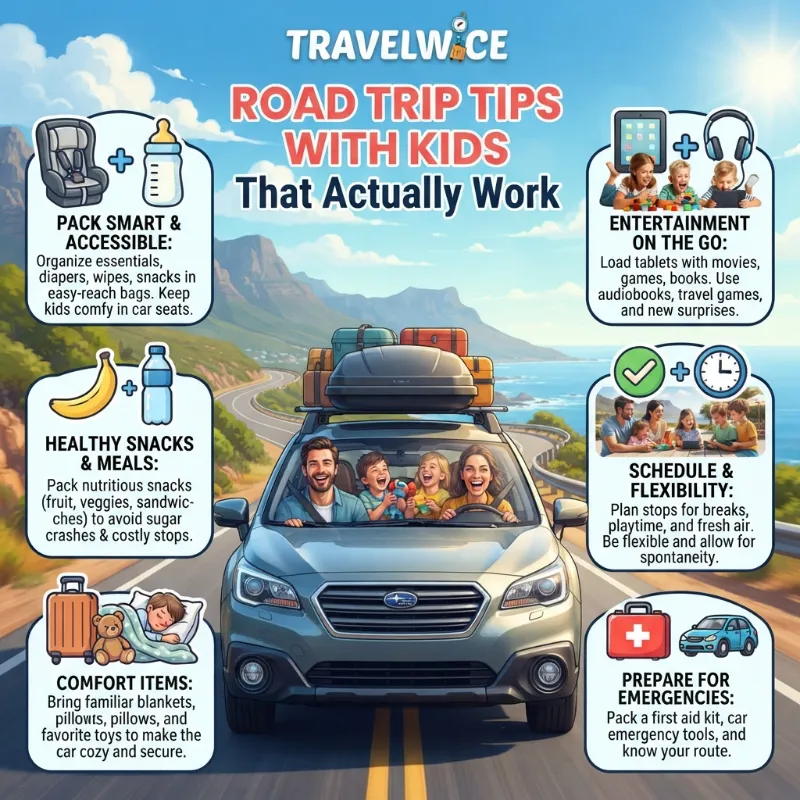

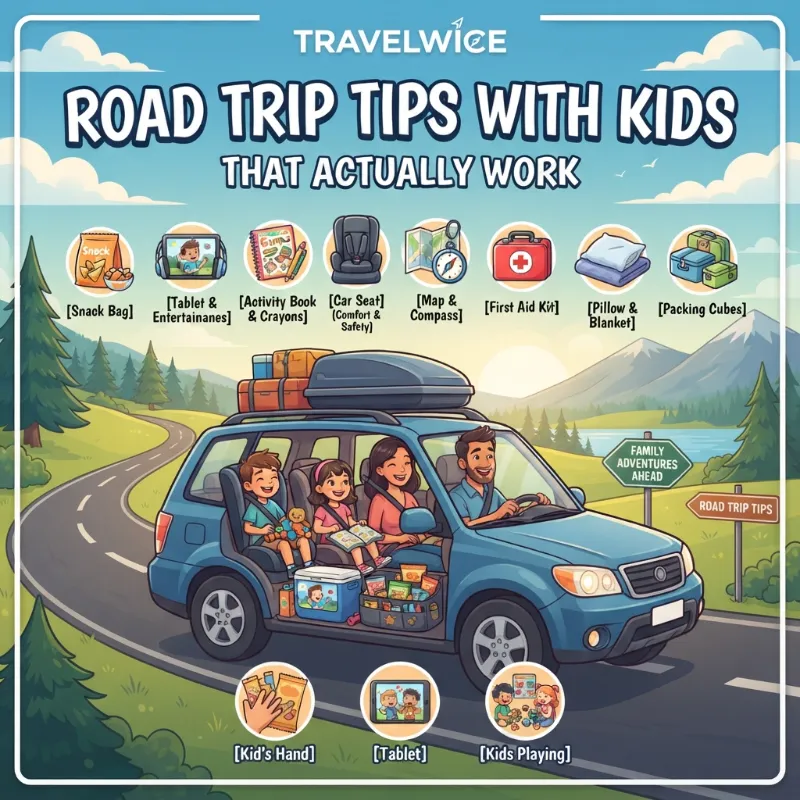
The first hour of a family drive is usually fun. Then someone needs the bathroom, someone drops a snack, and a toddler decides they are done with the car seat. These road trip tips with kids come from simple routines that keep long days calm. You do not need fancy gear. You need a plan, a few smart rules, and a bag of tricks that you can reach from the driver’s seat.
TL;DR
- Plan a stop every 2 hours, and match the pace to your youngest child.
- Pack three bags: snacks, activities, and an emergency kit within arm’s reach.
- Hold back the best games and treats until kids get restless, not at the start.
- Check car seat fit before you leave, because it is the most important safety step.
Key Takeaways
| Topic | What to do | Why it works |
|---|---|---|
| Stops | Every 2 hours, 15 to 20 minutes | Kids burn energy and reset their mood |
| Driving time | Cap at 6 to 8 hours a day with young kids | Fewer meltdowns and safer driving |
| Snacks | Pack dry, low mess foods | Less cleanup and fewer sugar crashes |
| Activities | Rotate one new item each hour | Novelty beats a pile of toys |
| Toddlers | Drive during nap time | Quiet miles and a fresher driver |
| Safety | Check seat fit and install | Proper seats lower the risk of serious injury |
Why Road Trip Tips With Kids Matter More Than the Route
Most parents spend hours picking a route and ten minutes planning the car itself. That is backward. The route stays the same, but the mood in the back seat changes every 30 minutes.
Road Trip Packing Checklist Essentials You Need in 2026
Think of the car as a small room you share for a full day. Good rooms have snacks, things to do, fresh air, and a place to rest. When any of these is missing, kids let you know quickly.
Road Trip Planning Apps 2026 Compared: The Tools Worth Your Phone Space
Our main pillar guide on road trip travel tips in the USA covers routes, budgets and timing. This post focuses on the people in the back seat.
Start With a Realistic Daily Drive Plan
The biggest mistake is planning adult sized days. A 10 hour drive may work for two adults. For kids, it often ends in tears for everyone.
Here is a simple rule of thumb. Plan the number of hours your youngest child can handle, then add the stops. A baby may handle 3 to 4 hours between feeds and changes. A toddler may need breaks every 90 minutes. School age kids can often go 2 hours or more.
Best Car Rental Tips USA: Save Money on Your Road Trip
A sample day for a family with a toddler and a 7 year old
Picture a 7 hour drive from Denver to Salt Lake City. Instead of one push, split the day like this:
- Leave at 7:30 a.m. after breakfast, with the toddler still sleepy.
- Stop at 9:30 a.m. for a playground or a rest area walk.
- Eat lunch at noon, away from the highway if you can.
- Drive during nap time from 1 p.m. to 3 p.m.
- Take a last snack and stretch stop at 3:30 p.m.
That plan adds about 90 minutes to the clock. It also cuts the number of crying fits, which matters more.
Road Trip Tips With Kids by Age Group
Age changes everything. A good plan for a 2 year old will bore a 10 year old. Use this table as a starting point and adjust to your own kids.
| Age | Comfortable stretch | Best activity type | Common problem |
|---|---|---|---|
| Baby (0 to 1) | 2 to 3 hours | Soft toys, music, pacifier | Feeding and diaper changes |
| Toddler (1 to 3) | 1.5 to 2 hours | Sticker books, finger puppets | Boredom and car seat refusal |
| Preschool (3 to 5) | 2 hours | Audio stories, simple games | “Are we there yet?” |
| School age (6 to 10) | 2 to 3 hours | Travel journals, trivia, books | Motion sickness, screen fights |
| Tween (11 to 13) | 3 hours | Podcasts, music, headphones | Wanting privacy and space |
Traveling with toddlers by car
Traveling with toddlers by car is the hardest version of this trip. They cannot reason with you, and they hate being strapped in. Still, a few habits help a lot.
Time your drive around nap time. Many toddlers fall asleep within 20 minutes of leaving. Keep the car cool and dim, and play soft music. Never skip stops to “make good time,” because a toddler who has been stuck for three hours will scream through hour four.
Keep a small “surprise bag” within reach. Hand out one item at a time, such as a new board book, a lunch box with stickers, or a washable crayon set. For more help with planning gear, see our road trip packing checklist.
Best Car Rental Tips USA: Save Money on Your Road Trip
Long Car Ride Activities Kids Will Actually Enjoy
Good long car ride activities kids love share three traits. They are cheap, they are quiet, and they do not make a mess. Here are options that work across ages.
- Audio stories: A single audiobook can fill three hours. Pick one the whole family likes so adults enjoy it too.
- Window bingo: Print a card with items like a red barn, a water tower, or an out of state plate.
- Travel journals: Kids draw or write one line about each stop. This also makes a great keepsake.
- Sticker scenes: Reusable sticker books keep little hands busy without glue or glitter.
- Magnetic boards: Small magnet puzzles stay put on a lap tray, even on bumpy roads.
- Snack challenges: Kids thread cereal on string, or sort snacks by color before eating.
Our guide to a road trip playlist and apps lists music and audio picks that keep every age happy. If you want more family planning ideas, Little Voyageurs has a helpful road trip with kids guide that shares a parent’s view on pacing.
Best Car Rental Tips USA: Save Money on Your Road Trip
Road Trip Games for Kids That Need Zero Gear
Road trip games for kids work best when they need no props. You never have to find a missing piece under the seat. These are our favorites because they scale across ages.
Classic word and guessing games
- I Spy: Works from age 3. Use colors for younger kids and first letters for older ones.
- 20 Questions: Great for ages 6 and up. Pick animals, places, or food.
- The alphabet game: Find each letter in order on signs and plates.
- Story chain: Each person adds one sentence. The silliest stories usually win.
Games for mixed ages
Mixed ages are tricky, since older kids get bored fast and younger ones get lost. Try team games. Pair a younger child with an older one, and give both a clear role. The older one can read signs, while the younger one spots colors.
Best Road Trip Snacks Ideas for Long Drives
Another good one is “Would you rather.” It costs nothing and invites debate. Keep questions light, such as “Would you rather eat pizza or tacos for a week?”
A simple reward system
Rewards help, but keep them small. Give a sticker for every hour of calm, and let kids trade ten stickers for a small treat at the next stop. This turns a long day into a series of short goals.
Snacks, Drinks and Meals That Prevent Meltdowns
Hunger drives more car fights than boredom. A steady flow of snacks keeps moods even. Still, some foods cause more trouble than others.
Good car snacks
- Cheese sticks and cut fruit in a small cooler
- Crackers, pretzels and plain popcorn
- Dried fruit and trail mix (only for kids who can chew safely)
- Reusable pouches with water or milk
Snacks to avoid
- Melting chocolate and gummy sweets
- Sticky candy that sticks to seats
- Very salty snacks, which make kids thirsty and need more bathroom stops
For small children, avoid foods that could cause choking while the car is moving. Offer snacks at a stop whenever you can. If a child chokes in a moving car, you cannot respond quickly.
Eat real meals at real tables when you can. A 30 minute lunch at a park often resets everyone better than a drive through meal.
Road Trip Safety Tips USA: Every Driver Should Know These 15 Checks
Car Seat Safety and Comfort: The Part You Cannot Skip
Comfort matters, but safety comes first. According to the National Highway Traffic Safety Administration, proper car seat use sharply lowers the risk of death in a crash. The agency estimates the risk drops by 71% for infants and 54% for toddlers aged 1 to 4 in passenger cars.
| Age group | Estimated drop in fatal injury risk with a proper car seat |
|---|---|
| Infants (under 1) | 71% |
| Toddlers (1 to 4) | 54% |
Chart (copy and paste friendly)
Infants   █████████████████████████████████████ 71%
Toddlers  ████████████████████████████ 54%
Before you leave, check the install. Many local fire stations or hospitals offer free car seat checks. The American Academy of Pediatrics also advises keeping kids rear facing as long as their seat allows.
Our full road trip safety tips guide goes deeper on emergency plans and what to keep in the trunk.
Comfort checks
- Dress kids in layers so they can adjust to temperature
- Use window shades to cut glare
- Never leave a child alone in a parked car, even for a minute
- Remove bulky coats before buckling, since they leave slack in the harness
Handling Motion Sickness, Potty Stops and Screen Time
Three issues cause the most trouble on long drives. You can handle all of them with a little prep.
Motion sickness
Kids who read or watch screens in a moving car can feel sick. Seat them where they can see out the window. Crack a window for fresh air, and keep a bag, wipes and a spare shirt in reach. Skip big greasy meals right before the drive.
Group Travel Discount Tips for USA Vacations
Potty stops
Do not wait until a child says “I need to go.” Offer a bathroom break at every stop, even if they say no. For potty training kids, bring a travel potty seat and a few pull up diapers for emergencies.
Screen time
Screens are not evil. Used well, they buy you peace for the final 90 minutes of a long day. Save them for the hardest stretch, and download shows ahead of time, since signal drops in rural areas. Mix screens with audio stories so kids do not get headaches or glued eyes.
RV Road Trip Tips USA: A First-Time Renter’s Guide for 2026
Family Road Trip Survival Tips From Real Parents
These family road trip survival tips come from common patterns that experienced parents report again and again.
- Keep the emergency kit in the front seat. Wipes, a change of clothes, a trash bag and a first aid kit should be within reach.
- Pack a “last hour” bag. Fill it with new snacks and a toy that kids have not seen yet.
- Drive at off peak times. Early mornings and late evenings often mean less traffic.
- Let kids choose one stop. A giant ball of twine can be a highlight for a seven year old.
- Do a pre trip talk. Explain the plan, the rules and the rewards before you start.
For a different view on the topic, Big Brave Nomad shares driving tips that suit long distance travel, and RoadTripKin has a USA family road trip guide with route ideas for kids.
Budget Tips: What a Family Road Trip Really Costs
Road trips are usually cheaper than flying for families of four or more, but only if you plan. Gas, food and hotels add up fast.
| Cost item | Smart way to save | Rough range |
|---|---|---|
| Fuel | Use a gas price app and fill up before highways | Varies by car and region |
| Food | Pack a cooler and eat one picnic meal a day | Save $20 to $40 a day |
| Hotels | Book suites with free breakfast | $120 to $220 per night, typical |
| Activities | Choose free parks and playgrounds | $0 to $15 per stop |
Prices change by season and region, so check current rates before you book. If you plan to rent, read our car rental tips for the USA first. Electric vehicle families should also review our EV road trip charging tips, since charging stops can double as kid breaks. And if your family prefers more space, our RV road trip tips cover that style of travel.
EV Road Trip Charging Tips for USA Drivers: The 2026 Plan That Works
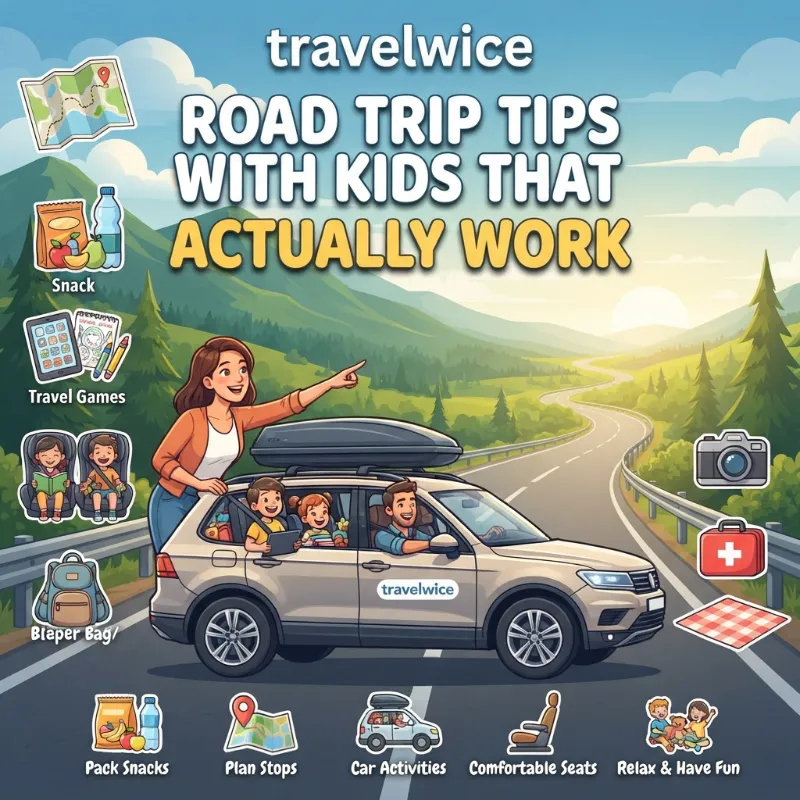
A Simple Plan You Can Copy
Here is a step by step plan for a 6 hour family drive.
- Pack the night before, and keep a snack bag within reach.
- Fill the gas tank and check tire pressure.
- Start the drive within 30 minutes of a meal or nap time.
- Stop every 2 hours for 15 to 20 minutes.
- Reveal one new activity each hour.
- Save the best treat for the final stretch.
- Arrive before dark when possible, so kids can wind down.
Visit the TravelWice home page for more family friendly guides.
Frequently Asked Questions
How often should we stop on a road trip with kids?
Plan a stop every 2 hours. With babies and toddlers, stop every 90 minutes or sooner.
How many hours should we drive in one day with young kids?
Most families do best with 6 to 8 hours of driving at most. Shorter days work better for toddlers.
What are the best long car ride activities kids enjoy?
Audiobooks, window bingo, sticker books, travel journals and simple word games work well across ages.
How do I keep a toddler happy in the car?
Drive during nap time, offer a new toy every hour, and stop often. Keep snacks and water within reach.
Should kids use screens on road trips?
Yes, in moderation. Save screens for the toughest stretch, and mix them with audio or games.
How do I stop kids from getting car sick?
Seat them where they can see out, give them fresh air, and avoid heavy meals before driving. Keep a bag and wipes nearby.
Quick Quiz: Test Your Road Trip Know How
1. How often should you stop on a long drive with kids?
A. Every 30 minutes
B. Every 2 hours
C. Only when someone complains
2. When is the best time to drive with a toddler?
A. During nap time
B. During rush hour
C. Right after a big sugary treat
3. Which snack is the safest choice for a car?
A. Melting chocolate
B. Sticky candy
C. Cheese sticks and crackers
4. What does a proper car seat do?
A. Looks nice in photos
B. Lowers the risk of fatal injury in a crash
C. Replaces the need for seat belts in adults
5. What helps reduce motion sickness?
A. Reading in a moving car
B. Looking out the window and getting fresh air
C. Eating a big greasy meal
Answers: 1. B, 2. A, 3. C, 4. B, 5. B
Conclusion
The best road trip tips with kids come down to a few steady habits. Plan shorter days, stop often, pack smart snacks, and save your best tricks for the hard moments. Put safety first by checking car seats before you leave. If you stay flexible, even a long drive can turn into a story your family tells for years.
References
- National Highway Traffic Safety Administration, Car Seats and Booster Seats: https://www.nhtsa.gov/vehicle-safety/car-seats-and-booster-seats
- American Academy of Pediatrics, Car Safety Seats: Information for Families: https://www.healthychildren.org/English/safety-prevention/on-the-go/Pages/Car-Safety-Seats-Information-for-Families.aspx
- Little Voyageurs, Road Trip With Kids: https://www.littlevoyageurs.com/en/blog/roadtrip-with-kids
- Big Brave Nomad, Driving Tips: https://www.bigbravenomad.com/driving-tips
- RoadTripKin, USA Family Road Trips With Kids: https://roadtripkin.com/usa-family-road-trips-with-kids-family/guide