
Bryce Canyon National Park Guide 2026: Hoodoos, Sunrise & Dark Skies
I drove into Bryce Canyon late one afternoon, tired from the highway and expecting another pretty viewpoint. Then I stepped out at Sunset Point, and the ground dropped away into a bowl of orange spires that looked like a city built by giants. Nobody had warned me how close the hoodoos stand, or how pink they turn in the last light. I stayed until the sun went down, then came back before dawn. This Bryce Canyon National Park guide is the trip I took, with the shuttle I rode, the hike that winded me, and the night sky that made me forget my phone.
TL;DR: Give Bryce Canyon two days if you can, one full day at a minimum. Arrive the night before and catch sunrise at Sunrise Point, then hike the Queen’s Garden and Navajo Loop combo before lunch. Ride the free shuttle in the amphitheatre area from April to mid-October, and drive the 18-mile scenic road to Rainbow Point in the afternoon. Budget $35 a vehicle for seven days, plus $100 a person for non-US residents aged 16 and over. Stay in Bryce Canyon City or at the lodge, and plan one night around the stars.
Why Bryce Feels Different
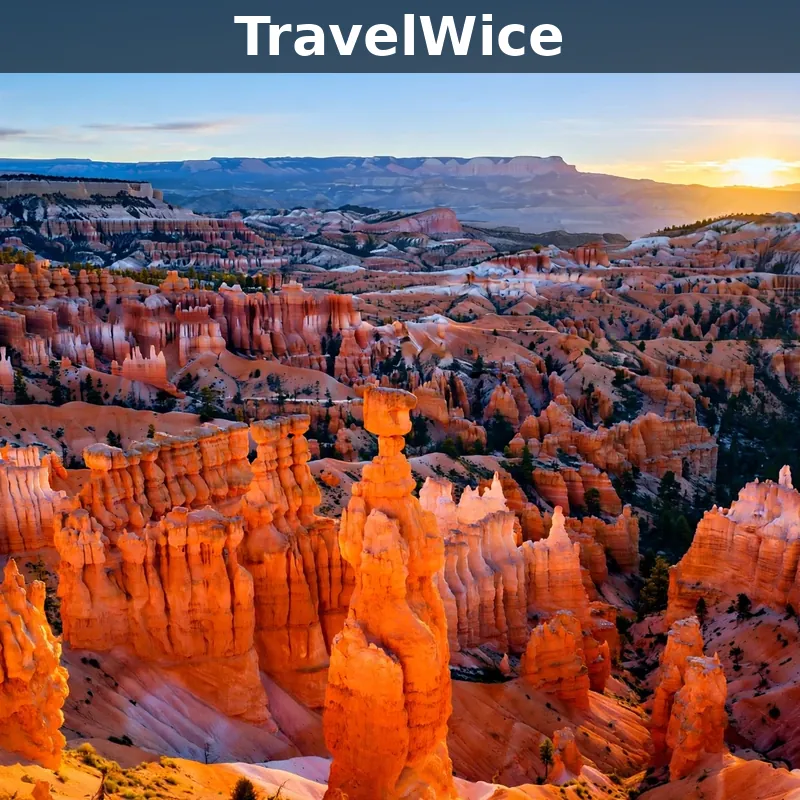
Also, Bryce Canyon is not a canyon at all. The park is a row of natural amphitheatres cut into the edge of the Paunsaugunt Plateau, and the rock spires inside them are hoodoos. I have seen the Grand Canyon and the red rock of Utah, but nothing else looks like this. The hoodoos crowd together so tightly that the amphitheatre feels like a forest made of stone.
In fact, altitude shapes everything here, so plan for it. The rim sits between 8,000 and 9,000 feet, and Rainbow Point tops out at 9,115 feet. That height keeps Bryce cooler than the desert parks nearby, and it also thins the air. I felt the climb out of the amphitheatre in my legs and my lungs, even though I hike often. So drink water all day, walk slowly on the way up, and give yourself a half day to settle in if you flew in from sea level. Summer days run warm and pleasant, while nights drop cold enough for a jacket even in July.
Getting to Bryce Canyon and Getting Around
Meanwhile, you reach Bryce by road, and the drive is part of the trip. The park sits in southern Utah off Highway 12, about 270 miles from Las Vegas and about 270 miles from Salt Lake City, and either drive takes around four hours. If you fly, Las Vegas and Salt Lake City are the usual airports, and both need a rental car after that.
For example, inside the park, one road does all the work. The scenic drive runs 18 miles south from the entrance station to Rainbow Point, and every viewpoint sits on your left as you drive in. The drive takes about 40 minutes without stops, but I stopped a dozen times.
After that, parking is the one headache, and the shuttle fixes it. The visitor centre lot allows only one hour, and the viewpoint lots fill by mid-morning in summer. So park free all day at the Shuttle Station in Bryce Canyon City, just outside the park, and ride in. The shuttle runs only in the amphitheatre area, so you still need your car for the Southern Scenic Drive. For the full picture of how the parks fit together, start with our USA national parks guide for 2026.
Fees, Passes, and the $100 Surcharge
On top of that, Bryce Canyon charges $35 a private vehicle for seven days in 2026, and that pass covers everyone in the car. Motorcycles pay $30, and walkers or cyclists pay $20 a person aged 16 and over. Kids under 16 enter free. The park is cashless, so pay by card at the entrance station or buy a digital pass on Recreation.gov before you go.
Non-US residents need to know about the new surcharge, because it changes the maths. In addition, since January 1, 2026, every non-US resident aged 16 and over pays an extra $100 a person on top of the entrance fee at Bryce Canyon and ten other busy parks. That fee is waived if you enter with an Annual pass or an America the Beautiful pass. So two non-US adults in one car pay $35 plus $200, which is $235 for Bryce alone. The America the Beautiful pass costs $80 a year for US residents and $250 a year for non-residents, and it covers the entrance fee and the surcharge.
At the same time, the park-specific annual pass costs $70 for US residents, and it covers Bryce for 12 months. Free entrance days in 2026 apply to US residents only, and they include February 16, May 25, August 25, and November 11. For pass details, read the America the Beautiful passes page on the NPS site.
The Free Shuttle: How It Really Works
Still, the Bryce shuttle is free, optional, and genuinely useful, and that combination surprised me. Unlike Zion, where the shuttle is the only way into the canyon, Bryce lets you drive to every viewpoint. But the lots are small, and circling them in summer wastes the morning. So I parked at the Shuttle Station and rode in, and I never thought about parking again. The shuttle costs nothing beyond park admission, and your entrance receipt or pass covers unlimited rides.
First, in 2026 the shuttle ran from April 3 to October 18. Spring and autumn hours ran 8 a.m. to 6 p.m., and summer hours ran 8 a.m. to 8 p.m. from May 9 to September 20. Buses came about every 15 minutes, and the full 15-stop loop took roughly 50 minutes without stops. Outside shuttle season, you drive everywhere, and the lots stay easy because the crowds thin out.
Next, the loop runs from the Shuttle Station through the hotels, the visitor centre, and the four main viewpoints. It serves only the amphitheatre area, so no bus runs on the Southern Scenic Drive. Pets are not allowed on the shuttle. My tip is simple: ride the shuttle for the morning hike and the viewpoints, then take the car south in the afternoon when the amphitheatre crowds peak. That split gave me the best of both.
The Four Viewpoints on the Rim
Then, Sunrise Point is where your day should start, and the name earns itself. I arrived at 6 a.m. with a coffee in one hand and a jacket zipped to my chin, and I watched the first light climb down the hoodoos row by row. It is also the trailhead for the Queen’s Garden Trail, so you can walk straight down into the rocks after the sun comes up.
In the end, Sunset Point sits a short walk south along the Rim Trail, and it holds the park’s most famous rock. Thor’s Hammer stands just below the rim here, a tall spire with a heavy cap that looks ready to topple. The viewpoint also starts the Navajo Loop, so hikers gather here all morning. The Rim Trail between Sunrise and Sunset is one mile, paved, and flat.
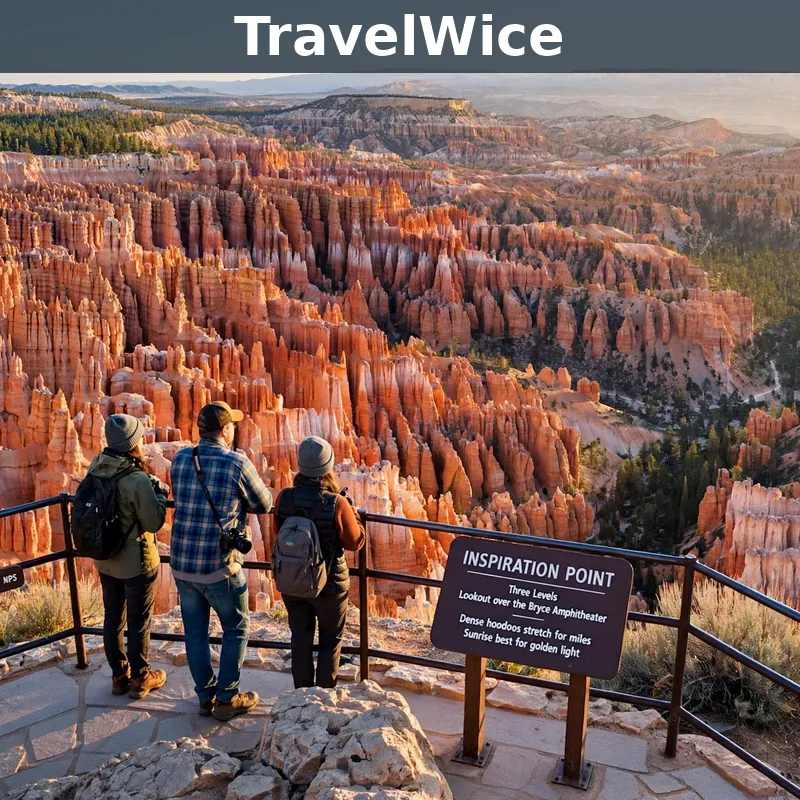
Inspiration Point gave me the view I still think about. Also, the hoodoos stack in rows of pink and orange, and the scale only hits you when you see a hiker below the size of a matchstick. Bryce Point sits at the south end of the amphitheatre at 8,296 feet, and it gives the most complete view of the bowl. If you only stop at one viewpoint, make it Bryce Point, but try for all four.
The Hike Down: Queen’s Garden and the Navajo Loop
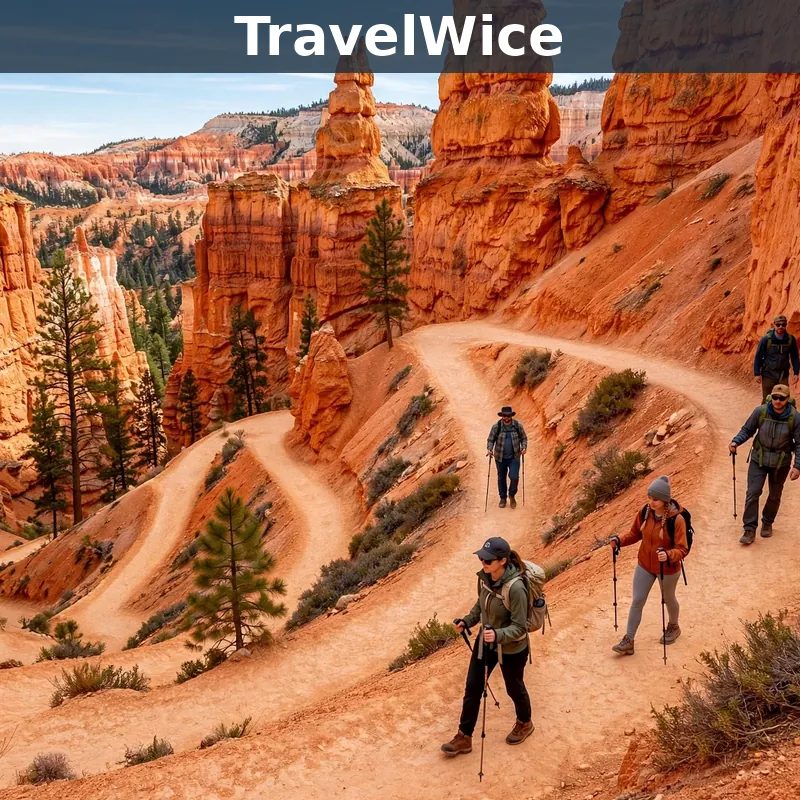
In fact, this is the hike to do, and I say that after walking most of the park’s trails. The Queen’s Garden and Navajo Loop combination runs 2.9 miles, climbs 625 feet, and takes two to three hours. You walk down into the amphitheatre first, and every step back up happens at 8,000 feet. I went clockwise, as the park recommends, and it worked well.
Start at Sunrise Point and descend the Queen’s Garden Trail. At the bottom, join the Navajo Loop and climb to Sunset Point. The Navajo side offers two ways up: Wall Street and Two Bridges. Wall Street is the famous one, a narrow slot between towering walls with tight switchbacks, but it closes in winter when ice and rockfall make it unsafe. Two Bridges stays open all year and passes close to Thor’s Hammer.
Go early, because the trail bakes by noon and the crowds stack up on the switchbacks. Carry at least a litre of water each, wear shoes with grip, and save energy for the climb out. Check the park’s alerts the morning you hike, because closures shift with rockfall and ice. For a different kind of Utah red rock, read our Arches National Park guide for 2026 and our Zion National Park guide for 2026.
More Trails If You Have a Second Day
Peekaboo Loop starts at Bryce Point and runs 5.5 miles with 1,560 feet of climbing, and it takes three to four hours. The loop winds through the Wall of Windows, a row of arches and fins that most visitors never see. Horses share this trail, so watch your step and give the mule trains room.
Fairyland Loop is the long one, at 8 miles and about 1,900 feet of gain, and it takes four to five hours. It starts at Fairyland Point, north of the visitor centre, and passes Tower Bridge and the Chinese Wall. If you want a short walk, the Bristlecone Loop at Rainbow Point runs one easy mile past pines up to 1,600 years old. The Rim Trail runs 5.5 miles along the amphitheatre edge from Sunrise Point to Bryce Point, and you can walk any section of it.
The Southern Scenic Drive to Rainbow Point
Most visitors skip this part of Bryce, and they miss the quiet half of the park. It runs 15 miles south from the amphitheatre to Rainbow Point, with nine overlooks along the way. I drove it in the afternoon, when the amphitheatre lots were full and the south road was nearly empty. The drive takes about 40 minutes without stops, but I gave it two hours.
Rainbow Point and Yovimpa Point end the road at 9,115 feet, the highest viewpoints in the park. On a clear day you can see more than 100 miles south over the Grand Staircase toward Arizona. The Bristlecone Loop starts here, a one-mile trail past twisted pines that have lived for over a thousand years. Picnic tables sit at Rainbow Point too, so bring lunch and eat at the top of the park.
Drive slowly on this road, because the overlooks sit on your left going in and the pull-outs are short. No shuttle runs here, and no size limit applies, so RVs can drive the full road. The spur roads to Fairyland Point and Paria View close in winter once snow needs plowing, so check conditions if you visit between November and March. For another high-altitude park with big views, read our Yellowstone National Park guide for 2026 and our Glacier National Park guide for 2026.
Stargazing: The Darkest Sky I Have Seen
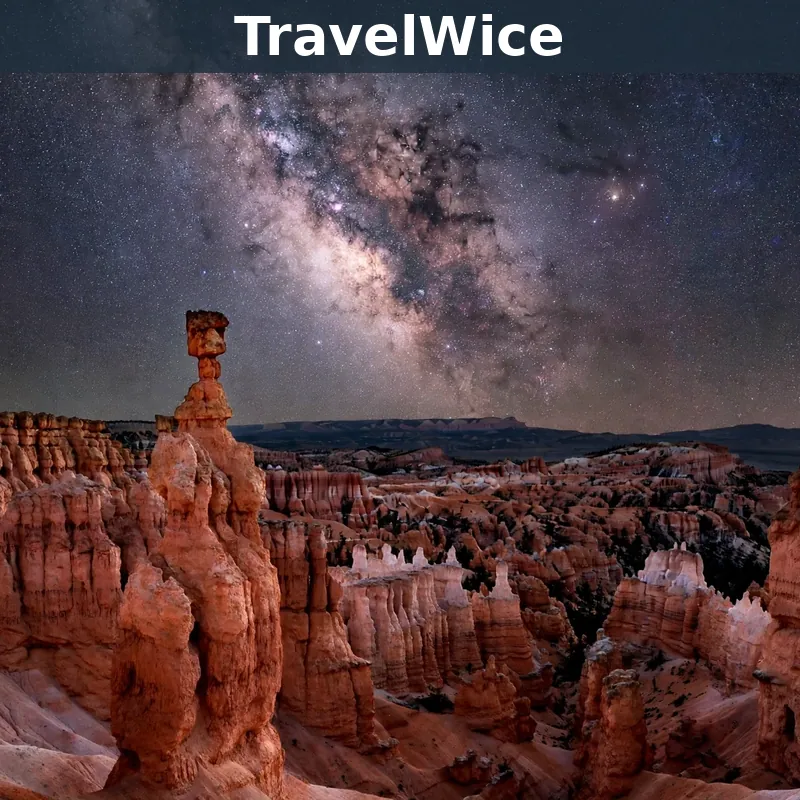
Bryce Canyon holds one of the darkest night skies in the country, and I did not believe that until I stood under it. The park earned Gold Tier International Dark Sky Park status in 2019, the highest rating the certifying body awards. On a moonless night, more than 7,500 stars show, and the Milky Way spreads across the sky like spilled sugar. The hoodoos below were black shapes, and the sky above them was full of light.
The park runs about 100 astronomy programs a year, and the program dates back to 1969, one of the longest-running night sky programs in the National Park Service. Ranger-led telescope programs usually run Thursday through Saturday nights in June and July, starting around 9:45 p.m. at Sunset Point. The annual Astronomy Festival runs each June, and the 2026 festival fell on June 11 to 13.
Time your visit around the new moon if you can, because the darkest skies fall in the nights around it. The Milky Way core shows best from June through August. Bring a red flashlight, because white light ruins your night vision and annoys everyone around you. Dress warmer than you think, since the rim cools fast after sunset. For another park where the night matters as much as the day, read our Grand Teton National Park guide for 2026.
Where to Stay: In the Park or in Town
You have two choices, and both work. The Lodge at Bryce Canyon sits inside the park near Sunset Point, and it is the only lodging inside the boundary. You walk to the rim in minutes, and you skip the entrance line in the morning. Rooms book out months ahead for summer, so reserve early. Prices run higher than town, and the rooms are simple, but the location pays for itself at sunrise.
Bryce Canyon City sits just outside the park entrance, and it holds the hotels, the restaurants, and the shuttle station. The Best Western Plus Ruby’s Inn is the big name, with rooms, a pool, a restaurant, and a general store, and the Grand Hotel sits nearby. Summer rooms in town run roughly $150 to $300 a night, and they climb on weekends and holidays. Book early, because the town is small and summer sells out.
Campers have two campgrounds inside the park. North Campground holds 99 sites and stays open year-round, while Sunset Campground holds 100 sites and runs April to October. Sites cost $30 a night, and you reserve through Recreation.gov reservations. Both campgrounds sit near the amphitheatre, and both fill fast in summer. Tropic, a small town about 15 minutes east on Highway 12, offers cheaper motels and cabins, and Panguitch sits about 25 minutes west.
What to Eat Around Bryce Canyon
Bryce Canyon City feeds you well enough, and the lodge dining room is the nicest table in the area. Ruby’s Inn runs a restaurant and a buffet, and it suits families who want a big meal after a hike. The general store at Ruby’s sells sandwiches, snacks, and ice cream, and I stocked up there each morning before the trail.
I packed a picnic lunch both days, and I recommend it. Buy bread, cheese, fruit, and water at the Ruby’s store, and eat at the picnic tables at Sunset Point or Rainbow Point. A trail lunch costs about $10 a person this way, and it beats any restaurant view. For a bigger food town on a Utah road trip, read our Las Vegas travel guide for 2026.
Bryce Canyon at a Glance
| Spot | Best for | Time needed | My tip |
|---|---|---|---|
| Sunrise Point | Sunrise, Queen’s Garden start | 1 hour | Arrive before 6 a.m. |
| Sunset Point | Thor’s Hammer, Navajo Loop | 1 hour | Come back at dusk |
| Inspiration Point | The big amphitheatre view | 30 minutes | Go at mid-morning |
| Bryce Point | Best full-bowl view | 45 minutes | Works at both ends of the day |
| Rainbow Point | Highest view, bristlecones | 1 hour | Picnic at the top |
| Queen’s Garden + Navajo | The classic hike | 2–3 hours | Start at 7 a.m. |
| Peekaboo Loop | Quiet hoodoos, arches | 3–4 hours | Watch for mule trains |
| Stargazing | Milky Way, telescopes | 1–2 hours | Go on a new-moon night |
Chart: Where a Mid-Range Bryce Day’s Money Goes
This chart breaks down a mid-range Bryce Canyon day of about $250 a person, so you can see which cost runs the trip.
Hotel, about $120 a night: █████████████████████████ 48%
Food, about $55 a day: ███████████ 22%
Car rental and fuel, about $45 a day: █████████ 18%
Park fee share, about $18 a day: ███████ 7%
Tours and extras, about $12 a day: █████ 5%
The hotel is the story, at close to half the daily spend. Food is second, and a picnic lunch at $10 keeps that number down. The car is third, and it pays for itself with the freedom to drive the Southern Scenic Drive. The park fee looks small because $35 covers seven days, so it spreads thin across a multi-day trip. So book the hotel by total price, eat a picnic lunch, and drive yourself.
A Two-Day Bryce Canyon Plan That Works
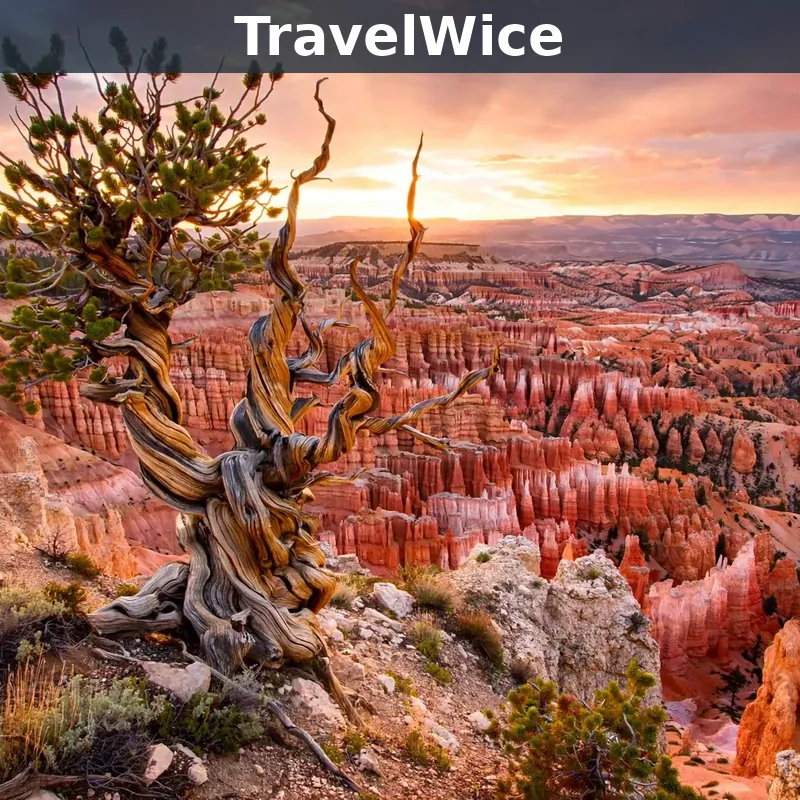
Day one is the amphitheatre. Arrive the night before, and set an alarm for sunrise at Sunrise Point. Hike the Queen’s Garden and Navajo Loop combo right after, and finish by late morning. Eat a picnic lunch at Sunset Point, then ride the shuttle to Inspiration Point and Bryce Point in the afternoon. Watch the sunset from Bryce Point, and walk back to Sunset Point for the stars after dinner.
Day two is the south road and the long trail. Drive the Southern Scenic Drive in the morning, stop at Natural Bridge and Agua Canyon, and picnic at Rainbow Point. Walk the Bristlecone Loop, then drive back north. Spend the afternoon on the Peekaboo Loop if your legs feel good, or walk the Rim Trail if they do not. For a wider Utah loop, pair this trip with our Arches National Park guide for 2026 and our Zion National Park guide for 2026.
What to Pack, and What to Leave Behind
Pack hiking shoes with grip for the Navajo switchbacks, a warm layer for sunrise and stargazing, a sun hat and sunscreen for the rim, a litre of water per person, and a red flashlight for the night sky. Bring a power bank too, because the cold drains phone batteries fast at night. Pack binoculars if you like birds, because ravens and Clark’s nutcrackers work the rim all day.
Staying Safe on the Rim and the Trails
Stay behind the railings at the viewpoints, because the rim edge crumbles and people have fallen. Wear grip shoes on the Navajo Loop, because the trail turns slick after rain and the switchbacks are steep. Carry water on every hike, and drink before you feel thirsty, since the altitude dries you out fast. Afternoon thunderstorms build quickly in summer, so start hikes early and get off the rim if lightning shows. Check the National Park Service alerts page the morning you hike, because trail closures shift with rockfall and ice. For a sense of how another park trip compares on cost, read our Grand Canyon day trip from Las Vegas and our Yosemite National Park guide for 2026.
References
- Bryce Canyon National Park official NPS page — Bryce Canyon fees, shuttle, trails, and stargazing.
- National Park Service — national park passes, alerts, and visitor information.
- Recreation.gov reservations — Bryce Canyon campgrounds and Fiery Furnace permits.
- America the Beautiful passes — pass prices and the non-resident surcharge rules.
Bryce Canyon National Park Guide Quiz
Test what you picked up from this guide before you book.
1. How much does a private vehicle pay to enter Bryce Canyon in 2026, and how long does the pass last?
- A) $35 a vehicle, valid for seven days.
- B) $15 a vehicle, valid for one day.
- C) $80 a vehicle, valid for one year.
2. When did the free Bryce Canyon shuttle run in 2026, and how often did the buses come?
- A) April 3 to October 18, about every 15 minutes.
- B) Year-round, about every 60 minutes.
- C) June to August only, about every 30 minutes.
3. How long is the Queen’s Garden and Navajo Loop combination, and how much does it climb?
- A) 1 mile, 100 feet of gain.
- B) 2.9 miles, 625 feet of gain.
- C) 8 miles, 1,900 feet of gain.
4. Which side of the Navajo Loop closes in winter, and which side stays open all year?
- A) Wall Street closes in winter, Two Bridges stays open.
- B) Two Bridges closes in winter, Wall Street stays open.
- C) Both sides close in winter every year.
5. What dark-sky rating did Bryce Canyon earn in 2019, and how many stars show on a moonless night?
- A) Gold Tier International Dark Sky Park, more than 7,500 stars.
- B) Silver Tier, about 1,000 stars.
- C) No rating, about 500 stars.
Quiz Answers
- A) $35 a vehicle, valid for seven days. — Bryce Canyon charges $35 a private vehicle for seven days in 2026, covering everyone in the car.
- A) April 3 to October 18, about every 15 minutes. — The free shuttle ran April 3 to October 18, 2026, with buses about every 15 minutes.
- B) 2.9 miles, 625 feet of gain. — The Queen’s Garden and Navajo Loop combination runs 2.9 miles and climbs 625 feet.
- A) Wall Street closes in winter, Two Bridges stays open. — Wall Street closes in winter in icy conditions, but Two Bridges stays open all year.
- A) Gold Tier International Dark Sky Park, more than 7,500 stars. — Bryce Canyon earned Gold Tier International Dark Sky Park status in 2019, and over 7,500 stars show on a moonless night.