
Grand Teton National Park Guide 2026: Jenny Lake, Mormon Row & Moose
I drove south from Yellowstone on a clear June morning. The Tetons rose out of the flat valley like a wall. No foothills soften them. The peaks jump straight from the sagebrush plain, and the tallest one, the Grand Teton, stands 13,775 feet high. I pulled over at the first turnout, and I just stared. This Grand Teton National Park guide is the trip I took. I caught the boat across Jenny Lake, watched a moose at dawn, and photographed one barn twice because the light changed.
TL;DR: Give Grand Teton 3 days, and base in Jackson or Teton Village. Entry runs $35 a car for 7 days, with no vehicle reservation and no timed entry. Non-US visitors age 16 and over pay $100 extra per person, unless they hold an annual pass. Catch the Jenny Lake boat early, walk Cascade Canyon on your fittest day, and watch Oxbow Bend at dawn and dusk. Book lodging months ahead for summer.
Why the Tetons Stopped Me in My Tracks
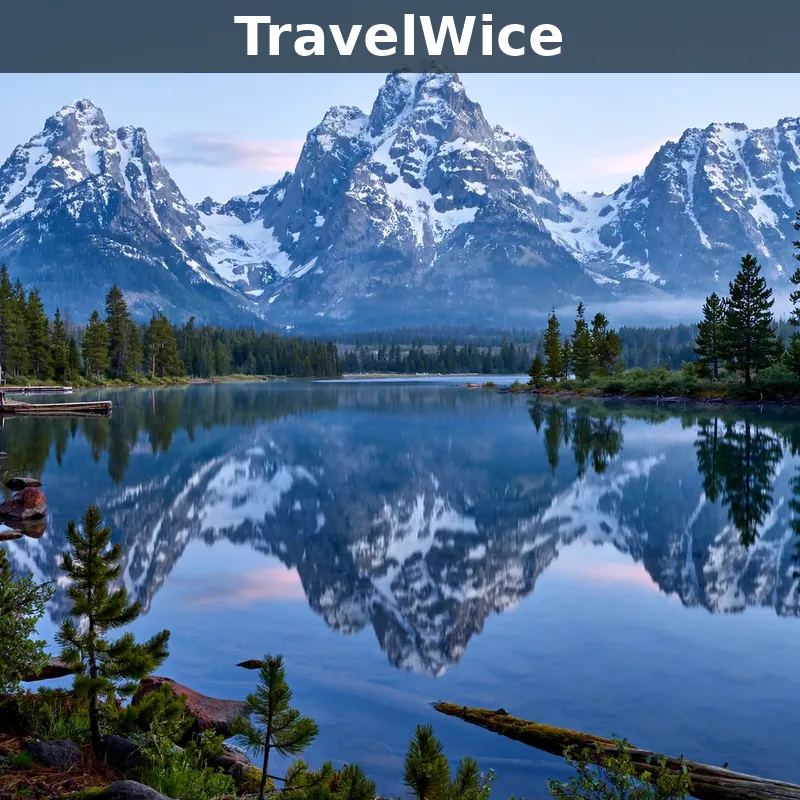
The Teton Range runs like a wall along the west side of Jackson Hole, and it does not ease you in. Most mountain ranges give you foothills first, then bigger peaks. Also, the Tetons skip that step. Granite rises straight from the valley floor, and snow stays on the high peaks into July. I drove Teton Park Road with the windows down, and I kept pulling over because every turnout looked better than the last one.
My first evening set the tone for the whole trip. I stood at Schwabacher Landing as the sun dropped, and the Snake River ran pink and gold below the peaks. In fact, a beaver slapped its tail on the water, and a moose stepped out of the willows on the far bank. Nobody spoke. A dozen strangers stood in the grass with cameras, and we all just watched. So if you want one park that makes you stop the car for no reason at all, this is the one. It sits on our best national parks in the USA list for exactly that reason, and it earns its place every single morning.
Fees, the $100 Question, and No Reservations
Meanwhile, entry to Grand Teton costs $35 for a private vehicle, and the pass lasts 7 days. Motorcycles pay $30, and anyone entering on foot or by bike pays $20. A park-only annual pass runs $70, and the America the Beautiful pass covers the park for $80 a year for US residents. I bought the America the Beautiful pass at the gate, because I planned to visit more parks that summer, and it paid for itself by the third park.
For example, one fee catches visitors by surprise. Non-US residents age 16 and over pay an extra $100 per person on top of the entrance fee at Grand Teton. The park is one of 11 parks that charge it in 2026. The fee drops away if you hold an annual or America the Beautiful pass, and the non-resident annual pass costs $250. So a family of four from abroad can save real money by buying one $250 pass instead of paying $100 each plus the car fee. Check the numbers before you reach the gate, and bring a card, because the park went cashless on May 1, 2026.
After that, here is the good news for planners. Grand Teton needs no timed-entry reservation and no vehicle reservation in 2026. You drive in any time, day or night, and the park stays open 24 hours. What you do need to book ahead is a place to sleep. In-park lodges fill by April, and every campground in the park takes advance reservations through Recreation.gov. July and August campground sites go within minutes of release, six months ahead. So book the bed first, and worry about the rest later.
Getting There: Jackson Hole and the Park Roads
On top of that, Jackson, Wyoming, is the gateway town, and it sits about 5 miles south of the park’s Moose entrance. I flew into Jackson Hole Airport, which sits inside the park itself, and I walked out of the terminal to a view of the Tetons. The airport is the only commercial airport inside an American national park, and the landing gives you a mountain view from your seat. Rental cars wait at the terminal, and I paid about $70 a day for a small SUV in June.
In addition, Teton Park Road runs the length of the park, from Moose in the south to Jackson Lake Junction in the north, and it is the road you will drive every day. The road passes Jenny Lake, the turnoffs for Mormon Row, and the Oxbow Bend pullout. Moose-Wilson Road runs a narrower, slower line along the west side, and it is the best road in the park for moose. That road closed to all use from September 8 to November 15, 2026, between the Rockefeller Preserve and Moose, for construction work. It also closes each winter from November 1 to mid-May. So check the Grand Teton National Park official site before you plan a Moose-Wilson drive, and have a backup route in mind.
Jenny Lake: Boat or Boots
At the same time, Jenny Lake sits at the base of the Cathedral Group, and it is the busiest single stop in the park for a reason. The lake runs 256 feet deep, and the water turns a cold blue-green in summer. The trail around the lake runs about 7 miles, and the boat shuttle cuts the walk in half. I took the boat on my first morning, and I walked back along the shore in the afternoon. Both felt right, and both showed me a different lake.
Still, the boat runs May 15 to September 30, 2026, and the hours shift with the season. From June 6 to September 7, boats run 7 a.m. to 7 p.m. In the shoulder weeks, they run 9 a.m. to 5 p.m. Boats leave the East Boat Dock every 10 to 15 minutes, and no reservations exist. You walk to the dock, buy a ticket, and board. The round-trip fare runs $20 for an adult, $12 for a child, and $17 for a senior, with one-way fares lower. Check the fare board at the dock, because prices can shift with the season. Arrive before 9 a.m. in July and August, because the South Jenny Lake lot fills by mid-morning and the line for the boat grows fast.
Hidden Falls, Inspiration Point, and Cascade Canyon
First, the boat drops you on the west shore, and the trail starts right at the dock. Hidden Falls sits about half a mile up the trail, and the water drops 100 feet down a rock face into a green pool. I stood on the viewing bridge with spray on my face, and I understood why every guidebook starts here. The trail to the falls is short and rocky, so wear shoes with grip. Families with kids manage it fine, and the falls reward the climb within twenty minutes.
Next, Inspiration Point sits about a mile from the dock, past Hidden Falls, and it gives you the classic Jenny Lake view. The lake spreads below you, and the Tetons rise behind it. I sat on a rock there for half an hour, and I watched clouds move across the peaks. The climb from the falls to the point is steep and rocky, so take it slow and bring water.
Cascade Canyon: The Long Walk That Pays Off
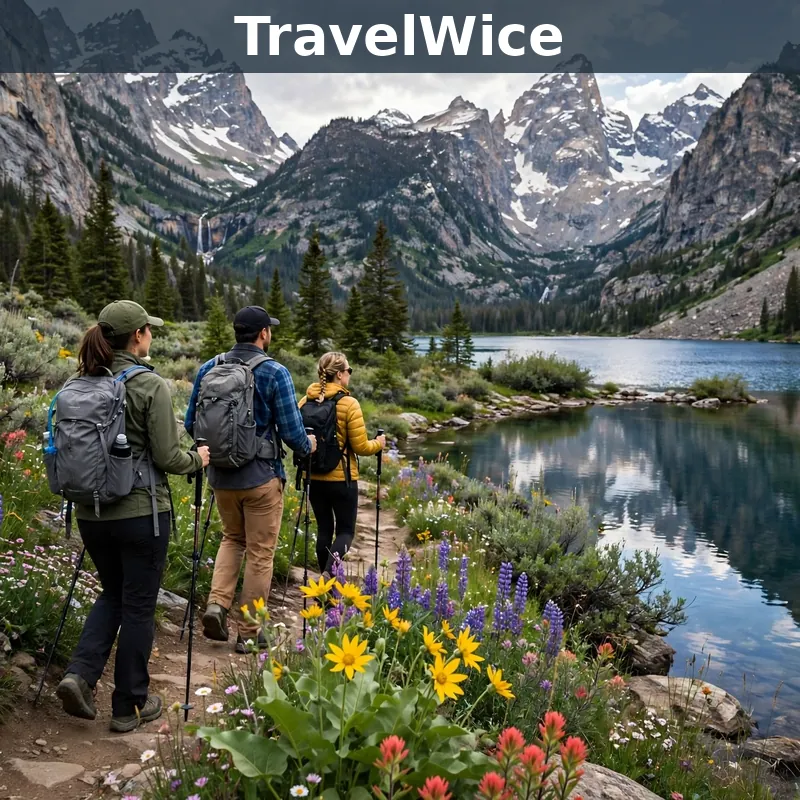
Then, past Inspiration Point, the trail enters Cascade Canyon, and the crowds thin fast. The canyon runs about 9 miles round trip from the west-shore dock to the forks, and the trail climbs gently along a creek through wildflower meadows. I walked to the forks and back, and I saw a black bear grazing on the far slope, pikas calling from the rocks, and a lake so clear I could count the stones on the bottom. The full walk takes 4 to 5 hours, so start by 8 a.m. and carry two litres of water. Check the last boat time before you set out, because missing it means a 2-mile walk back around the lake.
Mormon Row: The Barns Everyone Photographs
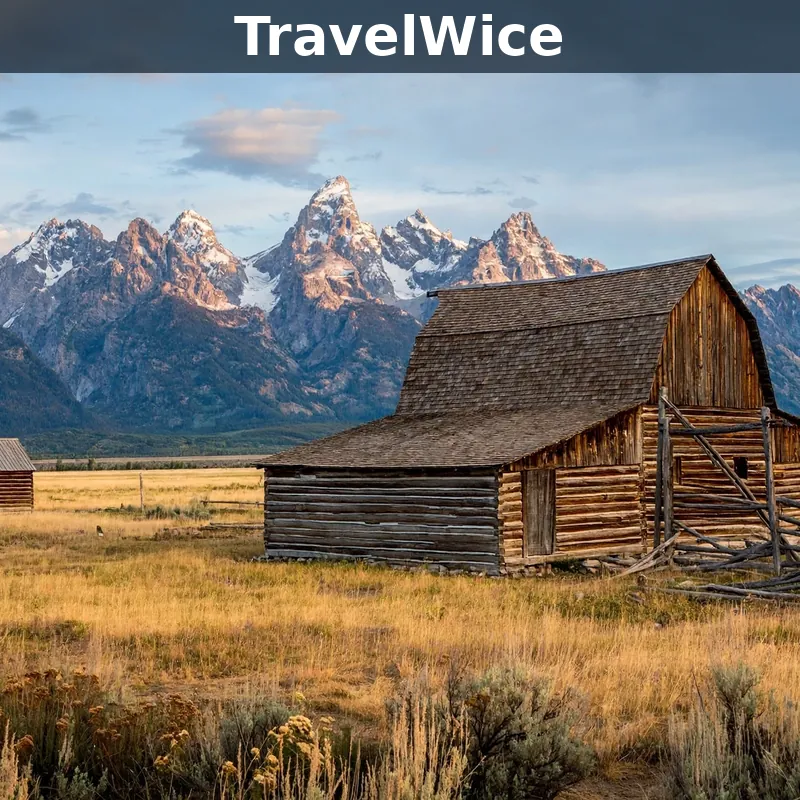
In the end, Mormon Row is a line of old homestead barns on Antelope Flats, and the most famous one, the John Moulton Barn, is the most photographed barn in America. Settlers built these barns in the early 1900s, and the Tetons rise right behind them. I went at sunrise, and the light turned the peaks pink while the barn stood dark against the grass. A dozen photographers lined the fence, and we all waited for the same shot.
Go early, because the light is best in the first hour after sunrise, and the parking area fills by 8 a.m. in summer. The barns sit on a dirt road off Antelope Flats Road, and the road is rough but fine for any car. Also, bison graze the flats in the morning, and pronghorn cross the road without warning, so drive slowly. I went back at sunset on my last day, and the light was softer but just as good. The barns look different every hour, and that is why people come back.
Oxbow Bend and the Wildlife Hours
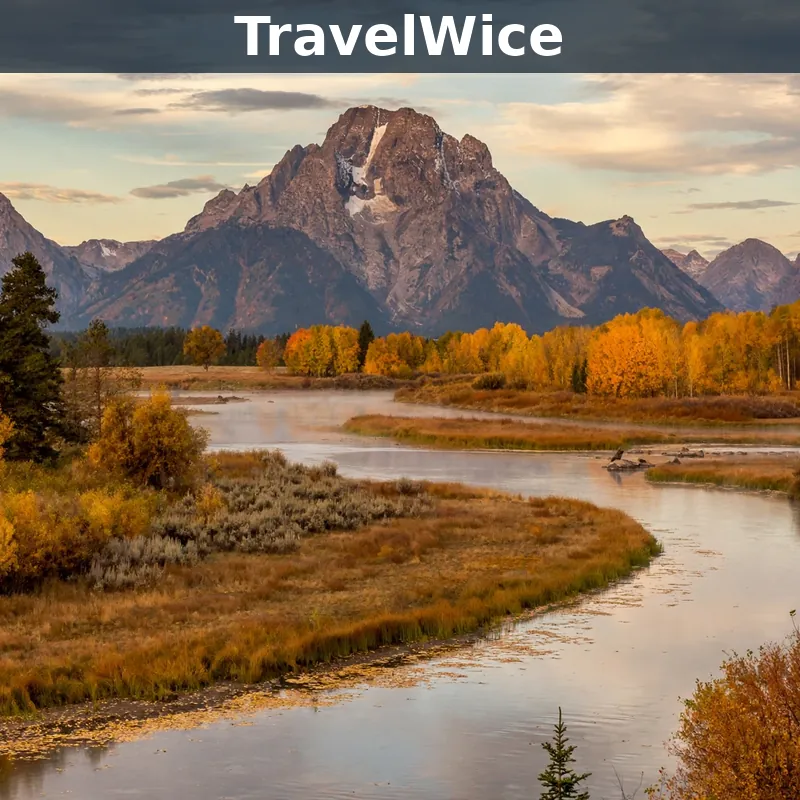
In fact, Oxbow Bend is a slow curve of the Snake River below Mount Moran, and it is the best wildlife pullout in the park. The river runs wide and still here, and the mountain reflects in the water on calm mornings. I arrived at 6 a.m. with a thermos of coffee, and I watched a moose feed in the shallows for an hour. A great blue heron fished from a log, and a bald eagle circled over the river. Dawn and dusk are the hours that matter here, and the middle of the day is quiet.
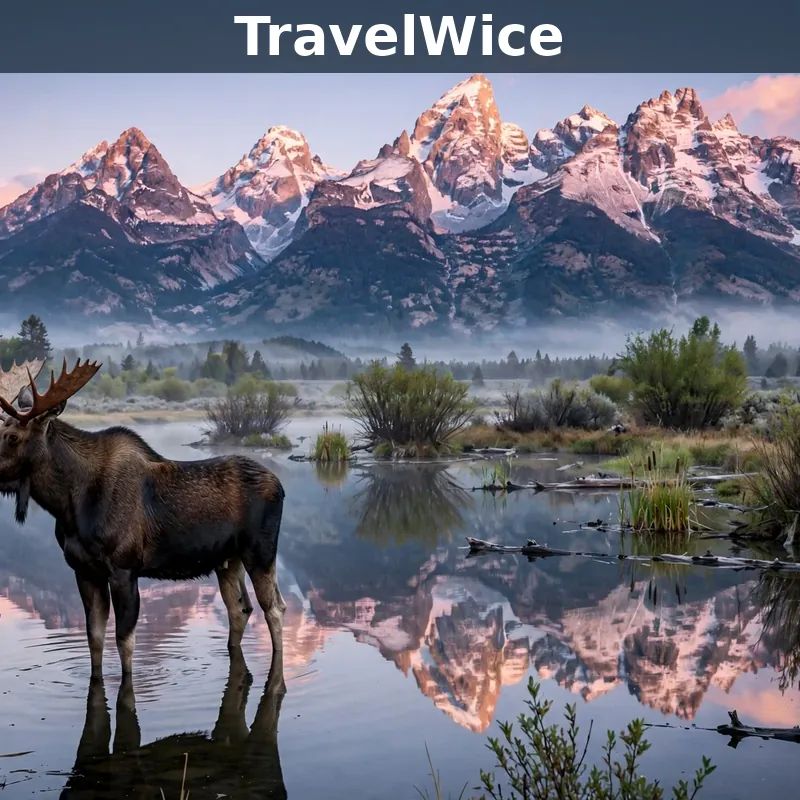
Meanwhile, the bend sits on the highway between Jackson Lake Junction and Moran, and the pullout holds about twenty cars. Arrive before sunrise in summer, because the lot fills fast and the light fades by 8 a.m. Bring binoculars, because the moose often feed on the far bank. I also stopped at Schwabacher Landing at sunset, and the beavers worked the river while the peaks turned gold. Both spots reward patience, and neither costs a cent.
Moose, Bears, and the 100-Yard Rule
For example, moose are the animal I came to see, and the Tetons did not disappoint. I saw six moose in three days, mostly at dawn along the Moose-Wilson Road and at Oxbow Bend. Moose look slow, but they charge fast, so keep 25 yards between you and a moose. Bears need more room. Stay 100 yards from bears and wolves, and 25 yards from everything else, including bison and elk. I watched a tourist walk toward a bison for a photo once, and a ranger waved him back within seconds. Bison injure more visitors than bears do, so give them space. Carry bear spray on every hike, and know how to use it before you need it.
Signal Mountain and the Drives
After that, signal Mountain Summit Road climbs 5 miles to a viewpoint at about 7,700 feet, and the view from the top covers the whole valley. I drove up at sunset, and the Tetons glowed pink on one side while Jackson Lake spread blue on the other. The road is narrow and winding, so drive slowly and use the pullouts. Trailers and large RVs cannot use it, and the road closes in winter.
On top of that, the Teton Park Road drive itself is worth a slow morning. I drove it from Moose to Jackson Lake Junction with the windows down, and I stopped at every turnout. The road passes the Snake River Overlook, where Ansel Adams took his famous photo in 1942, and the view still looks like the photograph. Colter Bay, on Jackson Lake, gives you a beach, a marina, and a visitor center. I swam in Jackson Lake on a hot afternoon, and the water was cold enough to take my breath away. The lake is 15 miles long, and it is the largest lake in the park.
Where to Stay: Jackson, Teton Village, and In-Park Lodges
In addition, Jackson is the main base, and it has the most choices. Hotels in town run $200–$450 a night in summer, and the best ones book out months ahead. I stayed in a motel on the south edge of town for $260 a night in June, and I walked to dinner every evening. Teton Village, at the base of the ski resort, sits closer to the park’s Moose entrance, and it has condos and lodges with mountain views. Rooms there run about the same as Jackson, and the village is quieter at night.
At the same time, in-park lodging is the splurge. Jenny Lake Lodge sits on the lake shore, and its cabins run several hundred dollars a night in summer, with breakfast and dinner included. Jackson Lake Lodge, at the north end of the park, has rooms with Teton views from the lobby windows. Colter Bay Cabins give you a simpler stay on Jackson Lake, with log cabins and a beach nearby. Book in-park lodging as early as you can, because rooms open a year ahead and the summer dates go first. Campers should book through Recreation.gov six months ahead, because every park campground fills fast for July and August.
What to Eat Around Jackson Hole
Still, Jackson feeds you well, and the town has more good restaurants than a mountain town should. I ate breakfast at Persephone Bakery most mornings, and the pastries and coffee cost about $12–$15. The bakery fills by 8 a.m., so go early or take your food to go. Lunch at a taco truck or a cafe runs $12–$20, and the portions are big enough to share. Dinner is where Jackson gets pricey. A steak or elk dish at a sit-down restaurant runs $30–$50, and the best tables book days ahead.
Teton Village has fewer choices, but the restaurants there serve the same mountain food with a view. First, I ate a bison burger at a lodge restaurant for $22, and I watched the sun set over the valley from the deck. Pack trail food from a grocery store in Jackson, because the park has almost no food inside except at the lodges. I carried sandwiches, apples, and nuts on every hike, and I bought ice in town each morning for the cooler.
Grand Teton at a Glance
| Place | Best for | Cost | My tip |
|---|---|---|---|
| Jenny Lake | Boat, Hidden Falls, hikes | Boat $20 RT adult | Catch the first boat |
| Mormon Row | Barns, sunrise photos | Free | Go at dawn |
| Oxbow Bend | Moose, sunrise, Mount Moran | Free | Arrive before sunrise |
| Cascade Canyon | Long hike, lakes, cliffs | Boat $20 RT adult | Start by 8 a.m. |
| Signal Mountain | Summit views, sunset | Free | Drive up at dusk |
| Colter Bay | Lake, beach, cabins | Free | Swim in the afternoon |
| Moose-Wilson Road | Wildlife, moose, bears | Free | Drive it slowly |
Chart: Where a Mid-Range Teton Day’s Money Goes
This chart breaks down a mid-range Teton day of about $260 a person. You can see which cost runs the trip.
Hotel, about $150 a night: ██████████████████████████████ 58%
Food, about $55 a day: ███████████ 21%
Car rental, about $35 a day: ███████ 13%
Boat and fees, about $15 a day: ███ 6%
Parking and tips, about $5 a day: █ 2%
The hotel is the story, at close to half the daily spend, and Jackson is not a cheap town. Food is second, and a bakery breakfast plus a taco lunch keeps that number down. The car is third, and it pays for itself with the freedom to drive the park at dawn. The boat and the entrance fee cost almost nothing when you spread them across three days. So book the hotel early, eat local at lunch, and drive yourself.
A Three-Day Grand Teton Plan That Works
Day one is Jenny Lake and Cascade Canyon. Catch the first boat at 7 a.m., walk to Hidden Falls and Inspiration Point, and hike into Cascade Canyon as far as your legs allow. Eat dinner in Jackson that night. Day two is the wildlife loop. Drive Moose-Wilson Road at dawn, watch Oxbow Bend at sunrise, and photograph Mormon Row in the morning light. Drive Signal Mountain at sunset. Day three is the lake and the south end. Swim at Colter Bay, walk the Rockefeller Preserve trails, and watch the sunset at Schwabacher Landing. For the full parks picture, start with our best national parks in the USA. If you want a northern contrast, read our Yellowstone National Park guide for 2026 and our Glacier National Park guide for 2026.
What to Pack, and What to Leave Behind
Pack hiking shoes with grip, a rain layer, bear spray, two litres of water per hike, and a power bank for your phone. I packed all five, and I used all five every day. The mountains make their own weather, and a sunny morning can turn to rain by noon. Leave the heavy suitcase behind, because you will haul it in and out of the car. Pack binoculars for Oxbow Bend, and pack a paper map, because cell signal dies in the canyons. I lost signal in Cascade Canyon, and my paper map saved the afternoon.
Staying Safe on Teton Trails and Roads
Teton trails ask for care, and the roads ask for patience. Wear shoes with grip on the Hidden Falls trail, because the rocks turn slick after rain. Carry two litres of water, and turn back if a storm builds over the peaks. At a moose sighting, stay in your car or keep 25 yards between you and the animal. Never approach a bear for a photo. Check the Grand Teton National Park official site each morning for road closures. Moose-Wilson Road work and weather can close roads without warning. For a sense of how a mountain trip compares on cost, read our Rocky Mountain National Park guide. Our Yosemite National Park guide for 2026 covers the Sierra side. Our Hawaii travel guide for 2026 shows a very different kind of park trip.
References
- Grand Teton National Park official site — fees, boat shuttle, trails, and alerts.
- Recreation.gov — campground reservations and backcountry permits.
- America the Beautiful passes — pass prices and free entrance days.
- National Park Service — national park passes and visitor information.
Grand Teton National Park Guide Quiz
Test what you picked up from this guide before you book.
1. What does a car pay to enter Grand Teton in 2026?
- A) Twenty dollars buys a car pass, with timed entry needed.
- B) Fifty dollars buys a car pass, and the park takes cash.
- C) Thirty-five dollars buys a car pass for 7 days, no reservation needed.
2. When did the Jenny Lake boat run in 2026?
- A) Summer boats ran May 15 to September 30, 7 a.m. to 7 p.m., no reservations.
- B) Year-round boats ran 24 hours a day, reservations a month ahead.
- C) Short-season boats ran June to August, 9 a.m. to 5 p.m., reservations only.
3. How far is Hidden Falls from the west dock?
- A) Five miles separate Hidden Falls from the dock.
- B) Half a mile separates Hidden Falls from the west dock, and Cascade Canyon runs 9 miles.
- C) Two miles separate Hidden Falls from the dock.
4. What extra fee do non-US visitors pay at Grand Teton?
- A) Fifty dollars extra per person applies abroad, unless they hold a pass.
- B) Nothing extra applies to visitors from abroad.
- C) One hundred dollars extra per person 16 and over applies abroad, unless they hold an annual pass.
5. What happened to Moose-Wilson Road in autumn 2026?
- A) Autumn work closed Moose-Wilson Road September 8 to November 15, 2026, from the Rockefeller Preserve to Moose.
- B) No work touched Moose-Wilson Road, and it stayed open.
- C) Summer work closed Moose-Wilson Road all season.
Quiz Answers
-
C) Thirty-five dollars buys a car pass for 7 days, no reservation needed. — Grand Teton charges $35 per private vehicle for 7 days, with no timed-entry or vehicle reservation.
-
A) Summer boats ran May 15 to September 30, 7 a.m. to 7 p.m., no reservations. — The Jenny Lake boat ran May 15 to September 30, 2026, 7 a.m. to 7 p.m. in summer, and it took no reservations.
-
B) Half a mile separates Hidden Falls from the west dock, and Cascade Canyon runs 9 miles. — Hidden Falls sits half a mile from the west-shore dock, and Cascade Canyon runs 9 miles round trip.
-
C) One hundred dollars extra per person 16 and over applies abroad, unless they hold an annual pass. — Non-US residents age 16 and over pay an extra $100 per person, unless admitted with an annual or America the Beautiful pass.
-
A) Autumn work closed Moose-Wilson Road September 8 to November 15, 2026, from the Rockefeller Preserve to Moose. — Moose-Wilson Road closed September 8 to November 15, 2026, between the Rockefeller Preserve and Moose.