
The first time I drove up Highway 29, my rental car was full of empty wine boxes. I thought two days would be plenty. It was not. Napa Valley squeezes more than 400 wineries into a strip of land barely 30 miles long. Picking the wrong five can eat an entire afternoon. This Napa Valley wine country guide is built from real trips and real receipts, including a fair number of missed reservations, so you can skip the mistakes and get straight to the good part.
Things to Do in San Diego on Any Budget: The Complete 2026 Guide
Below, you will find current tasting fees, a workable weekend plan, and an honest Napa versus Sonoma breakdown. You will also find the kind of budget math nobody puts on a postcard. Whether you are flying in from London, driving up from Los Angeles, or adding this to a longer California road trip, this guide covers what to book, when to go, and what to skip.
Joshua Tree National Park Guide for 2026 Everything You Need to Plan Your Trip
Who This Napa Valley Wine Country Guide Is For
This is written for the traveler who wants a real plan. It is not another list of the same fifty wineries every other blog recommends. Maybe you are a first-timer. Maybe you are a couple celebrating an anniversary, or a group of friends splitting a driver for the day. Either way, the advice below scales to fit. Every price and recommendation reflects current 2026 conditions, so you are not planning against outdated numbers.
Key Takeaways
| Question | Quick Answer |
|---|---|
| Best time to visit | April, May, September, and October |
| Average tasting fee (2026) | USD 40 to 75, walk-in bars from USD 25 |
| Minimum trip length | 2 full days, 3 is more comfortable |
| Booking window | 2 to 4 weeks ahead, 6 to 8 weeks for harvest season |
| Realistic couple’s budget | USD 760 to 1,370 for two nights, mid-range |
| Napa vs Sonoma | Napa for polish and Cabernet, Sonoma for value and variety |
| Nearest major airport | San Francisco (SFO) or Oakland (OAK), about 1 to 1.5 hours by car |
TL;DR
Napa Valley rewards planning. Book tastings two to six weeks ahead. For harvest season in September and October, aim closer to two months out.A realistic two-night trip for a couple runs roughly USD 760 to 1,370. That covers hotel, three winery visits, two dinners, and transport.Spring and early fall beat summer for lighter crowds. Reservations are easier too, and you do not sacrifice much warm weather.
Why Napa Valley Still Earns The Hype
Napa is small on a map but enormous in reputation. That gap is exactly why first-time visitors get overwhelmed. The valley runs north to south for about 30 miles. It stretches from the town of Napa up through Yountville, Oakville, Rutherford, St. Helena, and finally Calistoga. Each stretch has its own personality. Driving the whole thing in a single day usually means you experience none of it properly.
What makes this region different from most wine destinations is consistency. According to Visit Napa Valley, the region is home to sixteen distinct American Viticultural Areas. Each has its own soil, elevation, and microclimate. That is a big part of why a Rutherford Cabernet tastes nothing like one from Diamond Mountain. If you are building this into a bigger trip, our full California travel guide covers how Napa fits alongside the coast, the national parks, and the cities.
Most travelers pair Napa with San Francisco. It sits under 90 minutes from the city on a good traffic day. If you have extra time before or after wine country, our guide to things to do in San Francisco pairs naturally with a Napa weekend.
Lake Tahoe Travel Guide 2026 What to Know Before You Go
When To Visit: Timing Napa Around Crowds, Weather, And Harvest
Napa is a year-round destination, but the season you pick changes the entire trip. Summer looks glamorous in photos. It is also the most crowded and the hardest to book on short notice. Spring and fall consistently deliver better value without giving up much weather.
Here is how the four seasons actually compare, based on current visitor patterns and 2026 pricing.
| Season | Weather | Crowd Level | Booking Lead Time | Best For |
|---|---|---|---|---|
| Spring (March to May) | Mild, mustard blooms in the vineyards | Low to moderate | 2 to 4 weeks | Photos, value, first-timers |
| Summer (June to August) | Hot, dry, 85 to 95°F | High | 3 to 4 weeks | Long days, pool time |
| Harvest (September to October) | Warm days, cool nights | Highest | 6 to 8 weeks | Cabernet harvest, energy |
| Winter (November to February) | Cool, occasional rain | Lowest | 1 to 2 weeks | Quiet, personal tastings, deals |
If your schedule allows it, aim for late April or early May. You will see the vineyards turn green and mustard flowers carpet the rows between vines. Hotel rates also sit noticeably below their September peak. October is genuinely special too. It is when the Cabernet harvest happens, and some wineries run blending experiences you cannot get any other time of year. It is also the most expensive and hardest to book month on the calendar.
Best Time to Visit California by Region A Local’s Month-by-Month Guide
Best Wineries In Napa Valley To Book Right Now
With over 400 wineries scattered across the valley, narrowing the list is the hardest part of any Napa trip. Rather than a generic top ten, here is a mix of icons and boutique stops that consistently earn repeat visits.
Napa Valley Winery Picks By Style
- Stag’s Leap Wine Cellars (Stags Leap District): Home of the Cabernet that famously beat French wines at the 1976 Judgment of Paris. A standard tasting runs about USD 55 to 75. It is one of the few bucket-list names that still takes walk-ins on quieter weekdays.
- Robert Mondavi Winery (Oakville): A solid first stop for beginners. The classic tour and tasting runs around USD 45 to 65 and covers Napa winemaking basics before you move on to smaller producers.
- Domaine Chandon (Yountville): For sparkling wine fans, tastings here start closer to USD 35. The patio makes a relaxed lunch stop between more formal appointments.
- Del Dotto Vineyards (St. Helena): Known for barrel-cave tastings poured straight from the barrel. This one runs closer to USD 75 to 100, but it is consistently rated as one of the most memorable cave experiences in the valley.
- Black Stallion Estate Winery (Oak Knoll District): Built on a former equestrian center. It offers approachable reds and whites, with tastings around USD 40, making it a good budget-friendly stop near downtown Napa.
- Joseph Phelps Vineyards (St. Helena): A quieter, appointment-only estate best known for Insignia. This wine is credited with putting Napa Bordeaux-style blends on the map. Seated tastings run USD 100 to 150, and the hillside terrace is worth the price alone.
- Hess Persson Estates (Mount Veeder): Part winery, part contemporary art museum. Walk through the permanent collection before or after tasting mountain-grown Cabernet and Chardonnay. Tastings sit around USD 50 to 60.
- Jessup Cellars (Yountville): A relaxed, art-filled tasting room right on Yountville’s main street. It suits visitors who want a walkable option without a long drive between stops. Tastings run roughly USD 45.
Tasting Fees By Tier
Between the flagship names and the boutique stops, tasting fees stack up quickly. Here is roughly how the tiers break down across a typical day of Napa wine tasting.
| Tasting Tier | Typical Fee (USD) | Example |
|---|---|---|
| Walk-in bar tasting | 25 to 40 | Most Highway 29 tasting rooms |
| Standard seated tasting | 40 to 75 | Domaine Chandon, Black Stallion |
| Reserve or cave tasting | 75 to 150 | Del Dotto, Joseph Phelps |
| Flagship or single-barrel tasting | 100 to 200+ | Opus One, Stag’s Leap library pours |
For a broader spread across sub-regions, Wine Country maintains an updated directory. It is worth cross-checking against your dates, since some boutique producers rotate their appointment-only hours by season.
A Simple Booking Strategy That Actually Works
Rather than picking wineries at random, pace yourself with a rule that most Napa veterans already follow.
- Book one flagship, bucket-list winery per day, such as Stag’s Leap or Robert Mondavi.
- Pair it with one mid-tier, appointment-only boutique producer for a quieter, more personal tasting.
- Leave room for a walk-in stop or a lunch break. Back-to-back reservations rarely leave time to actually enjoy the wine.
- Cap it at three wineries per day. Four is possible, but exhausting, and your palate will thank you for stopping at three.
Napa Valley Weekend Itinerary: Two Days Done Right
If you only have a weekend, this Napa Valley weekend itinerary covers the valley’s Cabernet heartland without the drive turning into the main event. It assumes a Friday night arrival, and it bases you centrally, ideally in Yountville or downtown Napa.
Day One: Stags Leap And Yountville
- 9:30 AM: Coffee and pastries at Oxbow Public Market in downtown Napa.
- 10:30 AM: Tasting at Stag’s Leap Wine Cellars in the Stags Leap District.
- 12:30 PM: Lunch in Yountville, home to more Michelin stars per capita than almost anywhere else in North America.
- 2:00 PM: A second, quieter tasting at a boutique Yountville producer.
- 4:30 PM: Free time to walk the Yountville Art Walk before dinner.
Day Two: Oakville And Rutherford
- 9:00 AM: Breakfast, then drive north on Highway 29.
- 10:00 AM: Tasting at Robert Mondavi Winery in Oakville.
- 12:30 PM: Picnic lunch at V. Sattui in St. Helena, which has its own deli and picnic grounds.
- 2:00 PM: Tasting in Rutherford, known locally for the mineral quality winemakers call Rutherford dust.
- 4:00 PM: Head back toward San Francisco, or stay a third night if you can swing it.
Two days is genuinely enough to taste the heart of Napa. You will be skipping Calistoga, Carneros sparkling wine, and any crossover into Sonoma. If a third day fits your schedule, add a sunrise hot air balloon ride. Dawn is when the valley is calmest, and the light over the vineyards is worth the early alarm.
What To Eat In Napa Valley
Wine gets most of the attention, but the food scene is a legitimate reason to visit on its own. Yountville alone holds more Michelin stars per capita than almost anywhere else in North America. It is anchored by Thomas Keller’s three-starred French Laundry, which books out months in advance.
For something more casual, Oxbow Public Market in downtown Napa is a good first stop. Grab coffee, oysters, and local produce before your first tasting. V. Sattui in St. Helena runs a deli and picnic grounds where you can buy cheese, bread, and a bottle, then eat outdoors between appointments. It is both cheaper and more relaxed than a sit-down lunch. Bouchon Bakery, also in Yountville, is a reliable stop for a mid-morning pastry if French Laundry is out of reach this trip.
- Budget-friendly lunch: Oxbow Public Market or a winery picnic ground.
- Mid-range dinner: Bistro Jeanty in Yountville, known for classic French bistro cooking at a fraction of French Laundry prices.
- Splurge night: The French Laundry or Meadowood, both requiring reservations well ahead of your trip.
Napa Vs Sonoma Comparison: Which Wine Country Actually Fits You
This is the question almost every first-time visitor asks. The honest answer is that neither region is objectively better. They are built differently, and the right pick depends on the kind of day you want.
| Factor | Napa Valley | Sonoma County |
|---|---|---|
| Total wineries | 400+ | 425+ |
| Average tasting fee | USD 40 to 75 | USD 15 to 35 |
| Vibe | Polished, curated, appointment-driven | Relaxed, rustic, more spontaneous |
| Signature wine | Cabernet Sauvignon | Pinot Noir and varied blends |
| Layout | Narrow, straight, easy to navigate | Larger, spread out, more scenic variety |
| Best for | First-timers, luxury travelers, Cabernet fans | Budget travelers, Pinot lovers, spontaneous trips |
Napa is generally the better choice for your first wine country trip if you want a structured, high-end experience with the biggest names in American wine. Sonoma tends to suit travelers who want more flexibility and lower tasting fees. Its Russian River Valley and Sonoma Coast subregions produce Pinot Noir that competes with the best in the world. Plenty of visitors solve the debate by doing both, since the two regions sit about 30 minutes apart.
Napa Valley Travel Tips For A Realistic Budget
Napa has a reputation for being expensive, and that reputation is mostly earned. Still, a Napa trip does not have to blow up your budget if you plan around a few practical tips.
- Tasting fees have climbed steadily. Standard seated tastings now run USD 40 to 75, while reserve or cave experiences can reach USD 100 to 200 at flagship producers such as Opus One or Caymus.
- Many wineries waive the tasting fee if you buy a bottle. It is always worth asking before you pay.
- Weekday visits are consistently cheaper and easier to book than weekends. Some hotels drop rates by 20 to 30 percent Monday through Thursday.
- A rideshare or private driver removes the designated-driver problem. A short five-mile Uber ride typically runs USD 15 to 20.
- Pack layers. Temperatures swing noticeably between the warm valley floor and cooler mountain wineries, even in the same afternoon.
For a full breakdown of realistic day-by-day costs, including flights, hotels, and meals, Travel Guide To USA has current pricing worth checking before you book anything.
A Real Trip, By The Numbers
On a September trip a few years back, my partner and I booked three wineries across two days. We chose Stag’s Leap, a small Rutherford producer, and a Sunday morning stop at V. Sattui for a picnic lunch. Total tasting fees came to USD 190 for two people. Two nights in a mid-range Yountville hotel ran USD 720. Dinners added another USD 260, and rideshares between wineries came to roughly USD 90. The full trip landed just under USD 1,300 for two people, close to the middle of the realistic budget range. We left with a case of wine, two dinner reservations we still talk about, and zero regrets about skipping a fourth winery.
That trip is a useful reminder. Napa punishes overplanning almost as much as underplanning. Trying to fit five wineries into one day usually means rushing the pour and missing the story behind the wine. You also arrive at dinner too tired to enjoy it. Three unhurried stops beat five rushed ones nearly every time. That single change is probably the highest-value tip in this entire guide.
Getting There And Getting Around
Most international and East Coast visitors fly into San Francisco International Airport. Oakland is a solid alternative that is often cheaper and less congested. From either airport, Napa is roughly 60 to 90 minutes by car, depending on Bay Area traffic.
A rental car gives you the most freedom. Just remember that tasting rooms pour generously, so a private driver or guided tour lets everyone in your group actually enjoy the wine. If you are extending the trip south, our guides to things to do in Los Angeles and things to do in San Diego make it easy to build Napa into a longer California coastal route.
Where To Stay In Napa Valley
Accommodation eats a large share of most Napa budgets, so choosing the right base matters. Yountville keeps you within a 10 to 15 minute drive of most Stags Leap and Oakville appointments. It is walkable enough that your evenings do not require a car. Downtown Napa city offers more restaurant variety and slightly lower rates. Calistoga trades some convenience for hot springs and a quieter, less touristy feel.
A realistic mid-range budget lands around USD 280 to 450 per night for a comfortable hotel in Yountville or Napa. Budget travelers can find rooms from roughly USD 150 to 220 in American Canyon or outlying Calistoga motels. You will likely need a car or daily rideshare spend to make up the distance.
What To Pack For A Napa Valley Trip
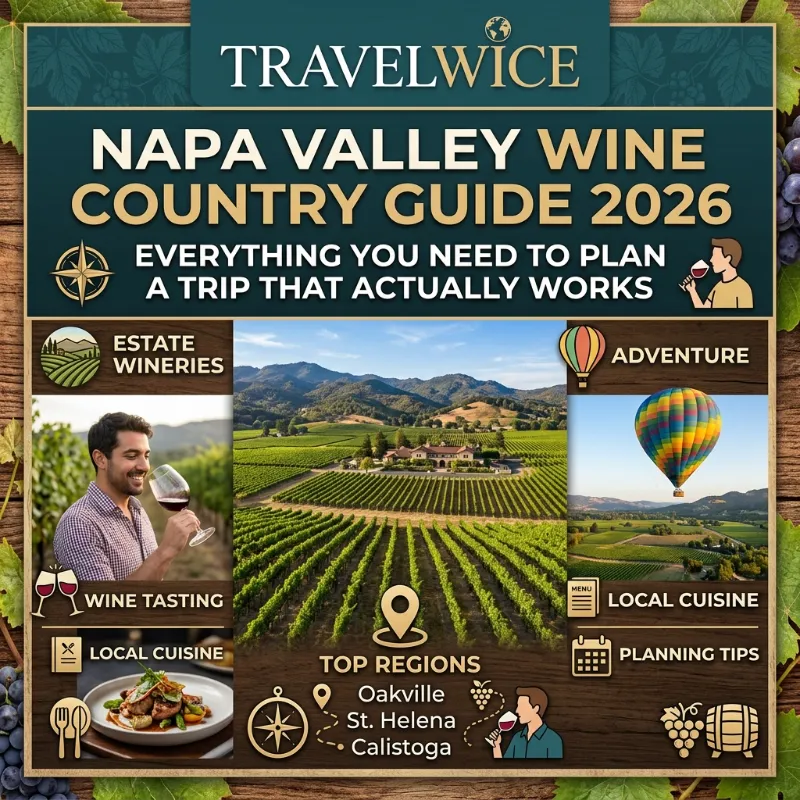
Packing for wine country differs from packing for a beach trip or a city break. Temperature swings between the valley floor and the hillside wineries are the main reason why. A few items consistently make the trip more comfortable.
- A light jacket or cardigan, even in summer, since mountain tasting rooms run noticeably cooler than the valley floor.
- Comfortable, closed-toe shoes for cave tours and vineyard walks. Sandals do not hold up on gravel paths.
- A reusable water bottle. Tasting several wineries without staying hydrated is a fast way to end your afternoon early.
- Sun protection for spring and summer visits, since the valley sits in direct sun for most of the day.
- A small cooler bag or wine tote if you plan to buy bottles. Napa afternoons can get warm enough to affect wine left in a hot car.
Insider Tips Locals Actually Use
A few habits separate a smooth Napa trip from a stressful one. Most of them come from talking to people who live and work in the valley, not from a brochure.
- Book your restaurant reservations before your winery appointments. Yountville’s best tables fill up faster than most tasting rooms.
- Ask your hotel concierge for same-week openings. Cancellations happen constantly at appointment-only wineries, and front desk staff often hear about them first.
- Visit your splurge winery first thing in the morning. Your palate is freshest before 11 AM, and mornings tend to be quieter across the valley.
- Skip Highway 29 during Friday and Sunday afternoon rush hours if you can. The Silverado Trail runs parallel and is almost always faster.
- Keep one afternoon unbooked if your trip runs three days or longer. The best Napa memories are rarely the ones on the itinerary.
Frequently Asked Questions
Trip Planning Basics
Is two days enough for Napa Valley? Two days is enough to taste the valley’s Cabernet heartland, roughly Stags Leap through Rutherford. You will skip Carneros, Calistoga, and any Sonoma crossover. Three days is more comfortable if your schedule allows it.
How much does a Napa wine tasting cost in 2026? Standard seated tastings run USD 40 to 75 per person. Walk-in bar tastings start around USD 25 to 40. Reserve or cave experiences at flagship wineries can reach USD 100 to 200 or more.
Do I need reservations for Napa wineries? Yes, for most of them. Roughly 70 percent of Napa producers are now appointment-only. Book two to six weeks ahead for a standard visit, and six to eight weeks ahead during the September and October harvest.
What is the cheapest time of year to visit Napa Valley? Winter, from November through February, brings the lowest hotel rates and the quietest tasting rooms. It also gives you a genuine chance at more personal time with your host. Spring is the best balance of value and pleasant weather.
Napa Vs Sonoma And Getting Around
Is Napa or Sonoma better for beginners? Napa tends to suit first-time visitors better. The experience is more structured, and the valley is easy to navigate in a straight line. Sonoma rewards travelers who already know roughly what they like and want a more relaxed, spontaneous day.
Can I visit Napa Valley without a car? Yes, though it takes more planning. A private driver or guided small-group tour is a popular option. It removes the designated-driver problem and lets everyone in your group actually taste. The Napa Valley Wine Train is another car-free option that covers several stops along a fixed route.
Is Napa Valley worth visiting if you do not drink wine? Yes. The food scene, hot air balloon rides, and hiking trails around Mount Veeder and Skyline Park all stand on their own. The small-town charm of Yountville and St. Helena does too, even if wine tasting is not the focus of your day.
The Bottom Line
A good Napa Valley wine country guide should save you from two mistakes almost every first-timer makes. The first is cramming in too many wineries. The second is showing up without a single reservation. Pick three wineries a day instead of six. Book ahead of the season you are traveling in, and leave room in the schedule for a slow lunch, since that is usually where the best conversations of the trip happen anyway. Napa rewards travelers who plan a little and then let the day breathe. That balance is what turns a good wine country weekend into the trip you keep talking about years later.
Quiz: Test Your Napa Valley Knowledge
- How many American Viticultural Areas (AVAs) does Napa Valley contain? a) Six b) Sixteen c) Thirty Correct answer: b) Sixteen
- Which winery’s Cabernet famously won the 1976 Judgment of Paris tasting? a) Robert Mondavi Winery b) Domaine Chandon c) Stag’s Leap Wine Cellars Correct answer: c) Stag’s Leap Wine Cellars
- Roughly how long does it take to drive the full length of Napa Valley? a) 5 miles b) 30 miles c) 90 miles Correct answer: b) 30 miles
- Which season typically has the highest booking lead time for Napa wineries? (Select all that apply) a) Spring b) Harvest season (September to October) c) Winter Correct answer: b) Harvest season (September to October)
- Which of the following are true about Sonoma County compared to Napa? (Select all that apply) a) Sonoma has generally lower average tasting fees b) Sonoma is known for a wider range of grape varieties, including strong Pinot Noir c) Sonoma has fewer total wineries than Napa Correct answers: a and b
References
- Visit Napa Valley, official regional tourism site: https://www.visitnapavalley.com/
- Wine Country, Napa Valley regional directory: https://www.winecountry.com/regions/napa-valley/
- Travel Guide To USA, Napa Valley trip planning and costs: https://www.travelguidetousa.com/napa-valley/
- TravelWice California Travel Guide: https://travelwice.com/california-travel-guide-for-2026/