
Finger Lakes Travel Guide 2026: Wine, Waterfalls & Lake Towns
I drove into the Finger Lakes on a grey October morning with no real plan, just a list of winery names scribbled on a receipt and a half-charged phone, and by the second evening I was sitting on a wooden deck above Seneca Lake with a glass of dry Riesling, watching the sun drop behind the far shore, wondering why I had waited so long to come here. The lakes do that to people. They look ordinary on a map — eleven long, thin lakes scratched into central New York by glaciers — and then you drive Route 14 along Seneca and realise the road keeps bending, the vines keep running down to the water, and every ten minutes there is another small town with a bakery, a brewery and a view you did not expect. This Finger Lakes travel guide 2026 covers the wineries worth booking, the waterfalls worth getting wet for, the lake towns that make good bases, and what the whole trip actually costs.
TL;DR: Stay 3–4 nights, base yourself in Geneva or Watkins Glen, and budget roughly $150–$220 per person per day. Late September to mid-October is the best window — harvest, foliage and tasting rooms still on full hours. Do not miss the Gorge Trail at Watkins Glen, a seated tasting at Hermann J. Wiemer or Dr. Konstantin Frank, Taughannock Falls near Ithaca, and at least one slow evening on Seneca or Cayuga Lake. Book tastings ahead on autumn weekends, carry cash for the $10 state park vehicle fees, and give yourself a designated driver or a tour for any wine day.
Why the Finger Lakes Caught Me Off Guard
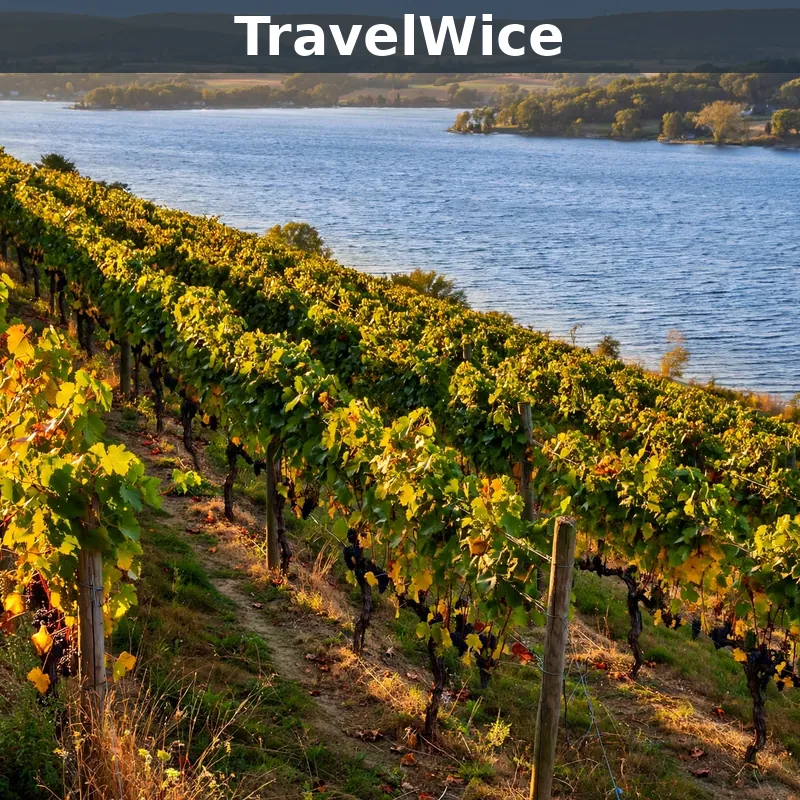
I will be honest: before my first trip I thought the Finger Lakes were a polite stop on the way to somewhere else. A wine region in upstate New York sounded like a nice idea, not a place I would plan a whole holiday around. I was wrong in the best way. The region covers more than 9,000 square miles, and it holds 11 lakes, over 100 wineries, and a waterfall count that puts most American states to shame. Seneca Lake alone is 38 miles long and 618 feet deep — the deepest lake in New York, with its floor sitting below sea level — and Cayuga matches it for length at 38 miles and drops 435 feet. Keuka is the odd one out, shaped like a Y, 19.6 miles long, and the locals call it the Crooked Lake. The lakes are not decoration. They warm the slopes in winter, cool them in summer, and give the Riesling here its sharp, clean edge.
What surprised me most was how unpolished it all feels, in a good way. Napa has limousines and velvet ropes. The Finger Lakes has a winemaker in a barn who pours you something he made from a single hillside and then asks what you think, like he actually wants to know. I tasted at a place on the east shore of Seneca where the tasting room was a converted farmhouse, the dog slept by the door, and the woman pouring told me the vineyard had frozen solid in January and come back anyway. That is the tone of the whole region: people who work hard, make good wine, and do not make a fuss about it.
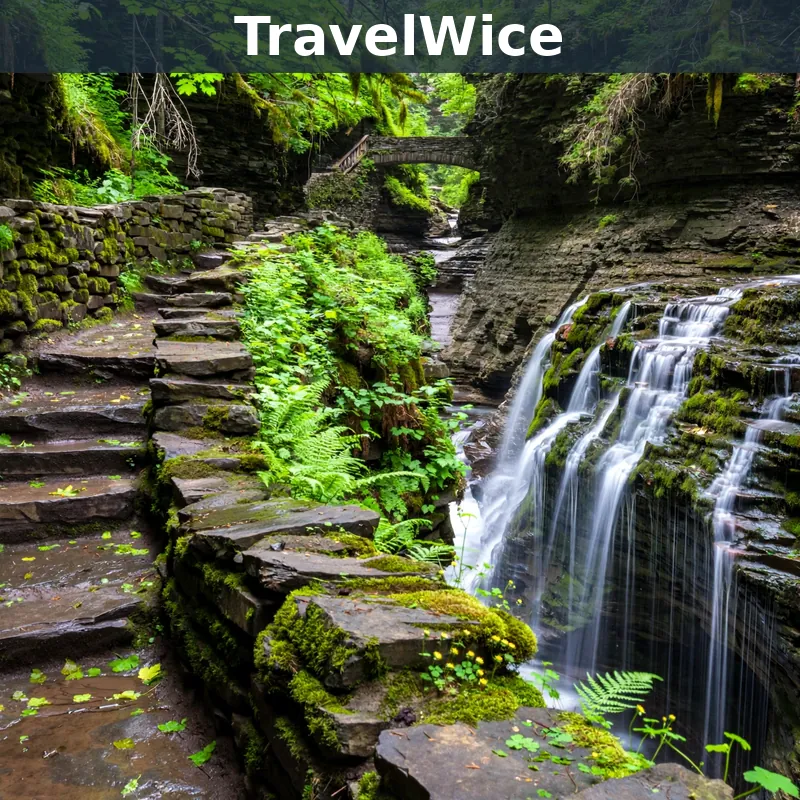
The waterfalls sealed it for me. I had seen photos of Watkins Glen, but photos flatten the place. Walking the Gorge Trail, you pass under a waterfall, then climb stone steps cut into the cliff while the creek roars below you, and you realise there are 19 waterfalls packed into about a mile and a half of gorge. A few days later I stood at the overlook for Taughannock Falls, a single 215-foot plunge that is taller than Niagara Falls, and there were maybe six other people there. Six. In October. I kept thinking about how crowded the same view would be anywhere else in America.
If you are planning a wider New York trip, our New York travel guide for 2026 puts the Finger Lakes alongside the city, the falls and the mountains, and our Niagara Falls travel guide for 2026 covers the big waterfall about two hours west — an easy add-on if you have a spare day.
Best Time to Visit the Finger Lakes
Late September through mid-October is the time I would pick, and I would fight anyone who says otherwise. The harvest is on, the tasting rooms are pouring the new vintage talk, the maples along the gorges turn red and gold, and the air smells like apples and woodsmoke. Daytime highs sit in the 60s, the lake light goes soft and golden by four in the afternoon, and the crowds thin out after the first weekend of October. The catch is that this is also the busiest stretch for wineries, so a Saturday tasting without a booking is a gamble. I learned that the hard way at a popular Seneca Lake room where the host looked at me kindly and said the next open slot was Tuesday.
May and June are my second choice. The Gorge Trail at Watkins Glen usually opens in mid to late May, the waterfalls run full after the spring melt, the lilacs and fruit trees bloom, and the tasting rooms are quiet enough that the person pouring has time to talk. I walked the gorge on a June morning once and had whole stretches of trail to myself, which does not happen in September. Rain is more likely in spring, so pack a light waterproof jacket and shoes you do not mind getting muddy.
July and August are warm, green and busy. Highs reach the low 80s, the lakes are warm enough to swim in, and the villages fill with families, boaters and wedding parties. The state park beaches at Taughannock were open daily from June 26 to Labor Day in 2026, 11 a.m. to 7 p.m., and the swimming pool at Watkins Glen ran through early September. The downside is the heat on the gorge steps and the tasting-room crowds on Saturdays. Start your waterfall walks before 9 a.m. and save the wine for the cooler part of the afternoon.
Winter is the quiet season, and it has its own pull. The lakes steam on cold mornings, the waterfalls freeze into blue-white sculptures, and the villages go back to being villages. But be ready for short hours: many small wineries cut back or go appointment-only in January and February, and the Gorge Trail closes for the winter, usually from mid to late October until mid to late May. I love a winter Finger Lakes weekend — a fire, a red wine, snow on the vines — as long as I have checked opening hours first. Check the National Weather Service forecasts before you drive, because lake-effect snow can turn a two-hour drive into four with very little warning.
Getting There and Getting Around
You need a car here. I cannot say that strongly enough. There is no train running along the lakes, the buses are thin, and the whole point of the region is the slow drive from one shore to the next. Rochester and Syracuse both have airports about an hour from the northern ends of the lakes, and I have flown into both. Rochester worked better for me — smaller airport, faster car rental, and Canandaigua Lake is 30 minutes down the road. From New York City it is about a five-hour drive, and from Buffalo it is roughly two hours to Geneva. If you are coming from the city, our New York City travel guide for 2026 covers the escape routes north, and the drive up I-87 and across is straightforward if you leave before the morning rush.
The driving itself is half the trip. Route 14 runs down the west shore of Seneca Lake from Geneva to Watkins Glen, and it is the prettiest wine road in the east: vineyards on your left, lake on your right, and a winery sign every mile or so. Route 89 does the same job on the west shore of Cayuga, past Taughannock Falls and into Ithaca. Route 414 runs the east shore of Seneca through Lodi and Hector, quieter and more rural, with farm stands and a few tasting rooms that feel like secrets even though they are right on the road. I drove the full loop of Seneca one October afternoon — Geneva down the west side, across at Watkins Glen, back up the east side — and it took me about three hours with stops, which is to say it took me five hours because I kept stopping.
Parking is easy and cheap in the villages, and the state parks charge a $10 vehicle fee when it is collected, usually from mid-May to mid-October. An $80 Empire Pass covers day-use entry at most New York state parks for the year, and it pays for itself fast if you are hitting Watkins Glen, Taughannock and Robert H. Treman in one trip. The one thing to sort out before you go is the wine-day transport. Tasting fees run about $10 to $25 a flight, and three wineries in an afternoon adds up to real alcohol. I used a local driver service on my busiest day and it cost less than a single speeding ticket would have. Some hotels in Geneva and Watkins Glen can arrange a driver, and there are small-group wine tours that pick you up. Do not try to drive the wine trail and taste properly at the same time — the roads are narrow, the shoulders are thin, and the sheriff’s deputies know exactly where the tasting rooms are.
Seneca Lake: The Riesling Road
Seneca is the lake to build your trip around. It is the deepest, the longest, the one with the most wineries, and the one where the Riesling tastes most like the place it came from. The west shore along Route 14 is where the big names sit, and the east shore is quieter, with farm stands, a few excellent smaller rooms and long views back across the water. I spent two full days on Seneca and still left wineries on my list.
Start with Hermann J. Wiemer Vineyard, on the west shore near Dundee at 3962 NY-14. Wiemer was a German winemaker who bought an abandoned farm here in the 1970s and planted Riesling when most people said European grapes could not survive a Finger Lakes winter. He was right and they were wrong. The tasting room sits in a converted barn, the pours are serious, and the single-vineyard Rieslings — Magdalena, Josef, HJW — are the bottles I still think about. A seated tasting starts from about $15 a person, and the library tasting, five older vintages poured privately, is $95. Book ahead. Walk-ins are welcome when there is room, but on an autumn Saturday there often is not, and the staff will tell you so without apology. I booked the library tasting on a rainy Tuesday and had the room almost to myself, which felt like stealing.
Ravines Wine Cellars, at the north end of Seneca near Geneva, pours dry Riesling that tastes like green apple and wet stone, and the tasting room has a view straight down the lake. A flight at the bar starts from about $15, a seated flight about $20. The staff there talked me through the difference between their dry and off-dry Rieslings with a patience I did not deserve after my third pour, and I left with two bottles and a better understanding of what “mineral” actually means in a glass.
Forge Cellars, on the east shore near Burdett, is the one I send people to when they want to feel like they found something. It is small, the tasting is by reservation, the fee is around $25, and the wines are dry, lean and built to age. Book a week ahead in summer and autumn or you will be turned away — I know because I was, once, and I drove back the next morning at opening time like a person who had learned a lesson.
Fox Run Vineyards, also on the west shore, is the friendly counterweight to all that seriousness. A tasting starts from about $10, the vineyard tour is $20, and the café does a decent lunch with a lake view. Anthony Road Wine Company, near Penn Yan, pours dry and semi-dry Rieslings in seated tastings from $10 to $15 a flight, and it is a good first stop if you are new to Riesling and want someone to explain it without making you feel like a student. The Finger Lakes tourism official site lists the current wine trail members and hours, and it is worth checking before you drive, because hours change with the season and small rooms close on weekdays in winter.
One practical note: most tastings now run $10 to $25 a person, and a few places waive the fee if you buy a bottle. Bottles run roughly $20 to $40 for the good Rieslings, which is a fraction of what the same quality costs in Napa or Burgundy. I came home with six bottles and a shipping box, and the shipping cost more than two of the bottles. Buy the wine, drink the wine, and if you love a place, join its wine club — the Finger Lakes clubs are genuinely good value, and the members-only bottles are often the best thing a winery makes.
Keuka Lake and Hammondsport: The Quiet One
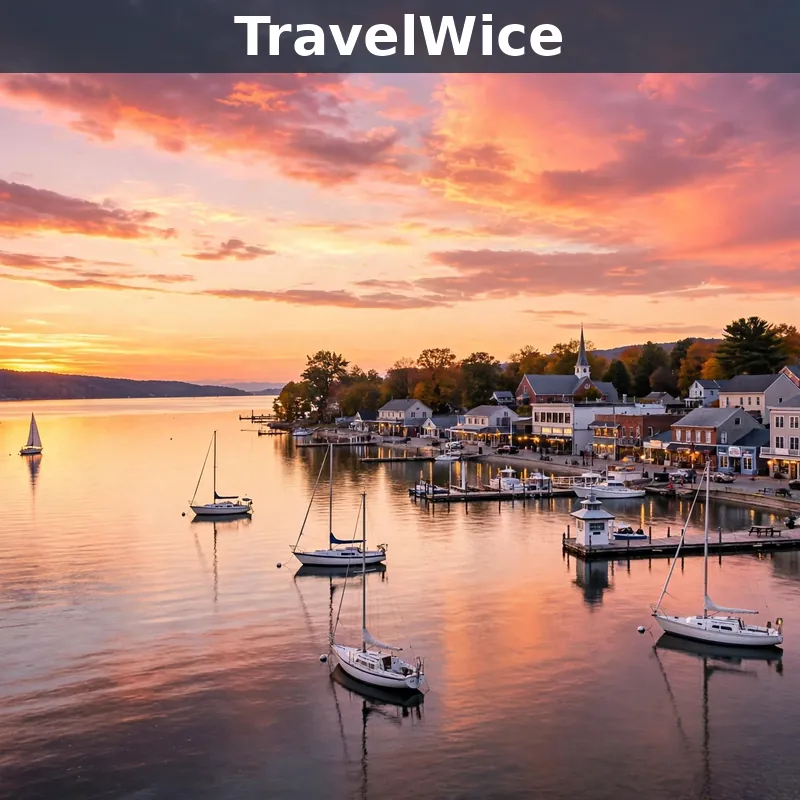
Keuka is the lake I go back to when Seneca feels too busy. It is Y-shaped, 19.6 miles long, 183 feet at its deepest, and the village of Hammondsport at its southern tip is the prettiest small town in the region — a main street you can walk in ten minutes, a square with a bandstand, and a lake that turns pink at sunset. The wine story here starts with Dr. Konstantin Frank, a Ukrainian viticulturist who arrived in New York in 1951, planted European grapes on the slopes above Keuka in 1958, and opened his winery in 1962. Before him, most people thought vinifera grapes could not survive here. He proved them wrong, and every Riesling you drink in the Finger Lakes owes him something.
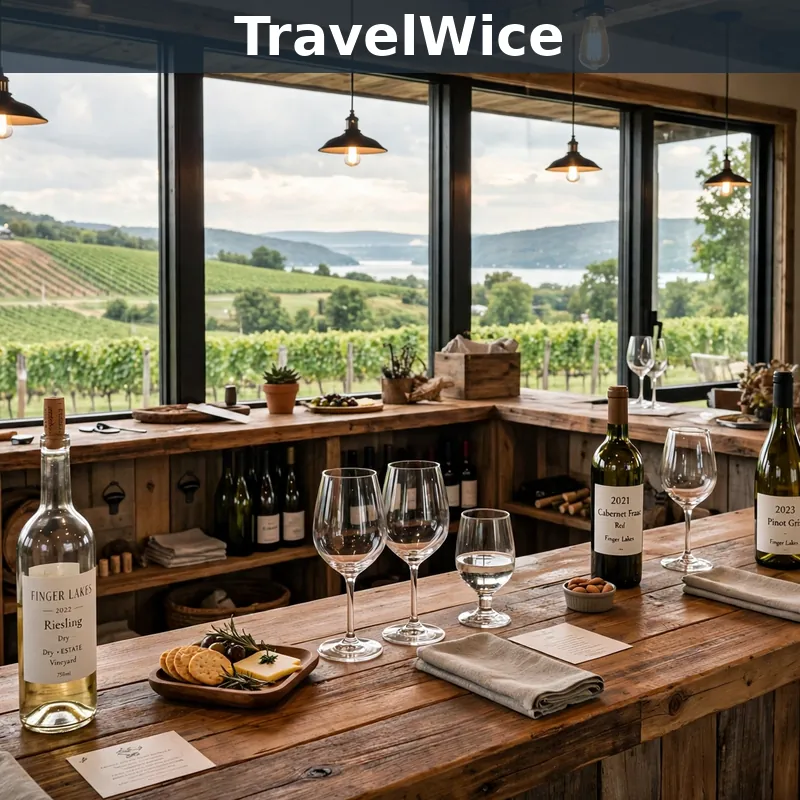
Dr. Konstantin Frank Wine Cellars sits above the west shore outside Hammondsport, and the standard tasting starts at $18 a person, with a seated tasting with small bites at $75. The room is open every day, reservations are recommended, and walk-ins are taken when there is room. I went on a Sunday in October, booked the standard tasting, and spent an hour working through dry, semi-dry and sparkling Rieslings while the light came through the big windows and turned the whole room gold. The vineyard walk, $45 on summer and fall weekends, is worth it if you like the story behind the wine — the guide walked us through the grafting, the lake effect, the frost, and I understood the place in a way I had not from the tasting room alone.
Hammondsport itself deserves a slow morning. There is a small aviation museum — Glenn Curtiss, the early aviation pioneer, built planes here — and a handful of cafes and shops on the square. I had breakfast at a counter cafe on the main street, eggs and toast and coffee for about $12, and watched the town wake up. From Hammondsport you can drive the Keuka Lake Wine Trail around both arms of the Y, stopping at Heron Hill, Keuka Spring and Weis Vineyards, all smaller, all friendly, all pouring wines that cost less than dinner. The east arm of the lake, toward Penn Yan, is farm country — corn, apples, roadside stands selling cider doughnuts in October — and the drive is slow and lovely.
Cayuga Lake and Ithaca: Waterfalls Everywhere
Ithaca is the town that makes the Finger Lakes feel young. Cornell University and Ithaca College sit on the hills above the south end of Cayuga Lake, and the town has bookshops, a farmers market, good coffee and a waterfall within walking distance of downtown. I stayed in Ithaca for two nights on my first trip and I still think it was the right call for a waterfall-focused visit, because three of the best gorge parks in the state are within 20 minutes of the Commons.
Taughannock Falls State Park is the headline. The falls drop 215 feet in a single plunge, past cliffs nearly 400 feet high, and the gorge trail from the lakeside parking area is a flat, easy three-quarter-mile walk that anyone can do. I walked it with my mother, who does not hike, and she made it in 25 minutes with time to sit on a bench and stare. The park charges a $10 vehicle fee, collected daily from sunrise to sunset in season, and the overlook parking lot gives you the postcard view in about two minutes from your car. All the trails were fully reopened in April 2026 after rim trail work, and the Cayuga Lake beach was open June 26 to Labor Day, 11 a.m. to 7 p.m. in 2026. Go early. The overlook fills up by late morning on autumn weekends, and the light is better before 10 a.m. anyway.
Robert H. Treman State Park, just south of Ithaca, is the one I liked most for walking. The gorge trail climbs past 12 waterfalls, including Lucifer Falls, a 115-foot cascade, and the swimming hole at the base of the falls is the kind of place that makes a hot July afternoon feel like a gift. The vehicle fee is $10 when collected. Buttermilk Falls State Park, closer to town, has a natural pool at the base of the falls and a gorge trail that climbs beside a chain of cascades — I went after rain and the whole gorge was loud with water. Ithaca Falls, right in town, is free, a 150-foot-wide curtain of water you can see from the road, and it takes ten minutes. Four waterfalls in a day, no real hiking required, and I still had time for dinner on the Commons.
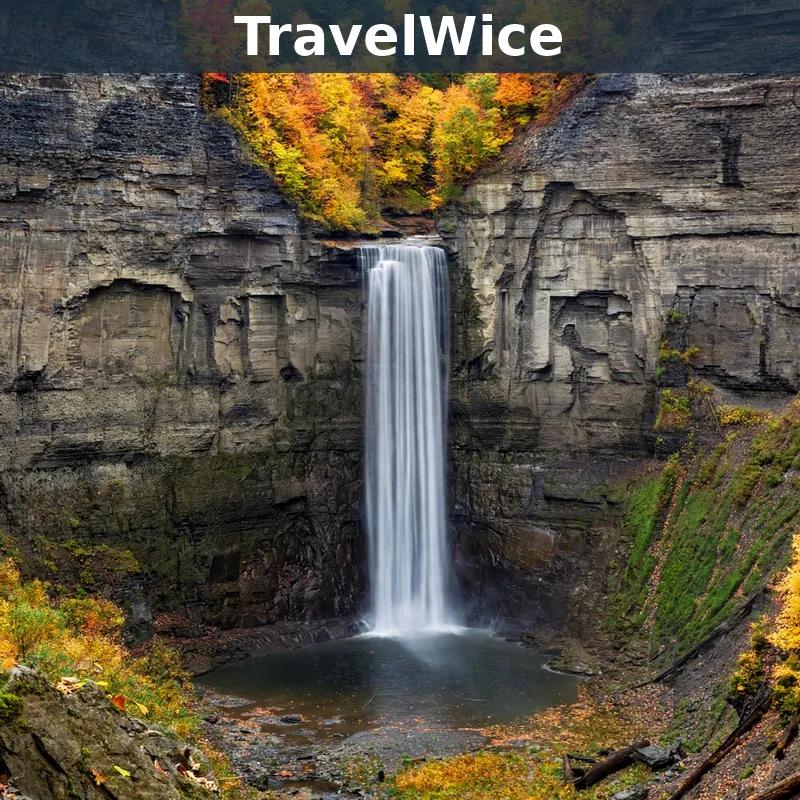
Cayuga Lake itself is 38 miles long and 435 feet deep, and the west shore drive on Route 89 from Ithaca to Seneca Falls is one of the quietest, prettiest roads in the region. Aurora, halfway up the lake, is a tiny village with a lakeside inn and a main street that looks like a film set. Seneca Falls, at the north end, is the town that inspired the fictional Bedford Falls in the film It’s a Wonderful Life, and the women’s rights history there — the 1848 convention — is marked at the Women’s Rights National Historical Park. I did not plan to stop and I am glad I did: the main street, the canal, the small museum, all of it felt like a place that mattered and knew it.
Watkins Glen: The Gorge That Earns the Drive
Watkins Glen State Park is the single most visited place in the Finger Lakes, and for once the crowds are right. The Gorge Trail runs about 1.5 miles through a gorge cut by Glen Creek, past 19 waterfalls, under a waterfall at Cavern Cascade, and up 832 stone steps — I counted the last hundred and stopped counting after that, because my legs had opinions. The creek drops about 400 feet through the gorge, the cliffs rise nearly 200 feet, and the stone bridges and tunnels were built in the 1930s by the Civilian Conservation Corps, which is why they look like they belong there.
The practical details matter here, because the gorge is seasonal. The Gorge Trail typically opens in mid to late May and closes in mid to late October — in 2026 it closed for the season at 6 p.m. on October 25, and it reopens in mid to late May 2027. The park itself is open year-round from dawn to dusk, and the north and south rim trails stay open all year, sunrise to sunset, but they do not give you the waterfall walk from November to May. The vehicle fee is $10, collected sunrise to sunset from mid-May to mid-October, and it includes pool access in summer. The shuttle between the main, south and upper entrances costs $6 a person each way. My advice: park at the main entrance on N. Franklin Street in the village, walk up the gorge, and take the shuttle back down — your knees will thank you, and the walk down the rim trail is a different, quieter view. Start before 9 a.m. on a summer or autumn weekend. By 11 a.m. the trail is a slow-moving line of people, and the stone steps are slippery when wet. No pets on the Gorge Trail, no swimming in the gorge — the fine is $250 a person — and bring water even though the walk is short, because the steps are steeper than they look in photos.
The village of Watkins Glen is small and easy. I ate lunch at a diner on Franklin Street after the gorge, a burger and fries for about $15, and walked down to the Seneca Lake waterfront, where the boats come in and the air smells like lake water and fried food. The Watkins Glen International racetrack sits just outside town, and on race weekends the village doubles in size — check the calendar before you book a room, or book into the noise on purpose if that is your thing. For a quieter gorge day, our Hudson Valley travel guide for 2026 covers river towns and hikes closer to the city, and the contrast with the Finger Lakes gorges is half the fun.
Lake Towns at a Glance
Picking a base matters more here than in most places, because the lakes are long and the drives between them are slow. This table is my honest summary after staying in four of these towns.
| Town | Best for | Feel | Typical hotel rate |
|---|---|---|---|
| Geneva | First-timers, Seneca wine | Lakeside, lively, walkable | $140–$260 |
| Watkins Glen | Gorge, Seneca south end | Small, sporty, friendly | $120–$220 |
| Ithaca | Waterfalls, food, students | Young, busy, hilly | $130–$240 |
| Hammondsport | Keuka wine, quiet | Tiny, pretty, slow | $110–$200 |
| Skaneateles | Pretty streets, lake walks | Polished, calm, pricey | $180–$320 |
| Penn Yan | Keuka north end, value | Working town, honest | $100–$180 |
| Canandaigua | West end, families | Resorty, easy, spread out | $130–$230 |
Geneva is my pick for a first trip. It sits at the north end of Seneca, the lakefront has a park and a marina, the main street has good restaurants and a couple of proper wine bars, and you can drive either shore of Seneca without backtracking. I stayed in a small hotel on the lakefront, paid about $180 a night in October, and walked to dinner every evening. Watkins Glen is the better base if the gorge is your priority and you want to be first on the trail in the morning. Ithaca is the best base for waterfalls and food, and the only town in the region that feels like a small city. Skaneateles is the prettiest town in the Finger Lakes — a main street of boutiques and cafes on a clear, deep lake — and also the priciest, so I treat it as a day trip and a long lunch rather than a base. Penn Yan is the value pick: plain, friendly, cheap rooms, and ten minutes from the Keuka wineries.
Where to Stay in the Finger Lakes
Stay in Geneva or Watkins Glen if you want to walk to dinner, stay in Ithaca if you want the most choice, and stay in a lake house if you are travelling with a group. The region has very few big chain hotels and a lot of small inns, bed and breakfasts, and vacation rentals, and that is part of the charm — and part of the planning problem, because the good small places book out for October weekends months ahead. I booked my October Geneva room in July and the innkeeper told me I was lucky. She was not exaggerating.
A good mid-range hotel or inn runs about $130–$260 a night in peak season, less in winter and on weekdays. Bed and breakfasts on the lake shores run similar prices and usually include a proper breakfast — eggs, local sausage, fresh bread — which saves you $15 a person and an hour in the morning. Vacation rentals work well for groups: a three-bedroom house on Seneca or Cayuga with a dock and a kitchen can cost $250–$400 a night in summer, which splits nicely four ways. Camping is the budget option and a good one: Watkins Glen State Park has tent and trailer sites from $18 to $30 a night, rustic cabins from $58, and Taughannock has campsites from $20 to $27 and cabins from $59. Book both through ReserveAmerica, and book early — the lakeside sites go first. Campgrounds and cabins at both parks ran roughly May to mid-October in 2026. Recreation.gov bookings covers the federal sites in the wider region, and the I LOVE NY official tourism site lists current lodging across the Finger Lakes.
One thing I wish someone had told me: the lakes are long and the towns are far apart after dark. A 30-minute drive on Route 14 feels twice as long at night, with deer on the road and no streetlights. Pick a base, eat near it, and save the long drives for daylight. I broke that rule once, driving back from a late dinner in Ithaca to a cabin on Seneca, and I spent the whole drive at 35 miles an hour watching for eyes in the headlights.
What to Eat and Drink in the Finger Lakes
The food here is farm food, and it is better than it has any right to be. The farm stands along Routes 14 and 89 sell sweet corn, apples, cider doughnuts and pies in season, and I stopped at so many of them that my car smelled like apples for a week. Naples, at the south end of Canandaigua Lake, is famous for grape pie — a sweet, dark, Concord grape pie that sounds strange and tastes like autumn. I bought a slice at a farm stand for $5 and ate it in the car, and then I went back and bought a whole pie for $18. It is the kind of local food that does not travel, and that is the point.
Ithaca has the best restaurant scene in the region, by a long way. The Commons has everything from ramen to farm-to-table, and the Moosewood Restaurant — the vegetarian place that started as a collective in the 1970s and became famous through its cookbooks — is still there, still good, still worth booking ahead. A proper dinner in Ithaca runs about $25–$40 a head. Geneva has caught up fast in the last few years: wine bars, a couple of serious kitchens on the main street, and lakefront restaurants where the fish is local and the wine list is all Finger Lakes. A casual lunch — a sandwich, a soup, a glass of wine — runs about $15–$25. Watkins Glen has diners and pubs and a few good pizza places, and that is honestly what you want after 832 steps.
Breakfast is the meal I plan around here. The diners open early, the coffee is strong, and a big breakfast — eggs, home fries, toast, coffee — costs about $12–$18. I ate breakfast at a counter in Penn Yan one morning, next to a farmer who had already been up for three hours, and the waitress knew his order before he sat down. That is the Finger Lakes in one scene.
Drink-wise, it is not only wine. The region has good breweries — Ithaca Beer Company, War Horse Brewing in Geneva, a string of small craft places along the lakes — and a growing cider scene, because the apples here are serious. A pint runs about $6–$8, a cider flight about $10–$15. The distilleries are worth a stop too, especially on a rainy day when the tasting rooms are crowded. And the coffee is good: Ithaca and Geneva both have proper cafes, and a flat white on a cold morning before the gorge walk is a small, necessary joy.
Day Trips from the Finger Lakes
You could spend a week on the lakes alone, but two day trips are worth the drive.
Corning Museum of Glass
Corning is about 45 minutes south of Watkins Glen, and the Corning Museum of Glass is the best rainy-day plan in upstate New York. It is a proper world museum — 50,000 pieces of glass, live glassblowing demonstrations, and a studio where you can make your own glass ornament — and it is also, somehow, relaxed and uncrowded. Adult admission is $25, discounted to $22 for students, seniors 62 and over and military, and free for anyone 17 and under. Tickets are valid for two consecutive days, which is generous and useful, because three to four hours is a normal visit and you will want to come back for the demonstrations. Hours are daily 9 a.m. to 5 p.m. from April to December, and closed Wednesdays in January to March. I went on a rainy October afternoon, watched a glassblower pull a glowing gather of glass into a vase in about ten minutes, and stayed an hour longer than I planned. The town of Corning itself has a handsome main street, Market Street, with shops and restaurants, and the Rockwell Museum of American art is a short walk away — a combined ticket for both museums is $35 for adults.
Letchworth State Park
Letchworth is about an hour west of Canandaigua Lake, and it is called the Grand Canyon of the East for a reason. The Genesee River has cut a gorge up to 600 feet deep and 17 miles long, with three major waterfalls, and the park has 66 miles of hiking trails. I drove there on a clear October day, stood at the overlook above the Upper Falls with the gorge dropping away below me, and understood the nickname immediately. The Letchworth State Park official page lists current hours, fees and trail conditions, and it is worth checking before you go, because the gorge trails close in icy conditions. Pair it with a stop in Geneseo, a pretty college town on the way, and give it a full day — the drive back in the dark is long, and the park deserves daylight.
Closer in, Skaneateles is the easiest half-day: a 16-mile-long lake, the clearest in the region, a main street of shops and cafes, and a lakeside walk that takes an hour. I went for lunch, stayed for the sunset, and wished I had booked a room. Our Adirondacks travel guide for 2026 covers the next big wilderness north if your trip continues that way, and our Catskills travel guide for 2026 covers the mountains south of the lakes. If you want more short-trip ideas at this budget, our roundup of the best weekend getaways in the USA has other drives worth the tank of gas.
How Much Does a Finger Lakes Trip Cost?
The Finger Lakes is one of the best-value wine regions in America, and the numbers show it. For a mid-range trip, plan on roughly $150–$220 per person per day, excluding flights. Our Texas travel guide for 2026 shows how that compares with a Texas city break, and our California travel guide for 2026 covers a wine trip at roughly double the price.
Lodging is the biggest cost: about $130–$260 a night for a good hotel or inn in peak season, $100–$180 in winter and on weekdays. Food runs about $50–$75 a day per person if you mix diner breakfasts and farm-stand lunches with one sit-down dinner — breakfast $12–$18, lunch $15–$25, dinner $25–$40, plus drinks. A rental car runs about $45–$75 a day. Activities are cheap by wine-country standards: state park vehicle fees $10 a car, tastings $10–$25 a person, the Corning Museum $25, and the gorge walks, the lake overlooks and the village strolls are free. A three-winery day costs about $45–$60 in tasting fees, and you will come home with at least two bottles.
Ways to save: visit on weekdays, when tasting rooms are quiet and some hotels drop their rates; stay in Penn Yan or Canandaigua instead of Skaneateles; eat at diners and farm stands; use the Empire Pass if you are hitting three or more state parks; and pick one splurge tasting a day instead of three. The best memories here — the gorge at 8 a.m., the lake at sunset, the $5 slice of grape pie — cost almost nothing. For a family version of this trip, our New York family vacation guide for 2026 covers kid-friendly hikes, museums and lake days across the state.
Chart: Finger Lakes Average Highs by Month
The Finger Lakes have four real seasons, and the temperature swing shapes the trip more than anything else, so this chart shows approximate average daytime highs across the year.
| Month | Avg high (°F) | Avg low (°F) |
|---|---|---|
| January | 32 | 18 |
| March | 44 | 27 |
| May | 68 | 48 |
| July | 81 | 61 |
| September | 73 | 55 |
| November | 48 | 33 |
What the chart shows is a region with a short, warm summer and a long, cold winter, and two shoulder seasons that do most of the work. Highs sit near freezing in January, climb through the 40s in March, reach the high 60s by May, and peak in the low 80s in July — warm, but rarely punishing, thanks to the lakes. September is the sweet spot, with highs in the low 70s and cool nights, and by November the highs are back in the 40s and the tasting rooms start cutting hours. The practical takeaway: book late September to mid-October for the best combination of weather, foliage and full opening hours, and pack layers in every season, because a morning on the lake can be 15 degrees colder than the afternoon in town.
References
- Finger Lakes tourism official site — Finger Lakes wineries, lake towns, events and trip planning.
- I LOVE NY official tourism site — statewide trip planning, road trips and events.
- National Weather Service forecasts — forecasts, lake-effect snow and heat alerts.
- Recreation.gov bookings — federal campgrounds and sites in the wider region.
- Letchworth State Park official page — Letchworth hours, fees, trails and waterfalls.
Finger Lakes Travel Quiz
Test what you picked up from this guide before you go.
1. How deep is Seneca Lake at its deepest point?
- A) About 618 feet
- B) About 300 feet
- C) About 150 feet
2. What was the vehicle fee at Watkins Glen and Taughannock Falls state parks in 2026?
- A) $25 per vehicle
- B) $10 per vehicle
- C) Free
3. When does the Gorge Trail at Watkins Glen usually close for the winter?
- A) Mid to late October
- B) End of December
- C) It never closes
4. Who planted European wine grapes above Keuka Lake in 1958?
- A) Dr. Konstantin Frank
- B) Hermann J. Wiemer
- C) Glenn Curtiss
5. What is the best time to visit the Finger Lakes, according to this guide?
- A) January to February
- B) Late September to mid-October
- C) Only in July
Quiz Answers
- A) About 618 feet — Seneca Lake is 38 miles long and 618 feet deep, the deepest lake in New York, with its floor below sea level.
- B) $10 per vehicle — Both Watkins Glen and Taughannock Falls charged a $10 vehicle fee in 2026, collected in season.
- A) Mid to late October — The Gorge Trail typically closes in mid to late October and reopens in mid to late May; in 2026 it closed on October 25.
- A) Dr. Konstantin Frank — The Ukrainian viticulturist planted European grapes above Keuka in 1958 and opened his winery in 1962.
- B) Late September to mid-October — Harvest, foliage and tasting rooms still on full hours, with daytime highs in the 60s.