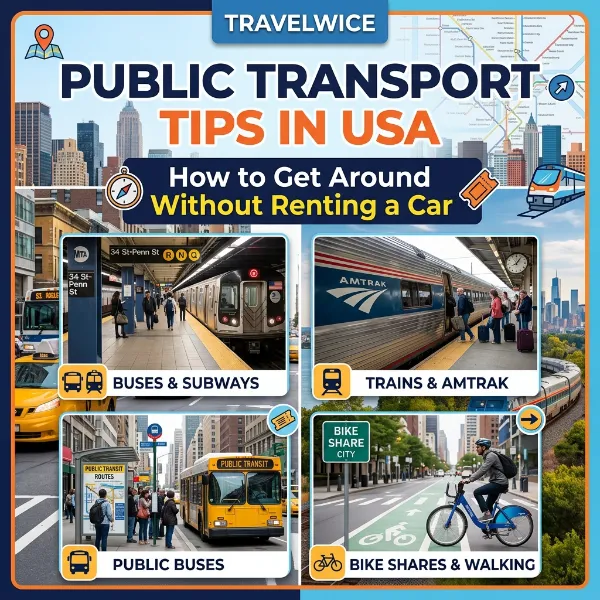

The first time I rode the New York subway with a rolling suitcase, a local behind me sighed loudly, and I learned my first real lesson about public transport tips in USA: stand right, walk left, and never block the doors. That one moment taught me more than any guidebook. Since then I have ridden the “L” in Chicago at rush hour, caught the last DC Metro train home from a Nationals game, and taken the Amtrak Coast Starlight through the Cascades with a coffee in hand. None of it required a rental car, and most of it cost less than a single Uber ride from the airport.
Money Saving Tips for USA Travel in 2026: Real Prices, Real Savings
This guide pulls together what actually works in 2026, not recycled advice from a decade ago. Fares changed in several major cities this year, Amtrak ran a headline sale on its cross-country pass, and more travelers than ever are choosing buses and trains over driving. So here is a grounded, no-fluff walkthrough for getting around the USA using buses, subways, trains, and a few smart apps.
Key Takeaways
| Topic | What You Need to Know |
|---|---|
| Best city for first-timers | Washington, D.C., thanks to its simple color-coded Metro lines |
| Cheapest way between cities | Intercity buses (FlixBus, Greyhound) usually beat trains and flights on short routes |
| Amtrak’s big 2026 deal | The USA Rail Pass dropped to $250 for 10 segments during the January sale, versus the usual $499 |
| NYC subway fare (2026) | $3.00 per ride, with a 7-day fare cap of $36 through OMNY |
| Chicago transit | Rail base fare $2.75, bus $2.50, with a Regional Day Pass covering CTA, Metra, and Pace |
| Golden rule | Tap-to-pay contactless cards now work in nearly every major US transit system, so you rarely need a paper ticket |
TL;DR: You can absolutely explore the USA without a car if you stick to the coastal and Midwest cities with real transit networks, book Amtrak segments early, and use a contactless card or phone to tap into subways and buses. Between cities, budget buses like FlixBus and Greyhound are usually your cheapest bet, and Amtrak wins for comfort and scenery. Inside cities, a day pass or fare-capped contactless card almost always beats buying single tickets.
Why Public Transport Tips in USA Actually Matter for Visitors
Here is the honest truth: America was built around the car, and that shapes everything about riding transit here. Unlike London or Berlin, where a single pass covers the whole region, US cities each run their own separate systems with their own cards, apps, and fare rules. That is exactly why a solid usa public transit guide tourists can actually follow matters so much more here than in Europe.
Consequently, a little homework before you land saves real money and real stress. For a broader primer on adjusting to American habits and etiquette, our beginner’s guide to USA travel is worth reading alongside this one, since transit etiquette ties directly into general cultural norms.
Cultural Etiquette Tips for Visiting the USA
USA Public Transit Guide for Tourists: City by City
Not every American city is transit-friendly, so it helps to know which ones reward you for leaving the car behind. Below is what I have found firsthand and through current fare data.
New York City
New York remains the easiest US city to explore entirely on foot and rail. As of January 4, 2026, the subway and local bus fare rose to $3.00 per ride, and the OMNY tap-and-go system introduced a 7-day fare cap of $36, meaning your 13th ride in a week is effectively free. Meanwhile, the old 7-day and 30-day MetroCards are being phased out entirely in favor of OMNY, so tapping a contactless card or phone is now the simplest approach.
Practical tip: skip the paper MetroCard line altogether. Just tap your contactless bank card or phone at any turnstile, and the fare cap kicks in automatically.
Best Travel Apps for a USA Trip in 2026
Washington, D.C.
The DC Metro is genuinely tourist-friendly, with clean color-coded lines (Red, Orange, Blue, Silver, Green, Yellow) that connect almost every major monument and museum. Fares vary by distance and time of day, running roughly $2.00 to $6.00 per trip, with daily cost caps that typically land between $8.50 and $15 for a full day of sightseeing. A SmarTrip card, either physical or loaded into your phone’s wallet app, works across Metrorail, Metrobus, and even some regional buses in Virginia and Maryland.
Visa and ESTA Travel Tips for the USA (2026 Guide)
Chicago
Chicago’s “L” train and CTA buses are how most locals move through the city. In 2026, the CTA raised its base rail fare from $2.50 to $2.75 and its bus fare to $2.50, while eliminating the old 3-day pass. However, Chicago also rolled out a Regional Day Pass linking CTA, Metra commuter rail, and Pace suburban buses, priced between $10 and $16 on weekdays and a flat $9.50 on weekends. For anyone combining a day trip to the suburbs with sightseeing downtown, that single pass genuinely simplifies things.
First-Time USA Travel Checklist: What Not to Skip
Boston
Boston’s MBTA, nicknamed “the T,” is one of the oldest subway systems in the country and still one of the most walkable to pair with. A CharlieCard (get one free from any station attendant) unlocks lower fares than paying with cash or a CharlieTicket, so it is worth grabbing one on arrival even for a short stay.
Los Angeles and San Francisco
LA Metro’s rail lines now reach Santa Monica, Hollywood, and Downtown, though a car or rideshare still helps for spread-out neighborhoods like Malibu. San Francisco, on the other hand, rewards transit riders generously: BART connects the airport directly to downtown and Berkeley, while the Muni system and cable cars cover everything else within the city.
Bottom line: if your itinerary leans on New York, DC, Boston, Chicago, or San Francisco, you can realistically skip the rental car altogether. Pair this with our guide to the best travel apps for the USA so your phone does the route-planning for you.
Safety Tips for USA Travel Every Visitor Needs in 2026
How to Use Amtrak in the USA: Trains Between Cities
Once you leave the big cities, Amtrak becomes your main non-car option for longer distances, and honestly, it is more scenic than most travelers expect.
Booking Amtrak Tickets and Passes
Booking directly through Amtrak.com or the Amtrak app is almost always cheaper and more flexible than booking through a third party. A few practical points from experience:
- Book longer routes early. Popular long-distance trains, like the California Zephyr or the Coast Starlight, sell out their cheapest Value fares days or even weeks ahead.
- Choose Coach unless you need to sleep. Coach seats are genuinely comfortable, with wide reclining seats, no middle seat, and big windows, so an overnight sleeper is only worth the extra cost on very long hauls.
- Download the Amtrak app before you travel. It handles mobile boarding passes, live delay alerts, and station information in one place.
The USA Rail Pass Explained
Amtrak occasionally runs a limited-time “Adventure Awaits” style sale, and the most recent one, running through January 20, 2026, dropped the USA Rail Pass to $250 instead of its usual $499. That works out to $25 per segment across 10 coach-class segments, valid across more than 500 destinations nationwide, as long as you complete all 10 within 30 days of your first ride and within 120 days of purchase.
A “segment” simply means one train ride without changing trains, so a New York to Philadelphia hop and a 45-hour Seattle to Chicago haul both count as one segment each. That quirk makes the pass a genuinely good deal for slower, multi-stop trips rather than quick hops. Just remember that even with the pass, you still need to reserve each segment ahead of time since it does not let you simply hop on the next available train.
If train travel across the US sounds appealing, it pairs naturally with a longer, slower itinerary rather than a rushed two-week tour, so plan your packing list for the USA with a few extra layers for changing climates along the route.
USA City Transit Passes Guide: Cards, Apps, and Fare Caps
Every city runs its own card, and mixing them up wastes money. Here is a side-by-side comparison based on current 2026 pricing.
| City | Transit Card / App | Single Ride | Day Pass | Notes |
|---|---|---|---|---|
| New York City | OMNY (tap card or phone) | $3.00 | Auto fare cap at $36/week | MetroCard passes being phased out |
| Washington, D.C. | SmarTrip | $2.00 to $6.00 | Daily cap approx. $8.50 to $15 | Distance and time-of-day based |
| Chicago | Ventra | $2.50 (rail), $2.25 (bus) | $6 to $16 depending on zones | Regional Day Pass covers CTA, Metra, Pace |
| Boston | CharlieCard | Lower than cash fare | Varies by pass type | Free card from station attendants |
| San Francisco | Clipper Card | Varies by system | Daily/monthly options | Works across BART, Muni, and regional buses |
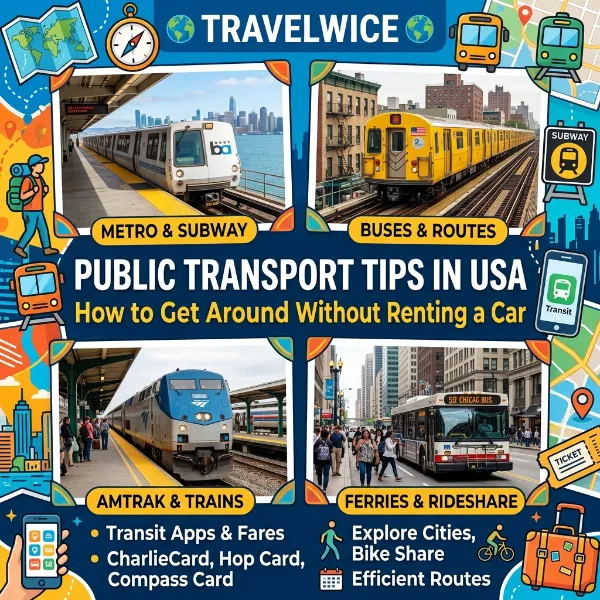
A genuinely useful piece of advice: in almost every one of these cities, you no longer need to buy a physical card at all. Tapping a contactless debit or credit card, or your phone’s wallet app, now works directly at the turnstile or farebox in most systems, and the fare automatically caps at the best available rate.
USA Transport Without a Car: Buses, Rideshares, and Regional Options
If your trip covers ground between cities that Amtrak does not reach well, intercity buses fill that gap nicely, and honestly, they have improved a lot.
FlixBus and Greyhound, now under the same parent company, together connect roughly 2,400 destinations across North America. They were named among USA Today’s 10Best Bus Services for the third year running in 2026, with readers pointing to reliable on-time performance and free luggage allowances as the main draw. For distances under a few hundred miles, a bus ticket is frequently cheaper than a flight once you account for airport parking or a checked bag fee.
A few other realistic ways to get around without a car:
- Rideshare apps (Uber, Lyft) work well for the last mile from a train or bus station to your hotel, especially late at night when transit runs less often.
- Regional commuter rail, like Metra around Chicago or Caltrain between San Francisco and San Jose, is a smart way to reach smaller towns without a rental.
- Bike share programs, such as Citi Bike in New York or Divvy in Chicago, are surprisingly good for short hops once you know the neighborhood layout.
- Walking, honestly, since many US downtowns are more compact than their sprawling suburbs suggest.
For a deeper look at how transit fits into US daily life and immigrant communities, USAHello’s guide to public transportation is a genuinely helpful, plain-language resource. Similarly, Roafly’s USA transport guide and World Trips’ transportation resource both break down regional differences well if you want a second opinion beyond this article.
Money-Saving Tips That Actually Work
After years of trial and error, here is what consistently saves money on US transit:
- Buy a reloadable transit card on day one instead of single tickets every time, since most systems charge a small premium for one-off paper fares.
- Travel outside peak hours (typically before 6:30am or after 7pm) where cities like DC still price fares by time of day.
- Watch for Amtrak’s seasonal sales, which have appeared around January and other holiday periods in recent years.
- Split longer trips across bus and train, since a Greyhound leg followed by an Amtrak connection is sometimes cheaper than either option end to end.
- Check whether your destination city offers a visitor-specific pass, since several tourist boards bundle transit with museum discounts.
Safety and Etiquette on US Public Transit
A few small habits make a real difference. Keep bags close and zipped, especially on crowded subway platforms during rush hour. Offer priority seating to elderly riders or anyone with a visible need, since this is expected everywhere from Boston to LA. Stand to the right on escalators so faster walkers can pass on the left, a rule New Yorkers take unusually seriously. Finally, remember that tipping culture generally does not extend to public transit drivers or conductors, unlike restaurants or taxis, so check our tipping etiquette guide for the USA if you are unsure where tipping actually applies.
Public Transit vs. Renting a Car: A Quick Comparison
| Factor | Public Transit | Rental Car |
|---|---|---|
| Typical daily cost (major city) | $8 to $16 with a day pass or fare cap | $40 to $90 plus parking and gas |
| Parking hassle | None | Often significant in downtown areas |
| Flexibility for rural areas | Limited | High |
| Learning curve | Moderate, varies by city | Low, if you already drive |
| Best for | City-heavy, coast-to-coast itineraries | Road trips, national parks, small towns |
If your trip mixes big cities with remote national parks, a hybrid approach often works best: transit and Amtrak between cities, then a short-term car rental for a few rural days.
Frequently Asked Questions
Is public transport reliable in the USA? It varies a lot by city. New York, Washington D.C., Chicago, Boston, and San Francisco all run frequent, dependable systems, while many smaller US cities have limited or no public transit at all.
Can I use one card for every US city? No, not yet. Each metro area runs its own separate card (OMNY, SmarTrip, Ventra, CharlieCard, Clipper), though most now accept a normal contactless bank card as well.
Is Amtrak cheaper than flying? Sometimes, especially on shorter regional routes like the Northeast Corridor between Boston, New York, and Washington. On longer cross-country routes, flying is usually faster, but Amtrak wins on scenery and comfort, and the occasional USA Rail Pass sale can make it genuinely cheap.
Do I need a car to visit US national parks? Generally yes. Most national parks sit far from rail or bus networks, so a rental car or organized tour is usually the practical choice for that portion of a trip.
Are intercity buses safe and comfortable? Modern FlixBus and Greyhound coaches have improved significantly, with WiFi, power outlets, and better on-time performance than their reputation from a decade ago suggests.
Quick Quiz: Test Your USA Transit Knowledge
- What is the current NYC subway single-ride fare as of January 2026? a) $2.75 b) $3.00 c) $3.50
- How many trip segments does Amtrak’s discounted USA Rail Pass include? a) 5 b) 10 c) 15
- Which card do you use on Boston’s MBTA subway? a) SmarTrip b) Ventra c) CharlieCard
- True or False: Tipping is generally expected for public bus and subway drivers in the USA.
- Which two companies now operate under the same parent for intercity bus travel in North America? a) Greyhound and Megabus b) FlixBus and Greyhound c) Greyhound and Amtrak
Answer Key: 1) b, 2) b, 3) c, 4) False, 5) b
Conclusion
Getting around the USA without a car is genuinely doable in 2026, as long as you match your itinerary to cities and routes built for transit rather than fighting against ones that were not. Lean on Amtrak and its occasional rail pass sales for the scenic middle-distance legs, use FlixBus or Greyhound for budget-friendly city hops, and tap a contactless card the moment you land in New York, DC, Chicago, Boston, or San Francisco. Do that, and you will spend less time worrying about parking and more time actually seeing the country.
References
- MTA fare and toll changes, effective January 4, 2026: https://www.mta.info
- Amtrak USA Rail Pass “Adventure Awaits Sale,” January 2026: https://media.amtrak.com
- Chicago Transit Authority 2026 fare and pass announcement: https://www.transitchicago.com
- USA Today 10Best Bus Services 2026 Readers’ Choice: https://www.flixbus.com
- Roafly USA Transport Guide: https://www.roafly.com/blog/usa-transport-guide
- World Trips United States Transportation Resource: https://www.worldtrips.com/resources/united-states/transportation
- USAHello: Public Transportation in Daily Life: https://usahello.org/life-in-usa/daily-life/public-transportation/