

Garden District New Orleans Guide 2026: Mansions, Cemeteries & Magazine Street
Also, I got off the streetcar in the Garden District on a warm afternoon. The first thing I noticed was the quiet. Ten minutes earlier I had been in the French Quarter, where every doorway had music coming out of it. In fact, every street had someone trying to sell me something. Here, the loudest sound was the streetcar bell and the leaves moving over my head. A green streetcar rolled past under a tunnel of live oaks.
A woman walked a small dog past a white-columned house. I thought, this is the New Orleans I had been hoping to find. This Garden District New Orleans guide is about that slower side of the city. The mansions, the cemetery that has just reopened, the long lunch at Commander’s Palace. The streetcar ride that costs $1.25 and feels like it should cost ten times more.
TL;DR: The Garden District is the leafy, residential neighbourhood uptown from the French Quarter, best reached on the St. Charles streetcar for $1.25 a ride, with a 2-hour transfer included. Start at Lafayette Cemetery No. 1, at 1400 Washington Ave, which reopened October 1, 2026 after seven years closed. Walk the mansion streets, have lunch at Commander’s Palace (1893) across the street, where martinis are 25 cents at lunch, then shop and snack your way down Magazine Street. Finish at Audubon Park and the Audubon Zoo at 6500 Magazine St. Allow a slow half day, wear walking shoes, bring water, and go in the morning in summer, when the shade and the breeze make the walk easy.

The Streetcar Ride Is the Start of the Trip
In addition, do not drive to the Garden District. Take the streetcar, because the ride is half the point. The St. Charles line runs from Canal Street, at the edge of the French Quarter, through the Garden District and on to Carrollton. In particular, a ride costs $1.25, and that fare includes a 2-hour transfer. You can get off, walk around, and get back on without paying again inside those two hours. I paid with exact change — the streetcar takes cash. Having the coins ready makes boarding faster for everyone behind you.
On top of that, I caught the car at Canal Street in the late morning. The green cars are old, with wooden seats and windows that slide open, and they rock gently as they move. Meanwhile, within five minutes the buildings changed.
The Quarter’s tight grid gave way to wider streets, front gardens, and the first live oaks. The oaks are the thing. Their branches meet over St. Charles Avenue in places, and the light comes through in patches. I sat by an open window and watched the houses go past: a white-columned mansion with a black iron fence, a painted cottage with a porch full of plants, a corner shop with a hand-painted sign. Nobody on the car was in a hurry. A man read a newspaper. A woman with a shopping bag smiled at the driver when she got off.
It felt like a neighbourhood tram, not a tourist ride, and that is exactly what it is.
What It Costs, in Plain Numbers
Also, get off at Washington Avenue for Lafayette Cemetery and Commander’s Palace. I know this because I sailed straight past Washington Avenue on my first ride, waving cheerfully at it as it went by. I had been looking out of the window at a particularly fine porch, and by the time I looked up. In fact, my stop was behind me and the streetcar was taking me on a bonus tour of the neighbourhood. I got off at the next stop, walked back, and arrived at the cemetery ten minutes late, hot, and pretending I had meant to see the extra houses all along.
The $1.25 fare had never worked so hard.
That is the stop I used, and it puts you right across the street from both. If you stay on the car a few stops further. You reach Audubon Park and the zoo end of the district.
The ride from Canal Street takes about 20 to 25 minutes, depending on traffic and stops, so build that into your morning. I planned to be in the Garden District by 10 AM, and I left the Quarter at 9:30 to make it. That half hour of slack saved me from rushing the cemetery, which is the last place in New Orleans you want to rush.
Lafayette Cemetery No. 1: Open Again After Seven Years
At 1400 Washington Ave, right across the street from Commander’s Palace, sits Lafayette Cemetery No. 1, and it reopened October 1, 2026 after seven years closed. In addition, I had read about the closure before I went. In particular, I had not expected to be able to walk inside at all. When I found the gates open, I changed my whole morning around it. Seven years is a long time for a cemetery to be shut, and the reopening matters. This is one of the most visited cemeteries in the city. For seven years visitors could only look at it through the fence.
The first thing to understand is why the tombs look the way they do. On top of that, New Orleans is below sea level in places, and the water table is high. Meanwhile, people here are buried above ground, in white tombs that look like small houses in rows. Lafayette Cemetery is full of them. Family tombs, society tombs, single vaults, all in white and grey, with iron fences and oak trees shading the paths. I walked slowly between the rows, reading the names and the dates. Some tombs were from the 1800s. Some had fresh flowers on them. One had a small toy left on the step. It is a working cemetery, not a museum, and that is the feeling you should carry with you. People come here to visit family, not to pose for photos.
Where to Stay for This Part
Also, be respectful, and be practical. In fact, stay on the paths. Do not climb on the tombs, do not sit on them, and do not touch the plaster, which is old and fragile. Keep your voice down. Take photos from the path, not from on top of a vault. Bring water, because there is little shade in the middle rows and the sun is strong by 11 AM. I spent about 45 minutes inside, and that was enough to see the whole ground properly without hurrying. Meanwhile, I also spent about five of those minutes holding my map upside down and nodding wisely, as if I knew exactly where I was.
I did not. A kind visitor pointed me toward the exit, and I thanked her with the dignity of a person who had just been caught pretending to read a map that was, in fact, upside down.
Cemeteries are for quiet reflection. Mine was mostly reflecting on how I keep getting lost in places with straight paths.
If you go in summer, go at 9 or 10 AM, when the light is soft. The heat has not built up yet. The National Park Service official site has background on the cemeteries. Burial traditions of the region if you want to read more before you go. The New Orleans official tourism site lists current visiting hours, which are worth checking before you go. Hours can change with the season.
Commander’s Palace: Lunch Across the Street
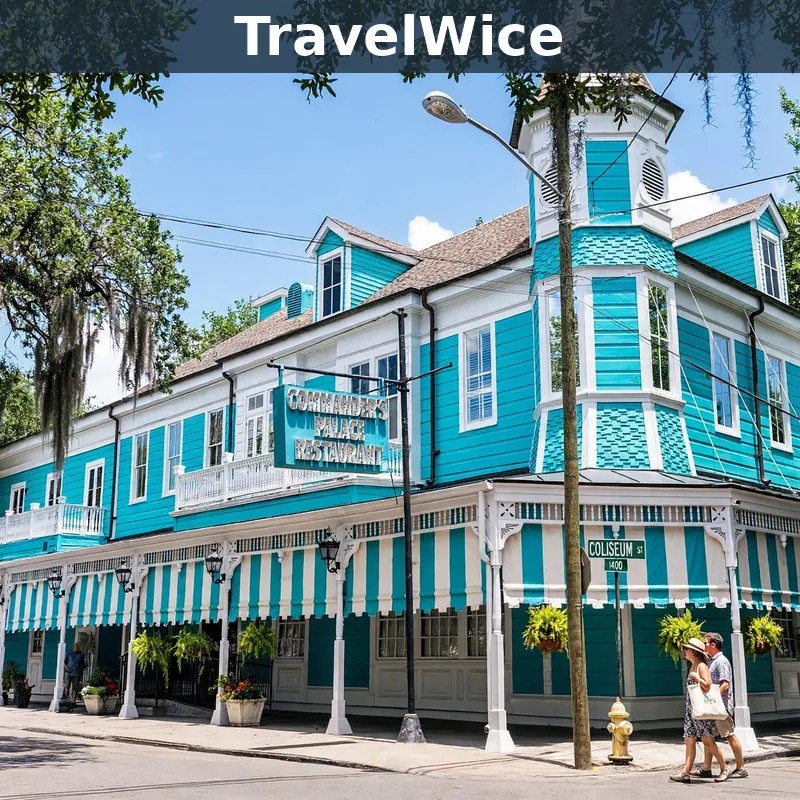
Since 1893, Commander’s Palace has stood across the street from the cemetery, a turquoise Victorian building with white trim that you can spot from a block away. In addition, the Brennan family runs it. It is the grand dining room of the Garden District in the same way Galatoire’s is the grand dining room of Bourbon Street. In particular, I did not go for dinner. I went for lunch, and lunch is the smart move here, because of the 25-cent martinis.
Yes, 25 cents. At lunch, martinis at Commander’s Palace cost 25 cents each, with a limit that the staff will explain when you sit down. On top of that, I ordered one with my lunch, and it arrived cold, in a proper glass, with an olive. I did the maths on the spot, which is always a mistake after a martini, even a 25-cent one. Meanwhile, at that price, I worked out. I could afford roughly four hundred martinis for the cost of one cocktail on Bourbon Street. I did not test this theory. The staff, the white tablecloths. My own common sense all seemed to agree that four hundred martinis was a plan with no happy ending. One martini, one long lunch, and a dignified walk back out into the sunshine was the right number.
What to Eat While You Are There
It is a tradition, not a trick, and it is the best value in New Orleans fine dining. The catch, if you can call it one, is that you are eating lunch in a white-tablecloth restaurant. Also, the food is the real cost. The jazz brunch runs $50–$100 a person, and lunch is a proper sit-down meal, not a quick sandwich. Book ahead. I booked two days before, and I was glad I did, because the dining room filled up by noon.
The food was Creole cooking done properly: rich, buttery, with the French and Spanish roots the city is known for. Also, Creole is the city cooking of New Orleans, built on tomatoes, butter and French and Spanish roots. In fact, Cajun is the country cooking of rural Louisiana, spicier, and without tomatoes in the jambalaya. I had heard that distinction a dozen times before I went. I only understood it when I ate both in the same week. Commander’s Palace is Creole, through and through. The room matches the food: bright, calm, with tall windows and a garden outside.
Getting There Without the Hassle
In addition, if you cannot get a table, do not stand outside and feel bad about it. In particular, walk to Magazine Street, which is five minutes away, and eat at one of the cafés there. But if you can get a lunch booking, take it. It is the meal I still think about when I think about the Garden District. It is the reason I tell people to plan this neighbourhood around lunch, not around a quick stop between other sights. My New Orleans food guide for 2026 has the full food picture, with gumbo at $15–$25, jambalaya at $15–$25, po’boys at $8–$15. The restaurants that are worth booking ahead.

Walking the Mansion Streets
On top of that, after lunch, I walked. That is the whole plan for the mansion streets, and it is enough. The Garden District was built in the 1800s as the American answer to the French Quarter, a neighbourhood of big houses on big plots, with gardens in front. Meanwhile, iron fences around them. The houses are not a museum you buy a ticket for. They are homes, and you walk past them on the public sidewalk, look at the columns. The balconies and the gardens, and keep walking. That is the pleasure of it, and it is free.
I started on Washington Avenue, near the cemetery, and wandered toward St. Charles Avenue and then down the side streets. Also, the houses change every block. In fact, one is white with tall columns and a lawn that looks like it is mowed twice a week. The next is painted a soft yellow, with a porch full of rocking chairs. Another has a garden so full of flowers that you can smell it from the sidewalk.
The iron fences are a study on their own: some plain, some with curls. Points, some with a gate that has been there for a hundred years. I took photos of the fences, the gates, the front steps, and the trees, not of the windows. People live here, and the rule is the same as in any neighbourhood: admire the house, do not stare into the home.
Tips I Wish Someone Had Told Me
In addition, wear walking shoes. In particular, the sidewalks in the Garden District are old, with tree roots pushing up the slabs in places. The blocks are longer than the blocks in the Quarter. I walked for about two hours after lunch, with stops. My feet were fine because I had worn flat, closed shoes. This was a triumph, because on my first Garden District walk I had worn the wrong shoes and spent the afternoon doing a careful dance around every tree root, like a person crossing a river on stepping stones. The roots had won that day.
The flat shoes won this day. If you take one tip from this whole guide, take this one. The trees in the Garden District are beautiful, old, and completely uninterested in where the pavement is supposed to be.
In sandals I would have been done in 30 minutes. Bring water, too.
There are shops on Magazine Street, but the residential streets have no shops. A hot afternoon with no water is a short walk. Go in the morning if you can, or in the late afternoon when the light turns gold. The houses look their best. Also, the golden hour here is real: the white columns catch the light, the oaks throw long shadows. The whole street looks like a photograph.
Magazine Street: Shops, Cafés and a Long, Easy Afternoon
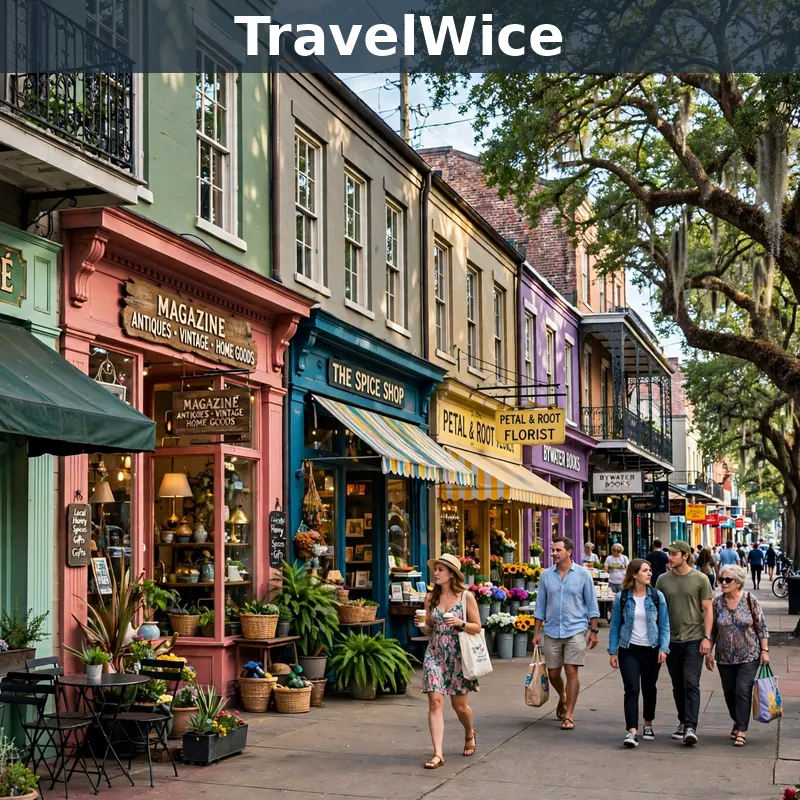
On top of that, Magazine Street runs for miles through Uptown. Meanwhile, the Garden District stretch is the best part of it for a visitor. It is a shopping street, but not a mall street. The shops are small, in old buildings, with hand-painted signs. Windows full of things made nearby: clothes, books, jewellery, art, home goods, toys. I walked it with no list and no hurry, which is the right way to do it. I went into a bookshop, a shop selling local art. A café where I sat for 20 minutes with a cold drink and watched people walk past.
Magazine Street is also where you eat if you did not book Commander’s Palace. The cafés here do lunch for a normal price, and the food is good without the white tablecloth. Also, a po’boy at $8–$15 is a full meal. A bowl of gumbo at $15–$25 is the same bowl you would pay twice as much for in a fancier room. I had a po’boy for a late lunch one day and sat on a bench outside the shop to eat it, which is the correct way to eat a po’boy: outside, with napkins. In fact, with gravy on your hands. Within three bites, the gravy had reached my elbows.
This is not a complaint. This is a review. A po’boy that does not try to escape down your arms is not trying hard enough. I used half a pack of napkins, gave up on dignity somewhere around bite four.
Finished the sandwich sitting on that bench like a person who had just won a small, delicious, messy victory.
Taking a Guided Tour
In addition, the street is long, so do not try to walk all of it. In particular, pick a stretch of six to eight blocks, walk it slowly, and then catch the streetcar back. The St. Charles line runs parallel to Magazine, a few blocks away. You are never far from a ride home. I walked from Washington Avenue down Magazine for about an hour, then turned back toward St. Charles Avenue and caught the car at the next stop. The fare was $1.25, the same as the ride in. The transfer rule meant my morning fare still covered me inside two hours. Check the New Orleans official tourism site for the shops. Cafés open on your dates, because small shops change hours with the season.
Audubon Park and the Audubon Zoo
On top of that, at the far end of the Garden District, past the houses. Meanwhile, the shops, is Audubon Park and the Audubon Zoo at 6500 Magazine St. The park is free, green. Full of the same live oaks that shade the Garden District. The zoo is one of the best family stops in the city. I went in the afternoon, after the mansion walk, and the change of pace was exactly right. Trees, open grass, and animals after two hours of houses.
Also, the zoo runs 10 AM to 5 PM, with the last ticket at 4 PM. In fact, it stays closed Tuesday and Wednesday in winter, so check the day before you go. Tickets run $30–$40 for an adult and $25–$35 for a child or senior, with under-2s free. Parking is free, and the zoo has been fully cashless since October 1, 2026, so bring a card, not cash. I paid by card at the gate and walked in without a queue. The Audubon Nature Institute official site lists the current hours and ticket prices. It is the place to check before you go, because winter hours and prices move with the season.
Bringing the Kids Along
In addition, if you are travelling with kids, the zoo is the anchor of the day. In particular, the Garden District walk is the calm part before it. My New Orleans family vacation guide for 2026 builds the full family day around the zoo, the aquarium and City Park, with the streetcar as the transport between them. The Audubon Aquarium and Insectarium, downtown, runs $45–$55 for an adult and $40–$50 for a child or senior. One ticket covers both. The Audubon Combo, covering the zoo, the aquarium and the insectarium, runs $60 for an adult and $55 for a child or senior. If you are doing two of the three, the combo saves money. If you are only doing the zoo, buy the zoo ticket on its own.
I finished my zoo visit with a walk in Audubon Park, on the paths under the oaks, and then caught the streetcar back toward Canal Street. On top of that, the ride back was quieter than the ride in. The car was half empty. Meanwhile, the light was low, and the houses looked softer in the evening. I got off at Canal Street with tired feet and a full notebook, which is how a good day in New Orleans should end.
My Slow Half-Day Walk: The Plan That Worked
Here is the half-day plan I would follow again, because it fits the neighbourhood instead of fighting it. Also, the Garden District rewards slow walking, and it punishes rushing. I tried rushing it once, on my first morning, and I missed the whole point. In fact, I was checking my watch, counting blocks, and trying to see everything before lunch. I saw the houses, but I did not see the neighbourhood. The second time I slowed down, and the place opened up.
9:30 AM: Streetcar from Canal Street
In addition, leave the French Quarter at 9:30 AM. In particular, pay $1.25, take a window seat, and ride the St. Charles line to Washington Avenue. The ride takes about 20 to 25 minutes. Do not look at your phone. Look out of the window. The oaks, the houses, the front gardens — that is the tour, and it costs $1.25.
10 AM: Lafayette Cemetery No. 1
Walk into Lafayette Cemetery No. 1 at 1400 Washington Ave. Spend 45 minutes on the paths, reading the names, looking at the white tombs. Taking photos from the path. Remember it reopened October 1, 2026 after seven years closed. You are walking somewhere people waited a long time to see again. Keep your voice down, stay off the tombs, and bring water.
11 AM: A wander before lunch
Walk the mansion streets for an hour. Start on Washington Avenue, drift toward St. Charles Avenue, and take the side streets that look prettiest. There is no wrong turn here. Every street has a house worth stopping for, and the best street is usually the quiet one you almost skipped. Wear flat shoes, because the sidewalks are old and the tree roots have opinions about where the pavement should be.
Noon: Lunch at Commander’s Palace
Sit down at Commander’s Palace for lunch. Book ahead, order the 25-cent martini if you drink, and take your time. This is a two-hour lunch, not a 30-minute one. The jazz brunch, if you are there on a weekend, runs $50–$100 a person. Lunch on a weekday is a proper meal in a calm, bright room. It is the centre of the day.
2 PM: Magazine Street
Walk to Magazine Street and spend an hour in the shops and cafés. Buy something small and local if you like, or just window-shop. Eat a po’boy at $8–$15 if you are hungry again, or save your appetite for dinner in the Quarter. This is the easy, unplanned part of the day, and it works best with no list.
3:30 PM: Audubon Park, then the streetcar home
Walk or ride to Audubon Park, sit under the oaks for a while, and then catch the streetcar back to Canal Street. If you are doing the zoo, go earlier in the day instead. The zoo closes at 5 PM and the last ticket is at 4 PM. A zoo visit needs two to three hours on its own, so do not try to squeeze it into the end of this walk. Give it its own morning, and do the mansion walk on another day, or on the same day if you start at 9 AM and skip the long lunch.
That plan costs very little for the walking part: $1.25 for the streetcar, nothing for the cemetery paths, nothing for the mansion streets, nothing for Magazine Street window-shopping, and nothing for the park. The money goes on lunch, the zoo ticket if you go, and the po’boy. A half day in the Garden District, without lunch or the zoo, can cost as little as $1.25. With lunch at Commander’s Palace and a zoo ticket, it is a full day out. It is still cheaper than a night on Bourbon Street New Orleans guide for 2026, where a round of cocktails can cost more than this whole walk.
When to Go, What to Wear and What to Skip
Go in the morning in summer. New Orleans summers are hot and wet. The Garden District walk is an outdoor walk with long stretches between shops. At 9 AM the shade is cool, the air moves, and the light is soft. By 1 PM the sun is high, the humidity has built up, and the same walk feels twice as long. In winter, the walk is easy at any hour. November and February are the sweet spot: cool air, thin crowds, and light that makes the white houses glow. Check the National Weather Service forecasts before you pack, because a summer week. A winter week in New Orleans are two different trips.
Wear flat, closed shoes you can walk in for three hours. I have said this about Bourbon Street too, and it is twice as true here. The Garden District blocks are longer and the sidewalks are older. Bring a water bottle, a hat, and sunscreen in summer. Bring a light jacket in winter, because the morning can be cool and the afternoon warm. Carry a card for the zoo, which has been fully cashless since October 1, 2026, and carry a little cash for the streetcar. The small shops, where cash is still faster.
Timing It Right
What to skip? Skip the idea that you need a guided tour to enjoy this neighbourhood. A walking tour costs $25–$30 in the Quarter, and a guided tour here can be good. The Garden District is a place you can walk on your own with a map and a free morning. The houses are on public streets, the cemetery is open, Magazine Street is a public street, and the streetcar is $1.25. If you love a good guide, take one. If you love wandering, wander. The neighbourhood does not hide its best parts behind a ticket.
Skip the car, too. Driving in the Garden District means looking for parking instead of looking at houses. The streetcar is cheaper, easier, and prettier. The airport (MSY) is about 30 minutes from the Quarter by road, so check rideshare prices on the day. Once you are in the city, walk and ride the streetcar. My New Orleans trip cost guide for 2026 has the full budget picture, with French Quarter hotels at roughly $200–$350 a night, food at $8–$25 a person for a casual meal and $40–$100 for a sit-down Creole dinner. The tour prices that are worth paying for.

The Music After Dark
If you want the loud side of the city after a quiet Garden District morning, my French Quarter New Orleans guide for 2026 covers Jackson Square, St. Louis Cathedral and Café du Monde, where beignets run about $4.50–$6 for three and café au lait about $3.60–$4. My New Orleans jazz guide for 2026 covers Preservation Hall, at 726 St. Peter St, where 45-minute sets run about $25–$65, and Frenchmen Street, where the clubs are smaller. The music is closer. And if you want to compare a slow neighbourhood walk in another city, my Colorado travel guide for 2026. My Texas travel guide for 2026 show how a walking day stacks up elsewhere.
Garden District at a Glance
| Item | Price / Detail |
|---|---|
| St. Charles streetcar | $1.25 per ride, 2-hour transfer included |
| Streetcar route | Canal Street through the Garden District to Carrollton |
| Lafayette Cemetery No. 1 | 1400 Washington Ave, reopened October 1, 2026 after 7 years closed |
| Commander’s Palace | Since 1893, 25-cent martinis at lunch |
| Commander’s Palace jazz brunch | $50–$100 per person |
| Magazine Street | Shops and cafés, Garden District stretch |
| Audubon Zoo | 6500 Magazine St, 10 AM–5 PM, last ticket 4 PM |
| Audubon Zoo ticket | $30–$40 adult, $25–$35 child/senior, under 2 free |
| Audubon Zoo | Closed Tue/Wed in winter, free parking, cashless since Oct 1, 2026 |
| Audubon Combo (zoo + aquarium + insectarium) | $60 adult, $55 child/senior |
| Gumbo / jambalaya | $15–$25 |
| Po’boy | $8–$15 |
Prices are 2026 figures from the sources in this guide. Check before you go, because hours and prices move with the season.
Chart: Where a Garden District Day’s Money Goes
This chart breaks down a typical Garden District day of about $95 a person, using the plan in this guide, so you can see which cost dominates.
| Category | Cost ($) | Share (%) |
|---|---|---|
| Lunch at Commander’s Palace | 55 | 58 |
| Audubon Zoo ticket | 35 | 37 |
| Streetcar (2 rides) | 2.50 | 3 |
| Po’boy snack on Magazine Street | 2.50 | 3 |
| Total | 95 | 100 |
The lunch is the story. At $55 for a mid-range lunch at Commander’s Palace, the meal is more than half the day, and it is the money best spent. The zoo ticket is the second cost, at $35, and the transport is almost nothing: two streetcar rides for $2.50, which is less than a cup of coffee. The practical takeaway is that the Garden District is a cheap neighbourhood to walk and an expensive neighbourhood to eat in, and that is a good trade. Walk for free, eat well once, and the day costs about $95 and feels like a holiday.
References
- New Orleans official tourism site — the Garden District, Lafayette Cemetery, Magazine Street and trip planning.
- Audubon Nature Institute official site — Audubon Zoo hours, ticket prices and the Audubon Combo.
- National Park Service official site — cemeteries, burial traditions and the parks of the region.
- National Weather Service forecasts — New Orleans weather before you travel.
Garden District New Orleans Quiz
Test what you picked up from this guide before you go.
1. How much is a St. Charles streetcar ride, what does it include, and where does the line run?
- A) $1.25, a 2-hour transfer, Canal Street through the Garden District to Carrollton
- B) $5, no transfer, French Quarter only
- C) Free, all day, to the airport
2. When did Lafayette Cemetery No. 1 reopen, after how long closed, and where is it?
- A) October 1, 2026, after seven years, 1400 Washington Ave
- B) January 1, 2020, after one year, Canal Street
- C) It never closed, Magazine Street
3. What is the famous lunch deal at Commander’s Palace, and when was the restaurant founded?
- A) 25-cent martinis at lunch, founded 1893
- B) Free lunch, founded 2000
- C) $5 martinis at dinner, founded 1850
4. How much is an Audubon Zoo ticket, what are the hours, and when is the last ticket?
- A) $30–$40 adult, 10 AM–5 PM, last ticket 4 PM
- B) $5 adult, 24 hours, last ticket midnight
- C) $100 adult, 9 AM–9 PM, last ticket 8 PM
5. How much is the Audubon Combo, what does it cover, and how much is a po’boy on Magazine Street?
- A) $60 adult, zoo + aquarium + insectarium, po’boy $8–$15
- B) $20 adult, zoo only, po’boy $50
- C) Free, everything in the city, po’boy $2
Quiz Answers
- The St. Charles streetcar costs $1.25 a ride, includes a 2-hour transfer, and runs from Canal Street through the Garden District to Carrollton (A).
- Lafayette Cemetery No. 1, at 1400 Washington Ave across from Commander’s Palace, reopened October 1, 2026 after seven years closed (A).
- Commander’s Palace dates to 1893, is run by the Brennan family, and serves 25-cent martinis at lunch (A).
- Audubon Zoo tickets run $30–$40 for an adult and $25–$35 for a child or senior, under-2s free, open 10 AM–5 PM with the last ticket at 4 PM, closed Tue/Wed in winter (A).
- The Audubon Combo runs $60 for an adult and $55 for a child or senior, covering the zoo, the aquarium and the insectarium, and a po’boy runs $8–$15 (A).