
Great Sand Dunes National Park Guide: Tallest Dunes, Medano Creek and Dark Skies in 2026
You drive for miles across the flat San Luis Valley in southern Colorado, and then a wall of sand rises about 750 feet high, glowing gold against the Sangre de Cristo Mountains. It doesn’t look real. This Great Sand Dunes National Park guide sticks to honest timing, costs as ranges, and the practical stuff that decides whether you have a great day or a sweaty, sunburnt one.
TL;DR: Visit late May to early June for Medano Creek, or September to October for cooler hiking and fewer crowds. Hike early or late in summer, because sand can reach 140–150°F by afternoon. Rent sandboards before you enter the park; the park does not rent them. Book Piñon Flats Campground when your three-month window opens. Bring closed shoes, sun protection, water and a red light for stargazing. No timed-entry reservation is needed.
Why Great Sand Dunes Feels Like Nowhere Else in Colorado
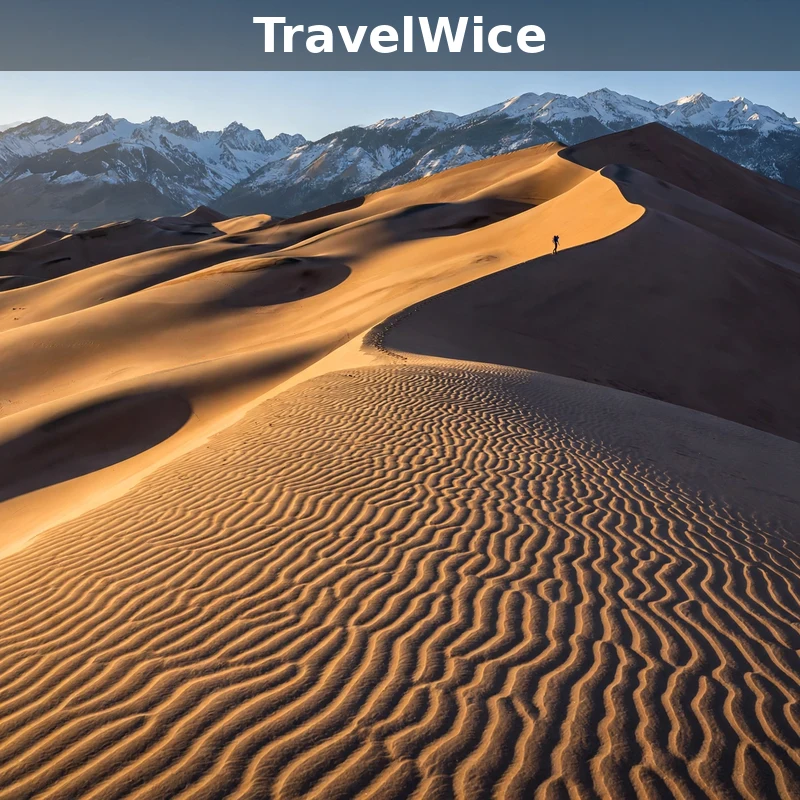
The main dunefield covers about 30 square miles. Wind has blown sand across the San Luis Valley for thousands of years, and the Sangre de Cristo Mountains trap it there — North America’s tallest dunes, in a landscape that shifts after every storm.
Beyond the dunes are grasslands, wetlands and forests, plus elk, deer, and six insect species found nowhere else on Earth. You can wade in a creek in the morning, climb what feels like a sand mountain, slide back down it, then watch the Milky Way come up — all in one day. If you’re fitting this into a bigger trip, our Colorado travel guide for 2026 will help you slot it in without rushing it.
Great Sand Dunes at a Glance: 2026 Facts, Fees and Hours
Prices are ranges listed by the National Park Service in late 2026; confirm them on the National Park Service fees and passes page.
| Item | What to know for 2026 |
|---|---|
| Location | San Luis Valley, near Mosca and Alamosa |
| Park size | About 149,000 acres; dunefield about 30 square miles |
| Tallest dunes | About 750 feet; Hidden Dune 741 feet, Star Dune 736 feet |
| Elevation | Visitor area around 8,200 feet |
| Open hours | Open 24 hours a day, year-round; no timed entry |
| Visitor Center | Generally 9 a.m. to 4:30 p.m. daily |
| Entrance pass | Standard pass $15–$25; vehicle about $25 for 7 days |
| Annual passes | Park pass about $45; America the Beautiful pass $80 |
| Free days, 2026 | February 16, May 25, June 14, July 3–5, August 25 |
| Piñon Flats | 88 sites, about $20 per night; April–October |
| Reservations | By reservation only, up to 3 months in advance |
| Medano Creek peak | Late May to early June, about 40 cubic feet per second |
| Summer sand | Can reach 140–150°F on hot afternoons |
When to Visit Great Sand Dunes
Late May to early June is the classic pick: Medano Creek is usually at its fullest and temperatures are still manageable. The catch? Weekends get packed — overflowing parking, full campgrounds, the lot. Go on a weekday if you can, and arrive before 9 a.m.
September and October are my quiet favourite. The creek’s usually gone, but the air is cooler, the aspen turn colour, the mosquitoes fade, and you can hike and stargaze in one day. Our best time to visit Colorado puts this in context with the rest of the state’s seasons. July and August call for early-morning or evening dune time, and watch for afternoon thunderstorms — they build fast out here. Winter is cold, sometimes snowy, very quiet, and camping is closed.
Chart/Graph: When the Park Works Best, by Season
This chart is a planning index, not an official measurement, using a 1-to-5 scale, where 5 is most favourable, except crowd pressure, where 5 means busiest.
| Season | Hiking | Creek | Stargazing | Crowds |
|---|---|---|---|---|
| Spring, April to mid-May | 4 | 3 | 4 | 3 |
| Late May to early June | 4 | 5 | 4 | 5 |
| Summer, late June to August | 2 | 1 | 5 | 4 |
| Autumn, September to October | 5 | 1 | 5 | 2 |
| Winter, November to March | 3 | 1 | 4 | 1 |
Late May to early June wins on creek flow, scoring 5, but also scores 5 for crowds. Autumn scores 5 for hiking and stargazing, with low crowds, so it is the best all-round season if the creek is not your priority. Summer scores 5 for stargazing, but only 2 for hiking.
The Dunes Themselves: How They Formed and How to Read Them
Southwesterly winds blow sand from the valley floor towards the Sangre de Cristo Mountains. Two gaps funnel the wind, it loses energy and drops its sand, then reverse winds push some of it back, piling it higher. Thousands of years of that built the dunefield — though the ridges keep moving.
The Colorado.com facts about Colorado national parks describe about 30 square miles of sand, with the tallest dunes in North America. Follow the ridgelines, which are firmer than the slip faces, walk early when the sand is cool, and walk left after you enter the sand for fewer footprints.
First Steps from the Main Dunes Parking Area
Most visits start at the main dunes parking area, a short drive from the Visitor Center. Cross the flat Medano Creek bed, dry for much of the year, then pick your ridge. There are no marked trails on the dunefield, so note the parking area and mountains before you climb.
Bring more water than a short walk seems to need, wear a hat and sunglasses, and expect the return to take longer. With kids, an hour near the creek bed, a short climb to the first ridge, then shade and water, is a good visit.
Medano Creek: The Seasonal Beach at the Foot of the Dunes
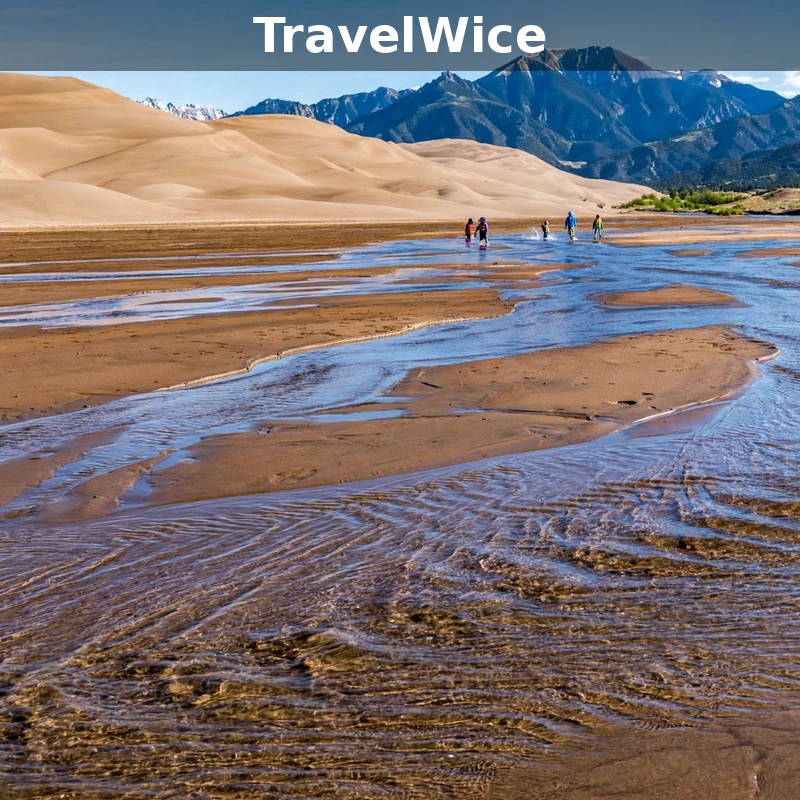
For most of the year, Medano Creek is invisible — it sinks into the sand before it reaches the main visitor area. In a normal spring, snowmelt pushes it across the sand at the base of the dunes, and suddenly there’s a wide, shallow, warm stream that looks like a beach. In Colorado. At 8,200 feet.
Children wade and float short distances on flat toys when surge flow is strong. Adults paddle and cool their feet after a climb. It’s free, unlike any other national park experience, and temporary, which is why timing matters.
Surge Flow, Explained Simply
As water flows over sand, small sand dams form and collapse, releasing pulses that travel downstream as low waves. At peak flow in late May or early June, waves arrive every 20 to 40 seconds and can carry a child a short distance. Stay out of the creek bed if you hear or see a storm upstream, because flash flooding is possible after heavy rain. The National Park Service Medano Creek page is the source for current flow and safety notes.
When Medano Creek Flows, and What to Do If It Does Not
In an average year the creek arrives in April as a trickle, builds through May, and peaks in late May or early June at about 40 cubic feet per second. By late June it is often only an inch or two deep, and by July it has usually retreated. Mosquitoes often emerge in large numbers in the second week of June.
One honest warning: in a low-snowpack year such as 2026, the creek may never reach the main parking area. Don’t build your whole trip around it. Pack for a beach if it is flowing: water shoes, a towel and sunscreen. Our Colorado family vacation guide can help balance a creek morning with rest and driving time for young children.
Sandboarding and Sand Sledding: The Park’s Most Fun Hour
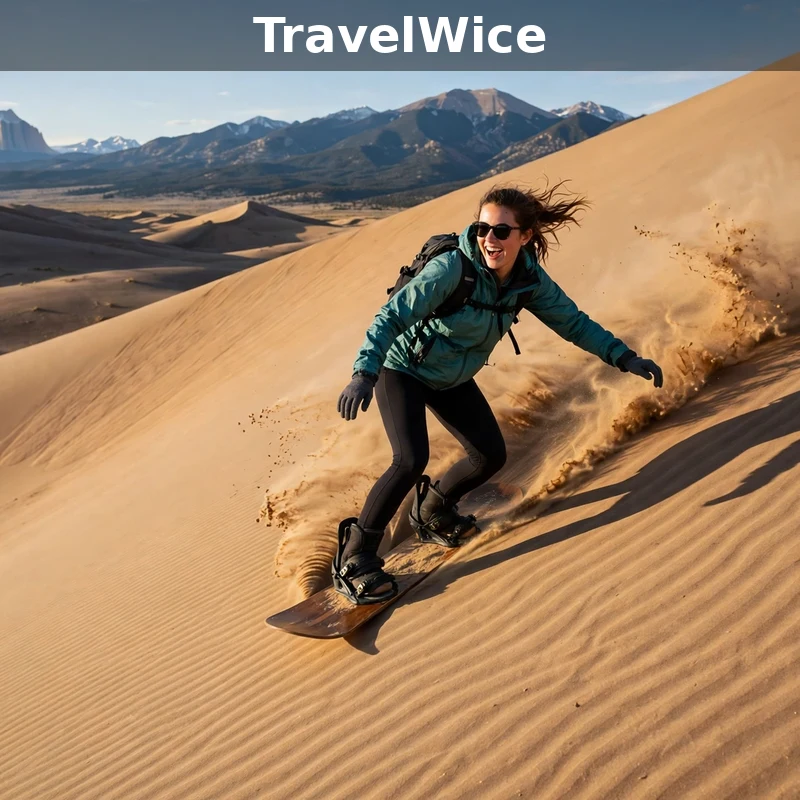
Sandboarding is the activity visitors talk about most after they leave, because a good run feels like surfing down a mountain. Only purpose-built sandboards and sleds, with a slick base and special wax, slide reliably on dry sand. Snowboards, snow sleds, cardboard and plastic saucers dig in and drag.
Where to Rent, and Why You Must Rent Before You Arrive
The park does not rent sandboards or sleds, so the rental stop belongs on your drive in. The closest option is the Great Sand Dunes Oasis, about four miles from the Visitor Center, open spring through early fall. It will not rent sleds when sand is wet, because wet sand damages the slick base. Kristi Mountain Sports in Alamosa, roughly 35 miles southwest, also rents boards and sleds and recommends reserving in advance from May to September. A useful range is about $20–$35 per board or sled per day, plus tax. Book ahead for late May and June weekends.
How to Sandboard Well, and Stay Safe
Choose a steep, smooth dune with no people below you, and climb only as high as you are comfortable descending. Beginners should start low, sit or lie on a sled first, then try standing on a board. Wax the base as instructed and keep your weight centred.
Wear long sleeves, long trousers, closed shoes and sunscreen, and protect your phone from sand. Do not sandboard on wet sand or slide into the creek, and do not climb in midday heat for one run. Two to three hours is plenty.
Hiking the Dunes and Beyond
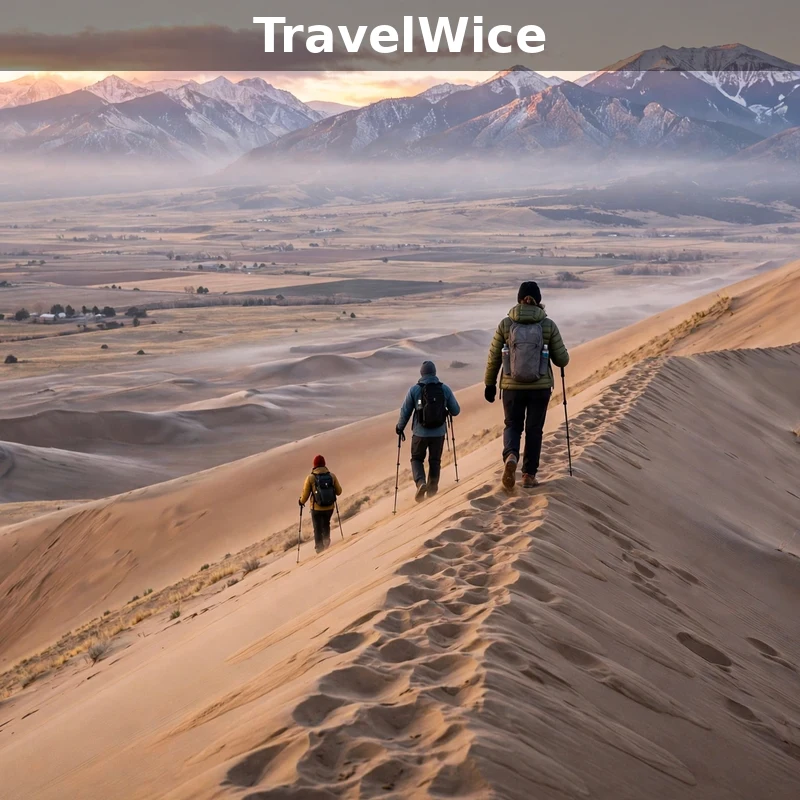
There are no switchbacks, shade or trail markers on the sand, only ridges and your route choice. A 2.5-mile dune hike can take two to three hours, and a six-mile hike can take a full day.
Carry at least a litre of water per person for a short climb and more for a long one, and turn back if you feel dizzy or unusually tired. Our Colorado road trip itinerary helps you avoid a strenuous climb on the same day as a long drive from Denver or Colorado Springs.
High Dune on First Ridge: The Classic Climb
High Dune is about 2.5 miles round trip and 2–3 hours for most fit walkers. Cross about half a mile of Medano Creek bed, then zigzag up ridgelines to a crest about 688 feet above the base, with views of the dunefield, valley and mountains. Start early, save energy for the descent, and climb only partway if you are short on time or with children.
Star Dune and Hidden Dune: The Serious Hikes
Star Dune, about 736 feet, is a serious full-day hike of about six miles round trip, taking six to nine hours. Hike about two miles south down the Medano Creek bed until the pyramid-shaped dune comes into view, then follow a ridge to its summit. Hidden Dune, about 741 feet, is listed as the tallest in North America, but it is remote and needs about seven miles round trip over six hours. Both need an early start, plenty of water, sun protection and a map or GPS.
Trails Beyond the Sand: Zapata Falls, Mosca Pass and the Preserve
Marked trails beyond the dunefield are worth a half day, especially in summer. Zapata Falls, just outside the park, is a short half-mile hike to a cool waterfall in a rocky crevasse, reached by wading the creek. Mosca Pass Trail climbs through forest and aspen to a historic pass, about 3.5 miles one way. The Montville Nature Trail, near the Visitor Center, is a short loop, good for families. One dune hike plus one forest or waterfall trail gives a fuller sense of the park.
Stargazing and Night Photography at an International Dark Sky Park
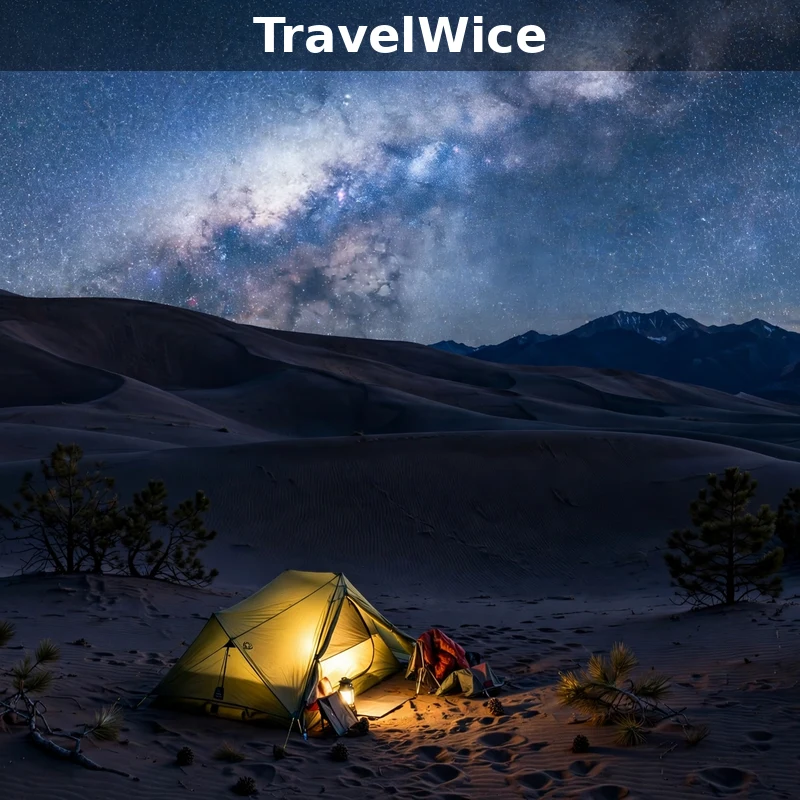
Great Sand Dunes is a certified International Dark Sky Park, and on a moonless night the sky is among the darkest in the lower 48 states. The valley is remote and dry air reduces haze, so the Milky Way appears as a bright band to the naked eye.
The Colorado Stargazing Trail lists it among the state’s best dark-sky places. August and September are best, when the Milky Way is brightest. Arrive before dark, use only red light, give your eyes 20 minutes to adapt, and bring a tripod and warm layers.
Where to Stay: Camping, Lodges and Alamosa
Where you stay decides how early you can reach the dunes and how late you can stay for stars. Staying in or near the park is worth the effort, but it needs booking ahead. Alamosa offers more choice, at the cost of a 35-mile drive. The National Park Service lodging page lists options within 20 and 30 miles, and is a good check for seasonal opening.
Piñon Flats Campground: Inside the Park
Piñon Flats is the only campground inside the park, one mile north of the Visitor Center, open April through October. It has 88 individual sites for tents and RVs up to 25 feet, with no hook-ups, plus three group sites. Individual sites cost about $20 per night, group sites about $65–$80, and all sites are by reservation only through Recreation.gov reservations, up to three months in advance. The National Park Service Piñon Flats Campground page warns sites book quickly for summer and creek weekends. Sites hold up to eight people, two tents and two vehicles. Arrive after 2 p.m. and check out by 1 p.m.
Lodges Near the Entrance and Hotels in Alamosa
Great Sand Dunes Lodge, just south of the entrance, is the closest motel, open mid-March through October. Nearby, the Oasis offers rustic cabins, a duplex motel, showers, a restaurant and a store, open April to October. Rustic Rook Resort, about 19 miles west, offers glamping tents and cabins. A useful range for valley lodges is about $100–$250 per night in peak season. Alamosa, 35 miles southwest, has chain hotels, restaurants, groceries, fuel and urgent care, at about $90–$200 per night. Staying in Alamosa suits travellers who need Wi-Fi or accessible rooms, but leave early and fill up before the park.
Practical Tips: Getting There, Costs, Packing and Safety
The park is about 240 miles southwest of Denver, about 180 miles southwest of Colorado Springs, and about 35 miles northeast of Alamosa. Allow four to five hours from Denver, about three hours from Colorado Springs, and 40 minutes from Alamosa. Fuel up in Alamosa or Mosca and download offline maps.
Our Rocky Mountain National Park guide is a useful contrast. A camping couple might spend about $20 per night for a site, $25 for a seven-day pass and $20–$35 per day for a rental, plus food and fuel. A family in a hotel might spend about $90–$250 per night. Our Colorado trip cost guide for 2026 can turn these ranges into a full budget.
Pack closed shoes, water shoes, a hat, sunglasses, sunscreen, warm layers, at least two litres of water per person, snacks, repellent and a red headlamp. Dogs must be leashed and can burn paws on hot sand. Watch for lightning and leave exposed ridges if storms build.
A Simple One-Day and Three-Day Plan
For one day, arrive before 9 a.m., cross Medano Creek if flowing, climb to the first ridge or High Dune, return for lunch and shade, sandboard in late afternoon, and stay for sunset and stargazing. For three days, use day one for the creek and a first climb, day two for Star Dune or a longer hike plus Zapata Falls, and day three for Mosca Pass, a scenic drive or hot springs. Add a buffer day with children.
References
Check these sources again close to travel.
- The National Park Service fees and passes page lists passes and 2026 free days.
- The National Park Service Medano Creek page gives flow and conditions.
- The National Park Service Piñon Flats Campground page confirms season, prices and reservations.
- The National Park Service lodging page lists nearby lodging.
- The Colorado.com facts about Colorado national parks covers dune size and height.
- The Colorado Stargazing Trail describes the dark-sky park.
- Recreation.gov reservations books Piñon Flats.
Quiz: Test Your Great Sand Dunes Knowledge
1. When does Medano Creek usually reach its peak flow in an average year?
- A. Late May to early June
- B. Late July to early August
- C. Late October to early November
2. Where should you rent a sandboard or sand sled for Great Sand Dunes?
- A. At the Visitor Center inside the park
- B. Before you enter the park, at the Oasis or in Alamosa
- C. At the top of High Dune
3. What is the best time of day to hike the dunes in summer?
- A. Midday, when the sand is warmest
- B. Early morning or late afternoon, when the sand is cooler
- C. Midnight, when the sand is coldest
4. How far in advance can Piñon Flats Campground sites be reserved in 2026?
- A. Up to 3 months in advance
- B. Up to 12 months in advance
- C. Only on the day of arrival
5. Why is Great Sand Dunes especially good for stargazing?
- A. It is a certified International Dark Sky Park with very little light pollution
- B. It has bright floodlights on the dunes at night
- C. It is close to Denver’s city lights
Quiz Answers
- A — Late May to early June
- B — Before you enter the park, at the Oasis or in Alamosa
- B — Early morning or late afternoon, when the sand is cooler
- A — Up to 3 months in advance
- A — It is a certified International Dark Sky Park with very little light pollution